 Before Ontario, Chino, Corona, Eureka, St. Johnsbury, Topsham, Portland, Bridgehampton and Hartford, the Sandford family first made the voyage to America in the mid-to-late 1630s.
Three brothers Robert, Thomas, and Andrew Sandford, along with their uncle Andrew Warner, arrived at Cambridge, Massachusetts. The Mayflower crossing had taken place nearly two decades earlier (1620) and new colonies were now forming across New England. Migrations and supply and trading missions to America had become almost routine, and settlers’ chances of surviving winters in the new world had improved considerably.
In 1638, Thomas was 30, Robert 23 and Andrew 21. Their journey seems mainly to have been motivated by the desire to seek new opportunities in a new land.
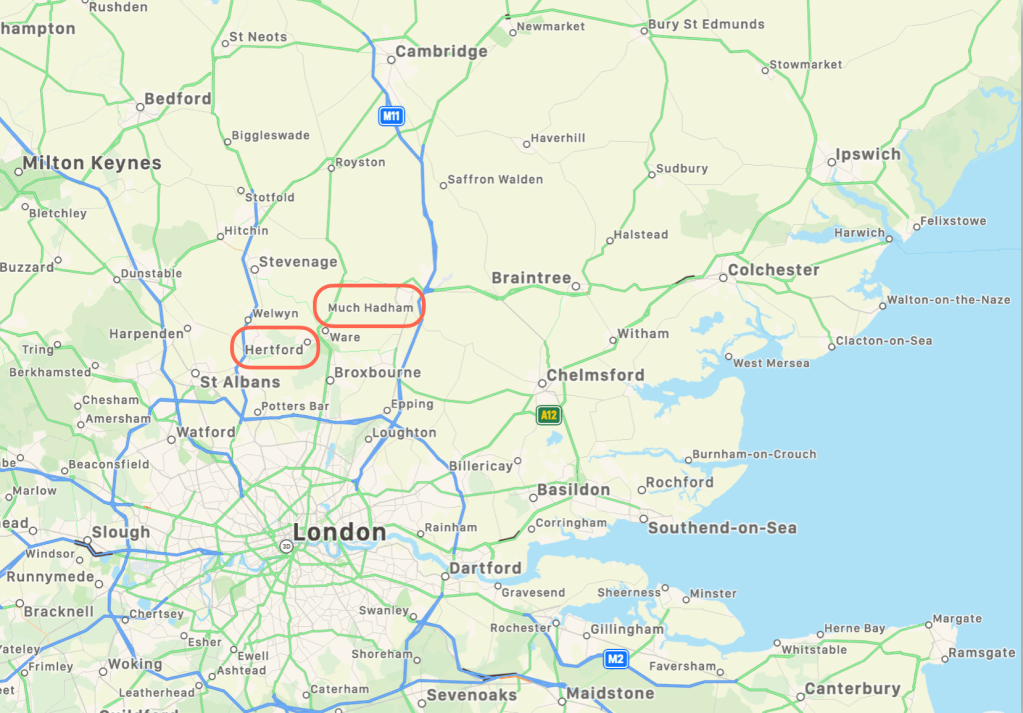
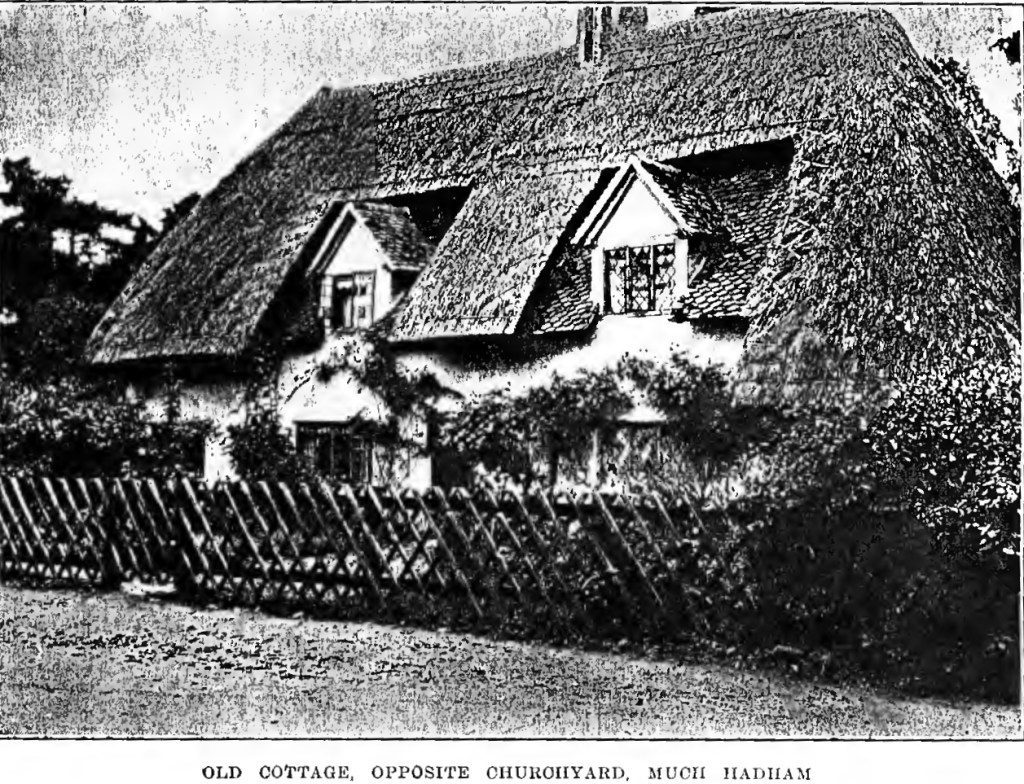
The Sandfords came from the small town of Much Hadham in Hertfordshire, England, just north of London and south of Cambridge.
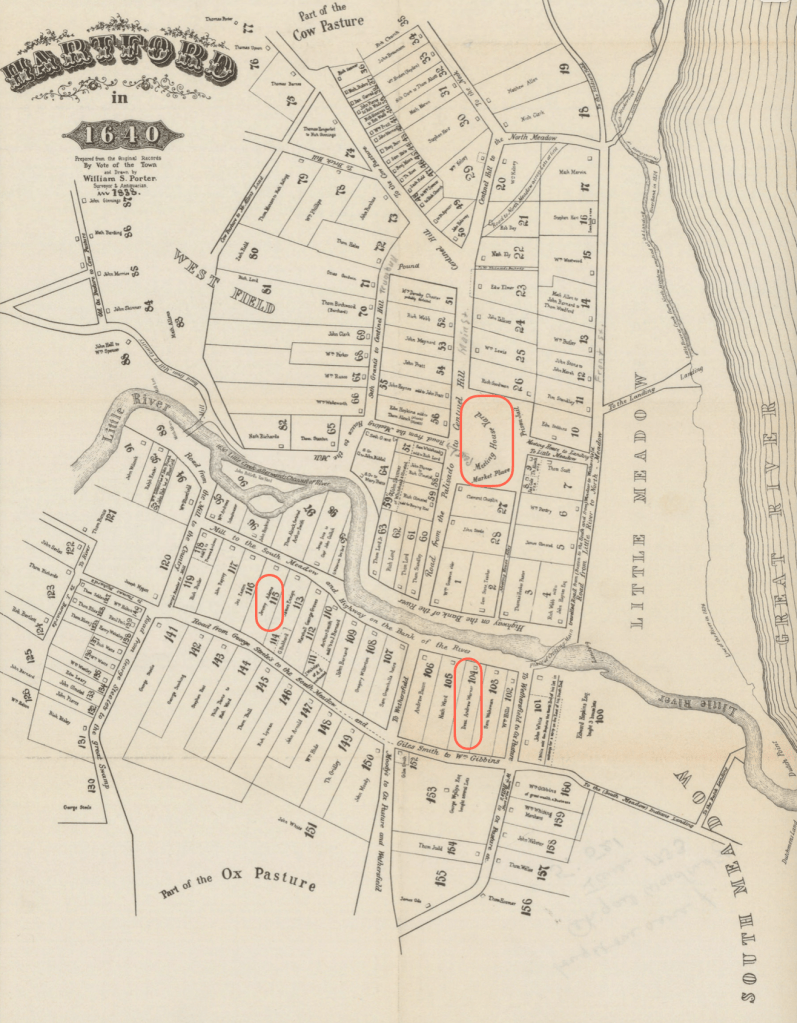
The family soon settled in emerging colonies in what would later become Connecticut. Robert (and initially Andrew) settled in the Hartford colony with uncle Andrew Warner. Thomas settled a little further south in Milford.
Robert and Thomas both started Sandford family branches which have thrived over the centuries. Our branch of the Sandford family began with Robert.
The first ‘d’ in the name Sandford has come and gone in various family branches at different times. Robert’s branch mostly kept the ‘d’ while Thomas’ branch mostly dropped it, becoming known as Sanfords (saving themselves lifetimes of correcting the spelling of others).
Hartford was first settled in 1635. It was named in 1637 in honor of Samuel Stone’s hometown of Hertford, England in Hertfordshire. Stone, a graduate of Cambridge University, was a student and follower of Thomas Hooker, the colony’s founder and leader.
Evidently the Sandford family’s decision to migrate to the Hartford colony was driven by direct knowledge of its neighbors’ founding journeys a year or two earlier, the Sandford home town of Much Hadham being located a few miles from Hertford. The Sandfords were not among the original founders of Hartford, but they were not far behind.
There are several well-worn publications describing the genealogies of various branches of the Sandford family, all written by distant cousins.
- Robert Sandford and his wife Ann Adams Sandford and some of their Descendants 1615-1930, by Josephine Sandford Ware, published 1930
- The Sandford/Sanford Families of Long Island, Their Ancestors and Descendants, by Grover Merle Sanford, published 1975
- Thomas Sanford, The Emigrant to New England, Ancestry, Life and Descendants, by Carleton E. Sanford, published 1911
The first of these sources has been circulating around our family for generations. Josephine Sandford Ware lived in Los Angeles when she wrote it, and I would not be surprised if our grandparents knew her, or at least knew of her (even though our common ancestry goes all the way back to Long Island). Although the best overall source for our branch of the family tree, Ware’s book contains a couple of significant errors which are discussed in other articles.
All three of these publications discuss the early origins of the Sandford family. All are in general agreement about our Much Hadham roots and the generations of Sandfords going back two or three generations prior to Robert, Thomas, and Andrew Sandford.
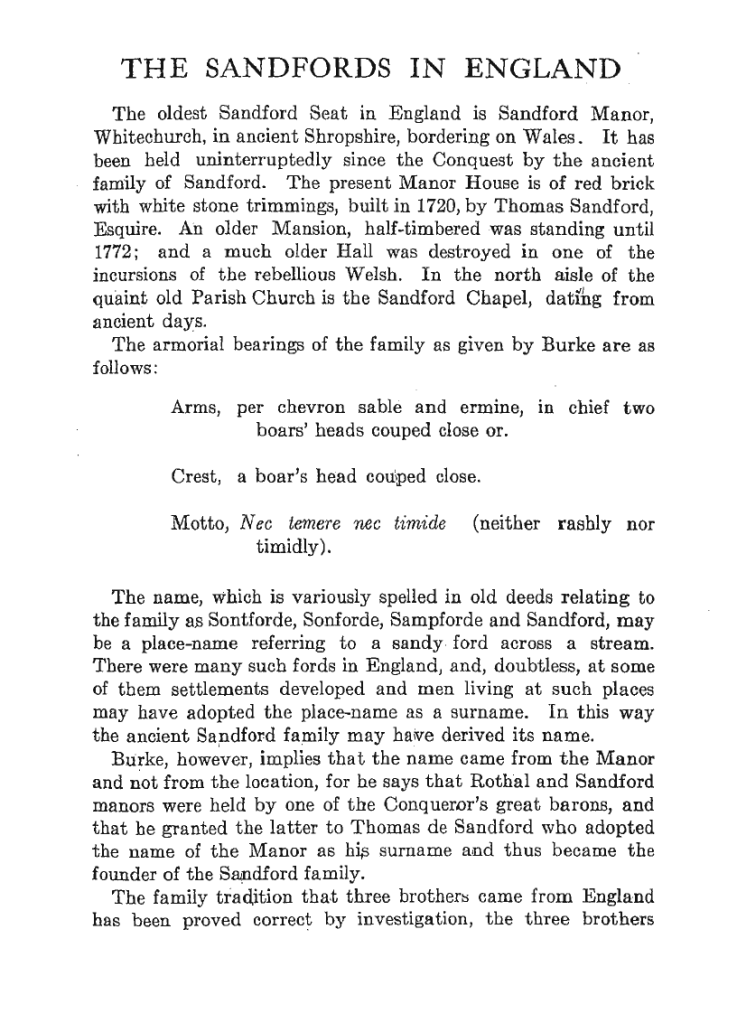
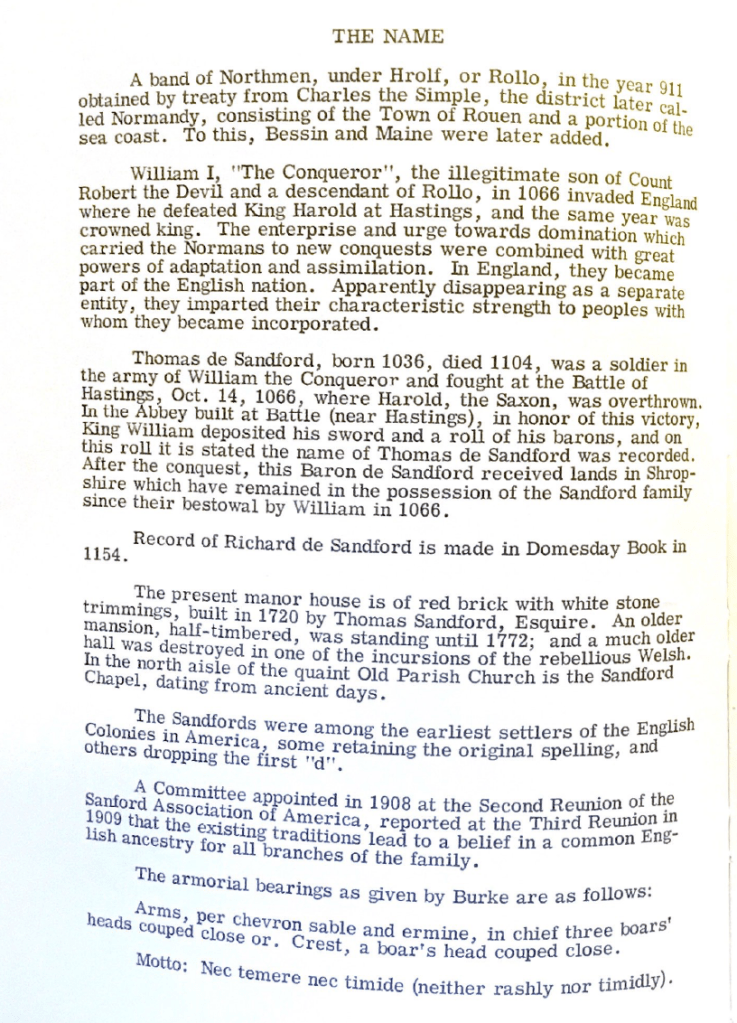
Prior to the 16th century, the Sandford history is much more speculative. Links to Thomas de Sandford of the 11th century and Richard de Sandford of the 12th century, the Sandford Manor in Shropshire, references in the Domesday 12th century land survey, a family coat of arms and motto have been examined in detail. Thomas Sanford’s 1911 genealogy has the most thoughtful and detailed analysis of these that I have found, and he concludes that these stories of earlier centuries cannot be conclusively linked to the Sandfords of Much Hadham. (Thomas Sanford’s 1911 book deals mainly with the Milford branch of the family, so, excepting the chapters on the Sandford origins, is generally of less use to us.)
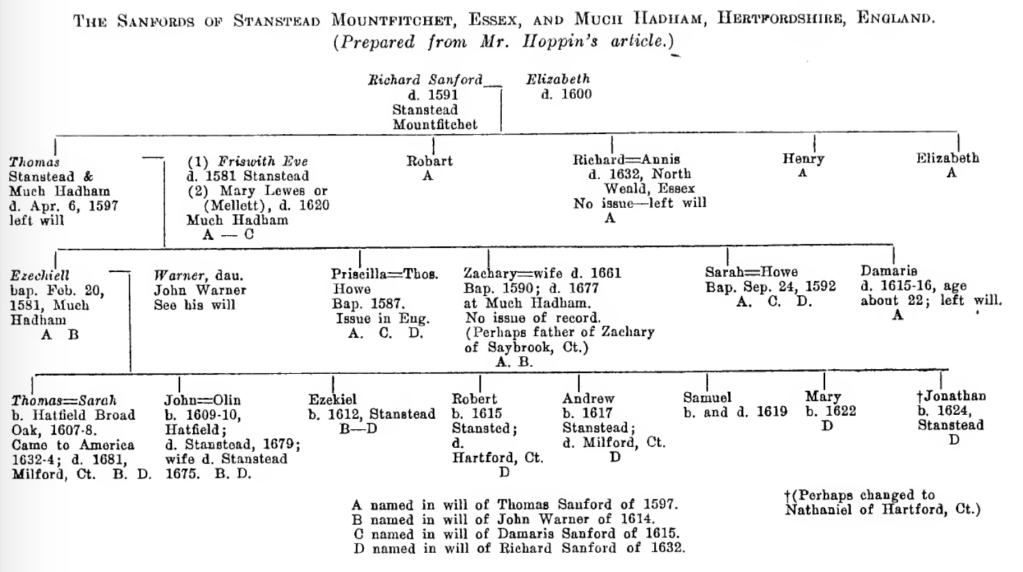
In Hartford, Robert married his wife Ann (incorrectly identified as Ann Adams in the Ware genealogy) in 1643. They had eight known children: Zachariah (1644-1714), Elizabeth (1645/46-1695), Ezekiel (our ancestor, 1647/48-1716), Mary (1650/51-1727), Robert (1656-1728), Sarah (1661-?), Hannah (1663-?), and Abigail. Robert died in 1676 at about age 60, Ann six years later.
Although their provenance cannot be proven, the Sandford coat of arms and motto have been circulated around the family for years, and they are fun to look at.
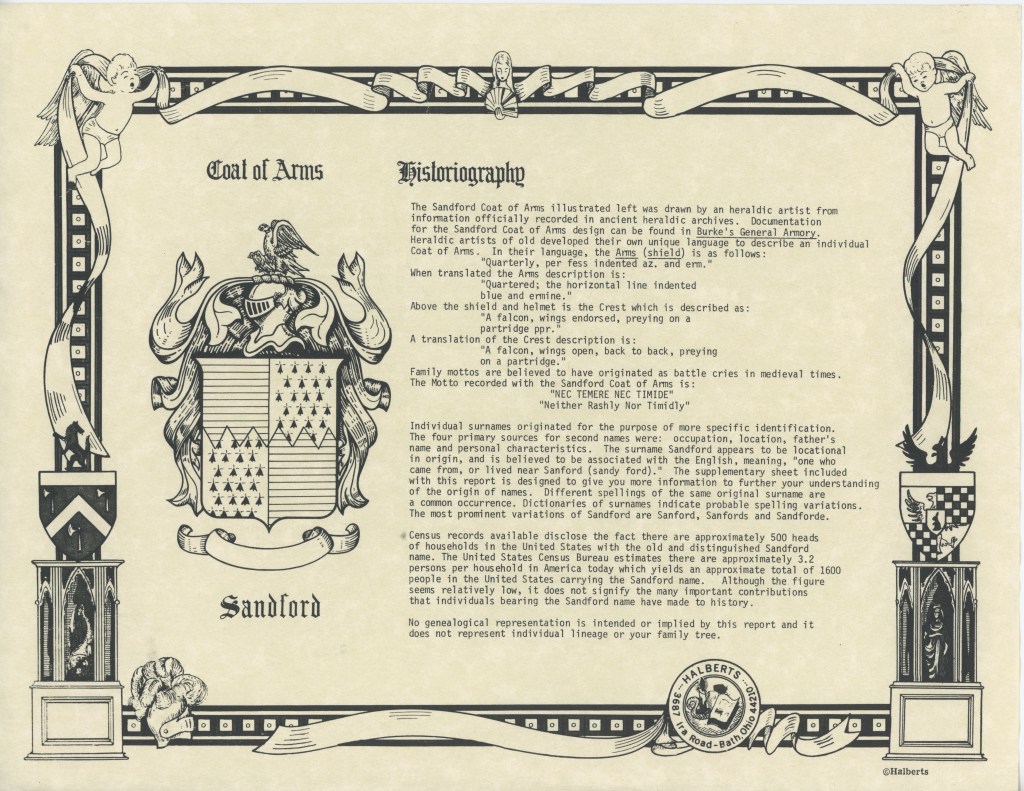
The motto Nec Temere Nec Timide (neither rashly nor timidly) always seemed particularly fitting in relation to other parts of our family history, although, similar to interpreting horoscopes, this is probably mostly a case of seeing what you want to see.
 Bridging the Silences
I totally loved reading this. Thank you for this post today!
LikeLike
Thanks, Donna. I always enjoy going back through your father’s work!
LikeLike
Hello! This November I was visiting Oakland, CA from Los Angeles, CA to attend a conference and I stayed with my aunt. I commented on art in my aunt’s home and later, she brought up the relative in the artwork’s eulogy. She then pulled out the eulogy, and other documents. Among those documents were family trees. These records were compiled when said relative was alive by said relative (my grandmother). My grandmother’s father is a descendent of the Thomas Sanford side, that dropped the second “d” — and the findings of that genealogical study were consistent with that in this article (Thomas settled in Milford, CT according to our records and yours). This was so insightful for me and I can hardly believe I found this article immediately with a simple Google search. It’s been a pleasure learning the family crest, which most certainly matches the enthusiasm and sometimes brashness of our family.
LikeLike