- Married Wednesday September 6, 1905 (116 years ago) in Newburgh, New York. James Louis Hynes and Bessie Gordon, great grandparents
- Fought in and survived the Battle of Antietam, Wednesday September 17, 1862 (159 years ago) in Sharpsburg, Maryland. Aaron Sechler, second great grandfather
- Died Tuesday September 18, 1945 (76 years ago) in Kalamazoo, Michigan. Laura Wright, great grandmother
- Died Monday September 25, 1911 (110 years ago) in Auckland, New Zealand. William Gordon, brother of second great grandfather Dr. James Gordon
Places of Origin
We can take our Ancestral Migrations Map and flip it around to see a view of our family’s overseas places of origin. Most of our family originated in England, Scotland, Wales and Ireland…
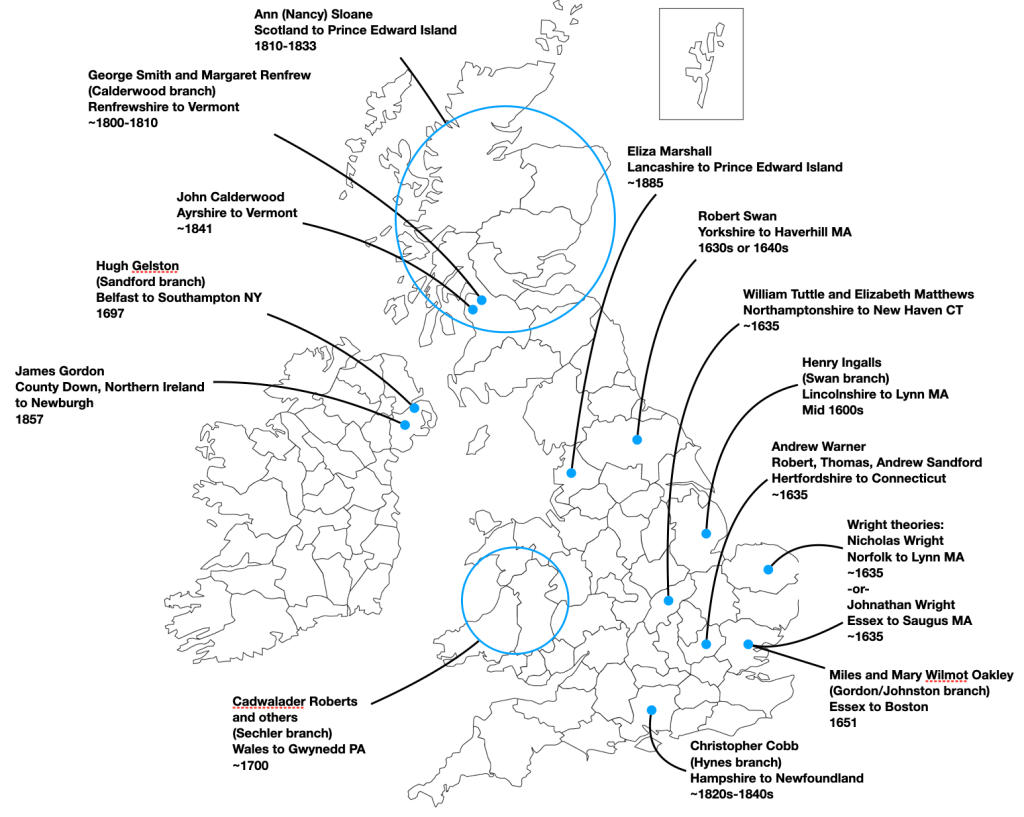
This is a partial list focussed on the family branches we have spent the most time investigating–to show all of our ancestors’ places of origin, even just the ones we are sure about, would require many pages.
A few of our ancestors originated from Germany…
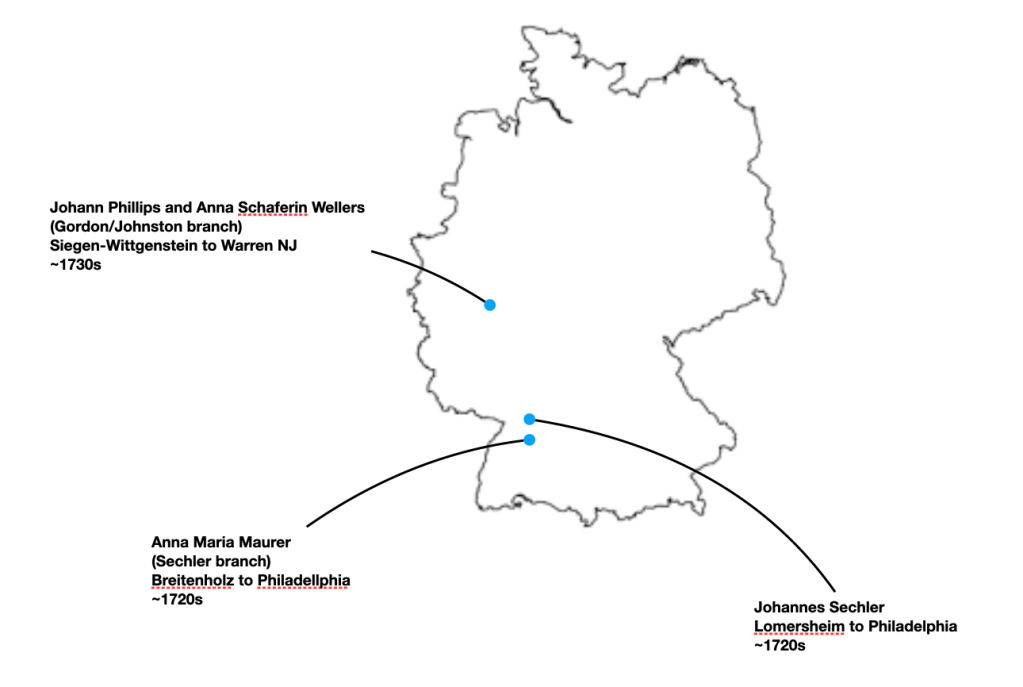
Every one of these people must have struggled, if not agonized, over their decision to leave their homeland to come to the new world, usually never to return. We owe our existences to the fact that each and every one of them decided to go through with it.
Our Wright Origins in America
 We have a pretty good understanding of our Wright ancestors back through the Prince Edward Island generations, but we have not yet looked at the generations prior to the American Revolution. The Wrights’ immigration to Connecticut in the 1880s was the family’s second immigration to New England. What can we say about the first?
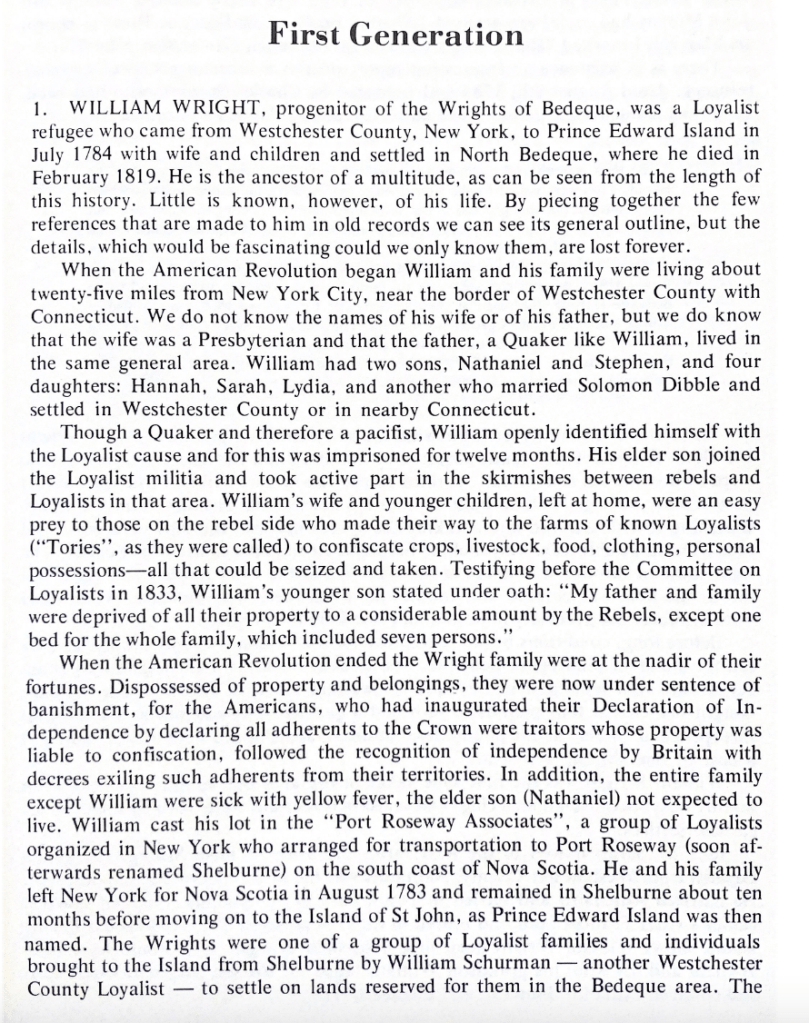
Family genealogist Doris Muncey Haslam surely tried to answer this question, but failed to come up with a definitive answer. Her summary of the life of fifth great grandfather William Wright takes us to the limit of what she was able to discover…
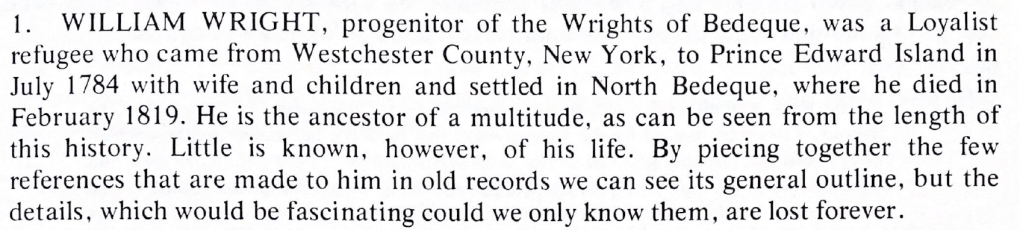
Sources agree that William was born around 1743, which is consistent with the timeline that he married and had son Nathaniel before the Revolution. Various versions of the Wright family tree available on Ancestry show that William is believed by many to have descended from the Wright dynasty in Oyster Bay, Long Island, New York just across the Long Island Sound from Westchester County (between New York City and the southwestern Connecticut border). However, these trees are suspiciously lacking in evidence, and this appears to be an instance of the common situation where many family genealogists copy each others’ family trees without adequate supporting evidence. If it was easy to link William Wright to the Wrights of Oyster Bay, Doris Haslam surely would have done it.
But with the hint of a possible link to Oyster Bay, we can turn to a 1923 genealogy, The Wright Family of Oysterbay Long Island, compiled by Howland Delano Perrine in 1923 for clues.
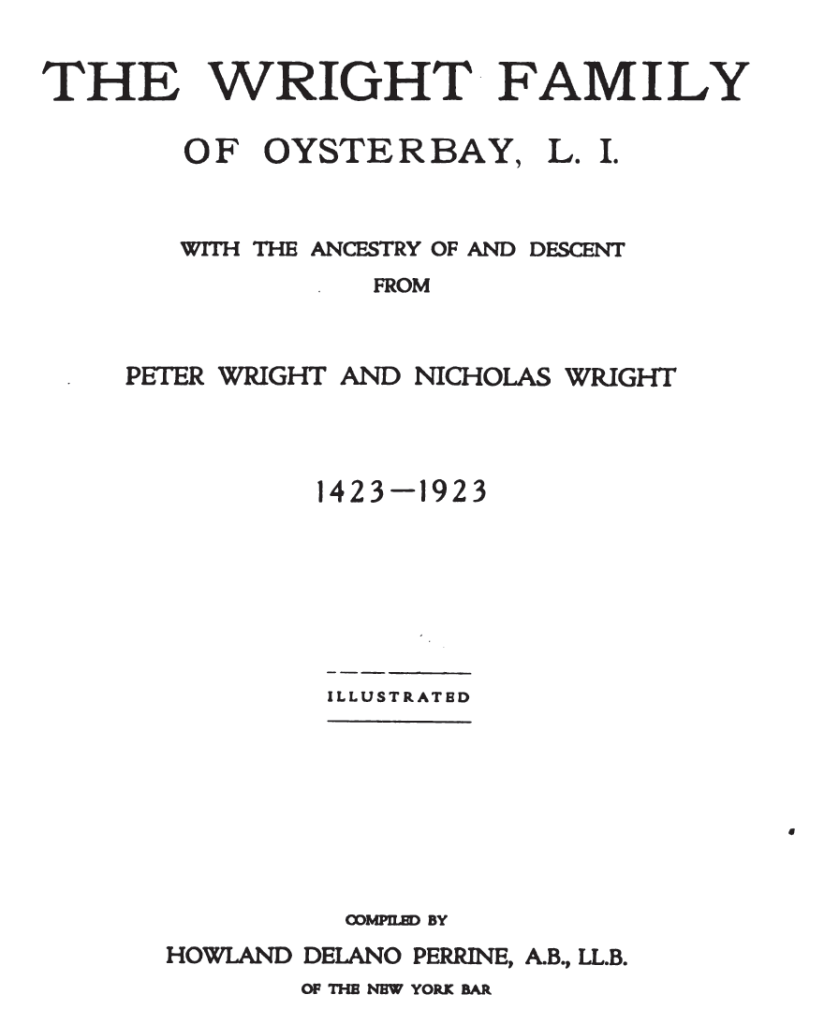
The details of the Perrine genealogy provide no direct link to our William Wright of Westchester (nor any pattern of consistency with the speculated relationships shown in most of the trees on Ancestry). But neither does the Perrine genealogy disprove the possibility of a link from Oyster Bay to Westchester, as it focuses on a specific group of Wrights in Oyster Bay, so is not comprehensive.
The introductory chapter of the Perrine genealogy does contain the following helpful observations…
…As my researches progressed the work became more and more difficult by reason of there being two families of the name “Wright” on Long Island at the same period, and settled but a short distance apart, viz. : the Wrights of Oyster Bay, and the family of Jonathan Wright of Flushing, separated by only eighteen miles. The public, church and other interesting records were full of items relating to both these families, and, to add to the difficulties and confusion of the work, intermarriages had occurred, and so, with the similarity of the name, making it very difficult, and in some instances almost impossible to properly sift and correctly distinguish the data. Neither of these Wright families were in any way related, the Oyster Bay family hailing from County of Norfolk, while the Flushing family hailed from County of Essex, in England.
This Jonathan Wright, of Flushing, was born in 1620, came to America on the ship “Safety,” and landed in Massachusetts Colony in 1635, first settling at Saugus, and subsequently making a final settlement, some time prior to 1664, at Flushing, becoming very prominent in the affairs of that community. Later a large number of that family crossed Long Island Sound, and settled at various localities in the present counties of Westchester, Putnam, and Dutchess, as did, about the same time, some of the Oyster Bay family, and thus again we find the old records intermingling; intermarriages occurred, adding further to the difficulties of the searcher…
from The Wright Family of Oyster Bay, Long Island, compiled by Howland Delano Perrine, 1923
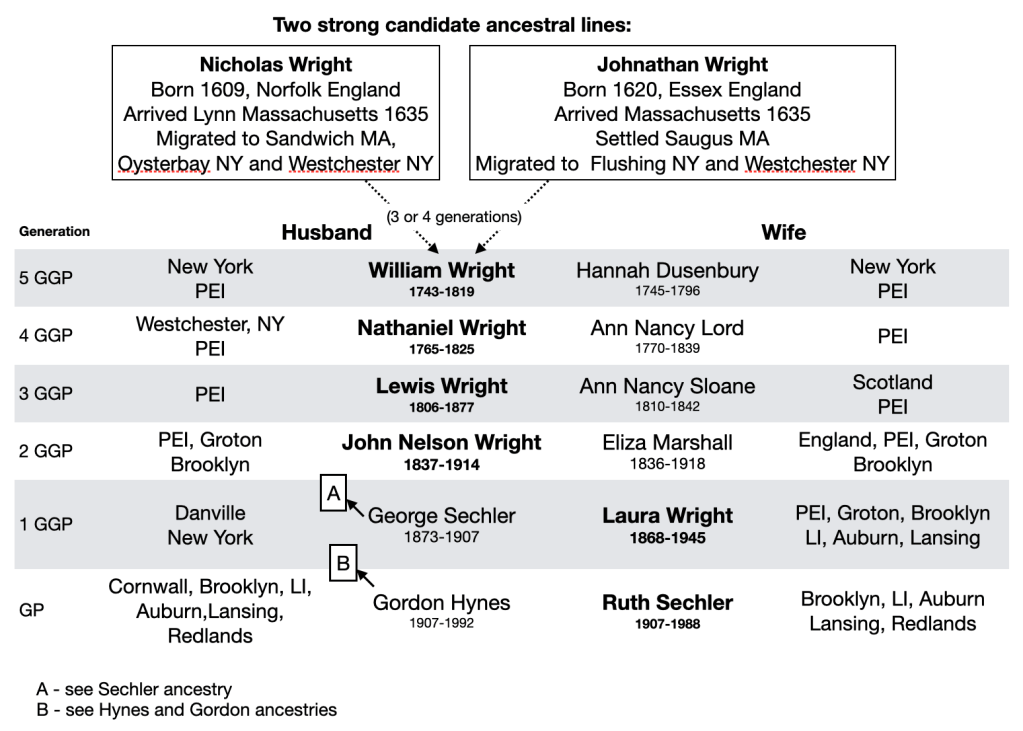
Whether Perrine was looking for our William Wright or some other Wright(s) from Westchester and/or the Hudson Valley, it is evident that he did as exhaustive a search of potential Wright roots in this area as anyone had done to that time, given how common the Wright name is, and given the complications of two separate Wright families having settled in there in the years prior to the Revolution. Perrine’s conclusions seem to justify a reasonable confidence that either the Oyster Bay Wrights (under patriarch Nicholas as identified later in Perrine’s book), or the Flushing Wrights (under patriarch Jonathan) were the the original ancestors of William in New England.
Both of these ancestral lines trace back to settlements in the area of Lynn Massachusetts around 1635. Nicholas Wright’s clan came to Lynn from Norfolk England, then migrated to Sandwich MA (on Cape Cod) before settling in Oyster Bay. Johnathan Wright’s clan came to Saugus MA (next to Lynn) from Essex England and later migrated to Flushing.
This is about as far as we can take it–we have two primary theories on the Wrights’ first immigration to New England, both in 1935. We do not have proof of any specific lineage to William Wright of Westchester and P.E.I., and we must leave open the possibility that neither theory is correct, so I will label these two theories as “strong candidates” and leave it at that.
The following is my best-estimate summary view of our Wright roots in New England.
Click here to see the ancestral migrations map updated with this information.
August Commemorations
- Died Wednesday August 3, 1921 (100 years ago) in Ontario, California. Elizabeth Smith, 2nd great grandmother, mother of Annie Calderwood
- Married Tuesday August 12, 1890 (131 years ago) in Mankato, Minnesota. Henry Swan and Mattie Tuttle, great grandparents
- Born Sunday August 23, 1840 (181 years ago) in Topsham, Maine. Edward Sandford, great grandfather
- Born Wednesday August 26 1863 (158 years ago) in Thorntown, Indiana. Henry Swan, great grandfather
The Wrights of Bedeque, Prince Edward Island–A Genealogy Written by Doris Muncey Haslam
With the recent reopening of the Library of Congress comes the opportunity to catch up on my backlogged list of genealogical and historical texts that are out of print but have not been digitized. One such book is the two volume The Wrights of Bedeque, Prince Edward Island, a Loyalist Family is the definitive source on our Wright ancestry back to our 5th great grandfather William Wright.
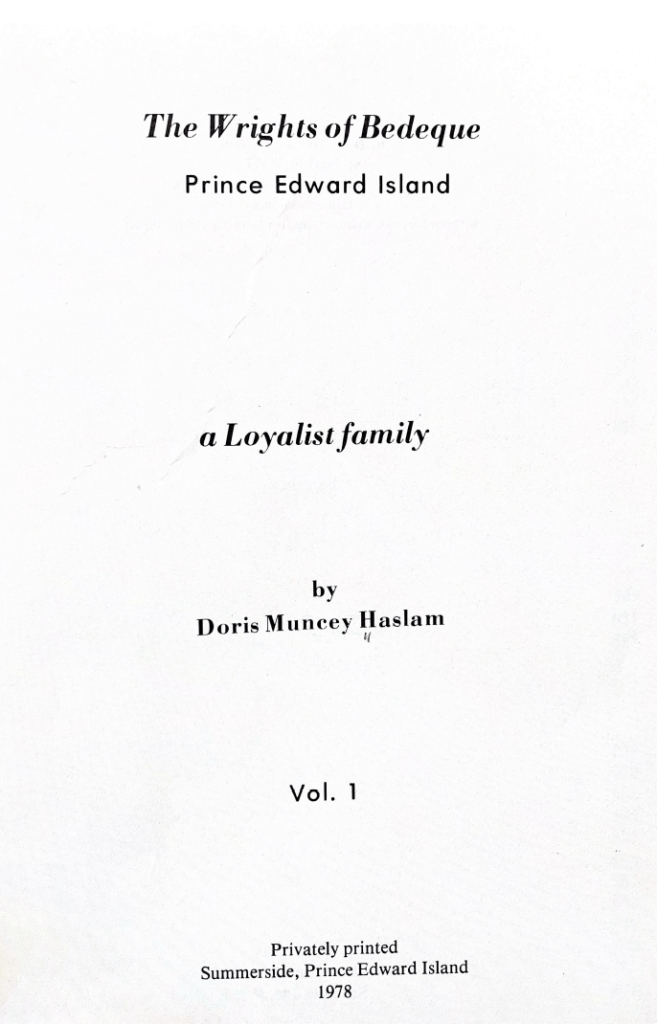
We have previously cited the work of Doris Muncey Haslam, a distant cousin also descended from William Wright. William’s full story, provided below, does not contain any new revelations. In particular, Haslam did not determine the origins of the Wright family in America prior to being expelled to Prince Edward Island at the end of the Revolution. (There are other sources which may shed light on this, which we will describe in future posts.)
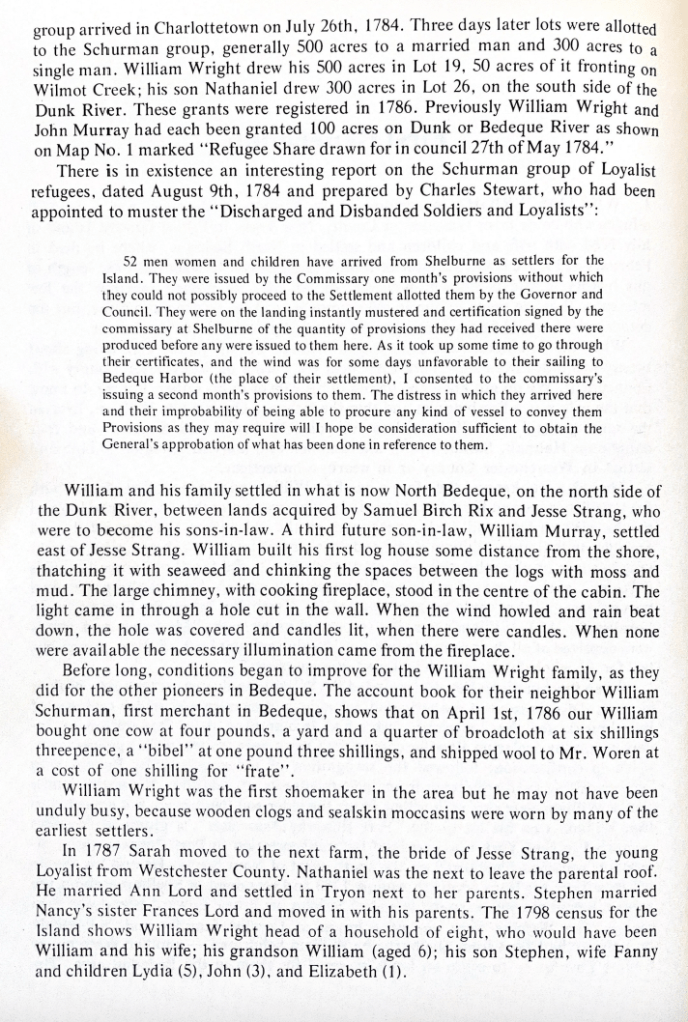
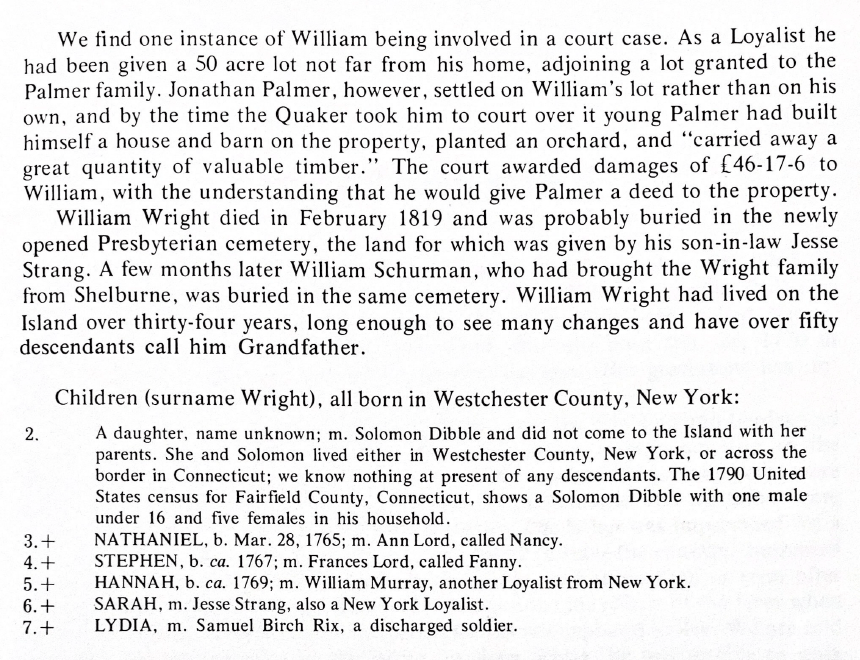
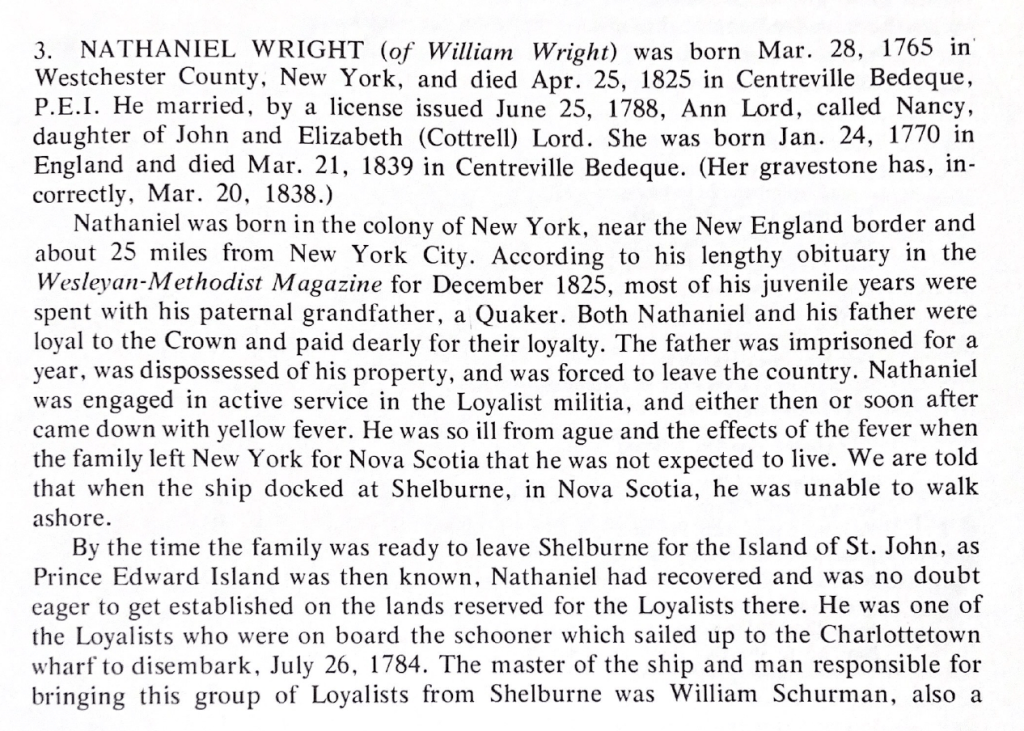
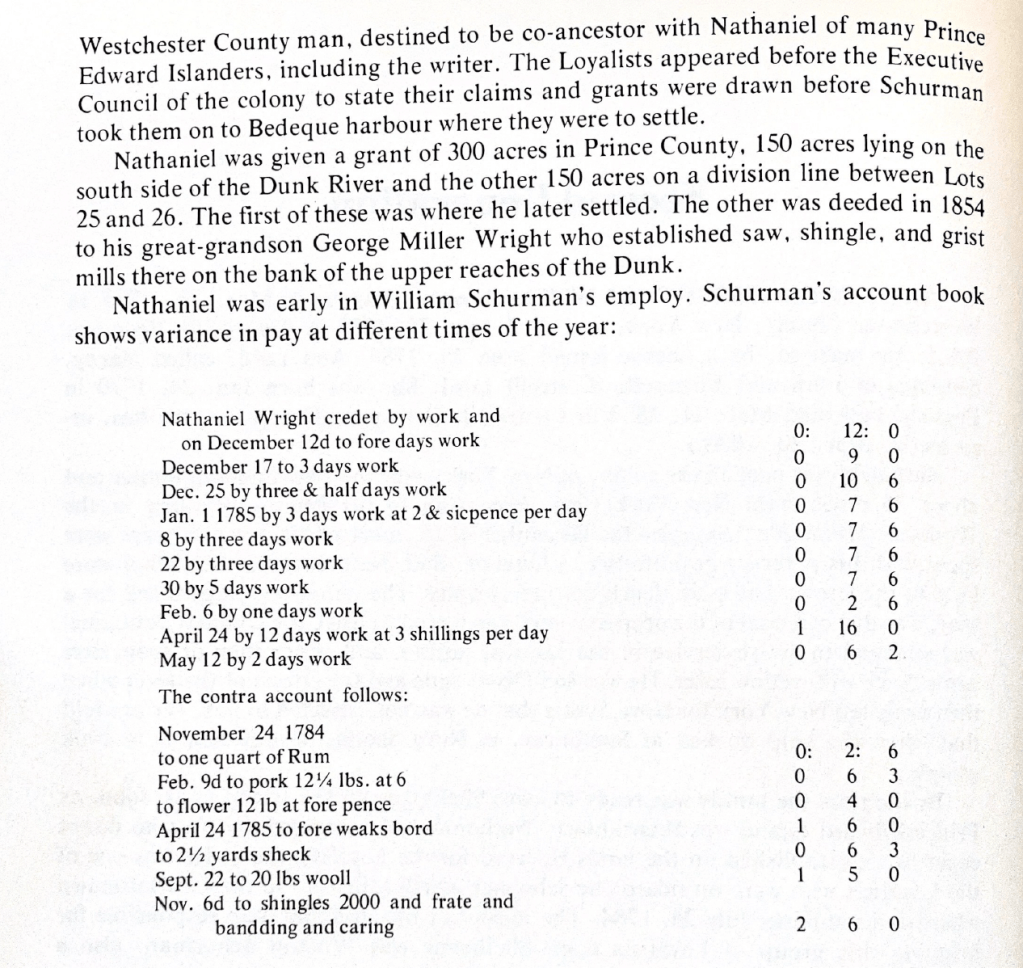
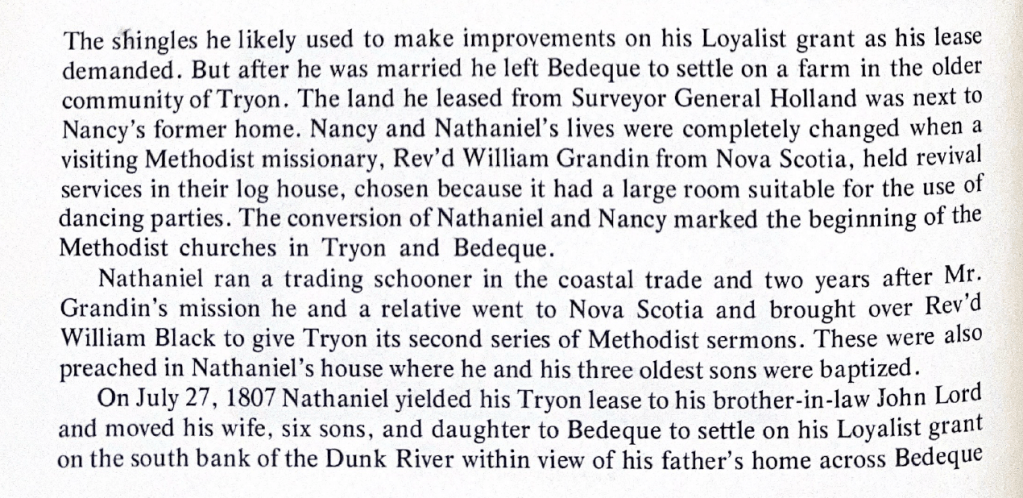
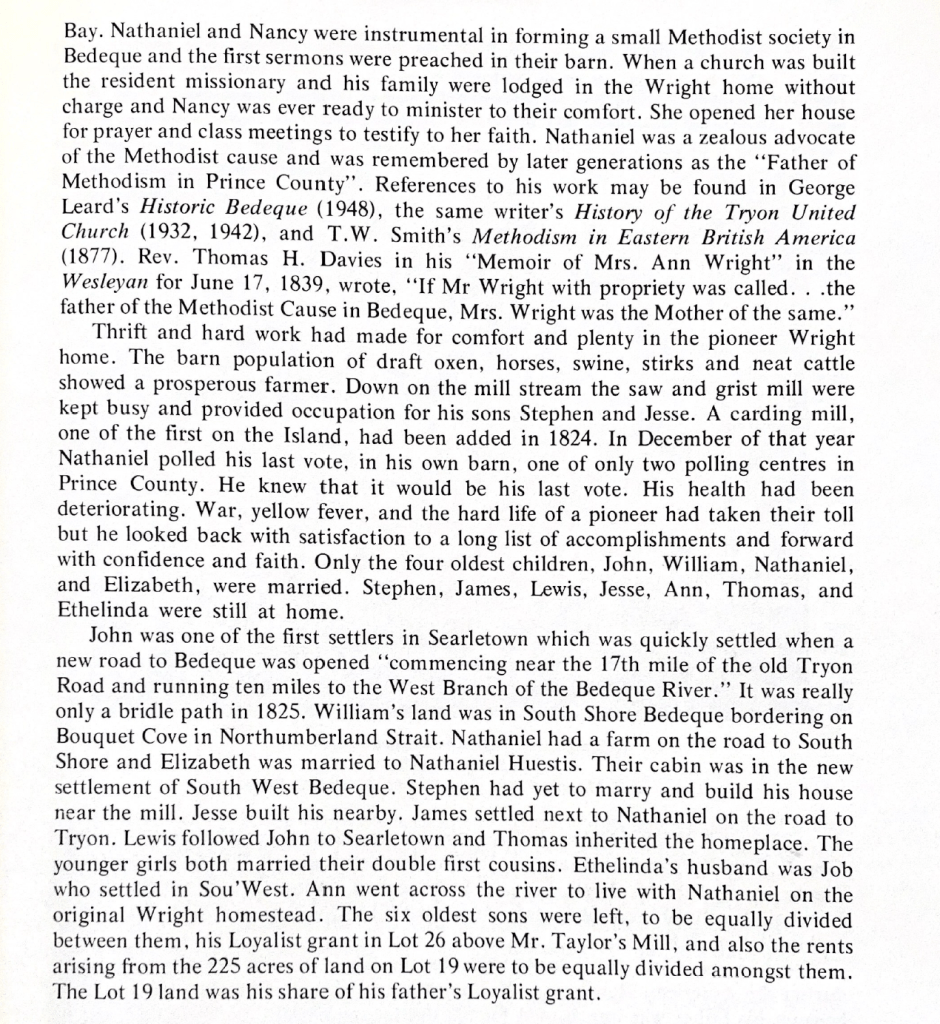
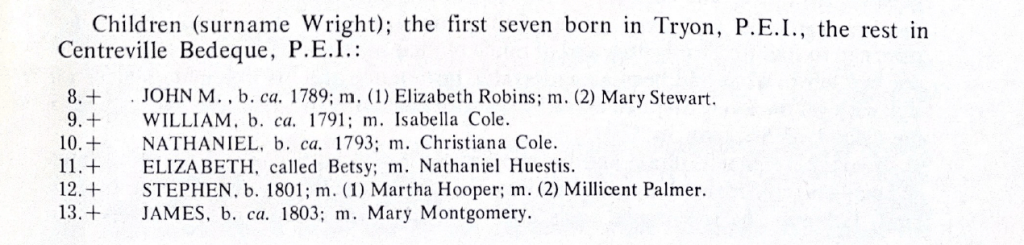
Haslam’s description of 4th great grandfather Nathaniel Wright also does not significantly differ from previously discovered writings.

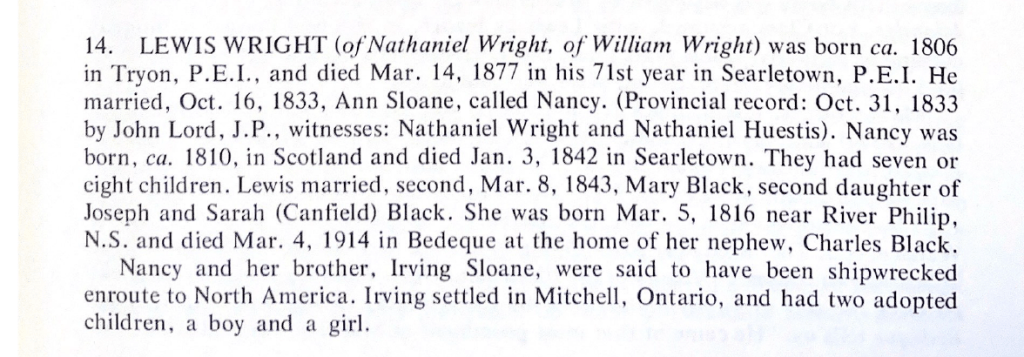
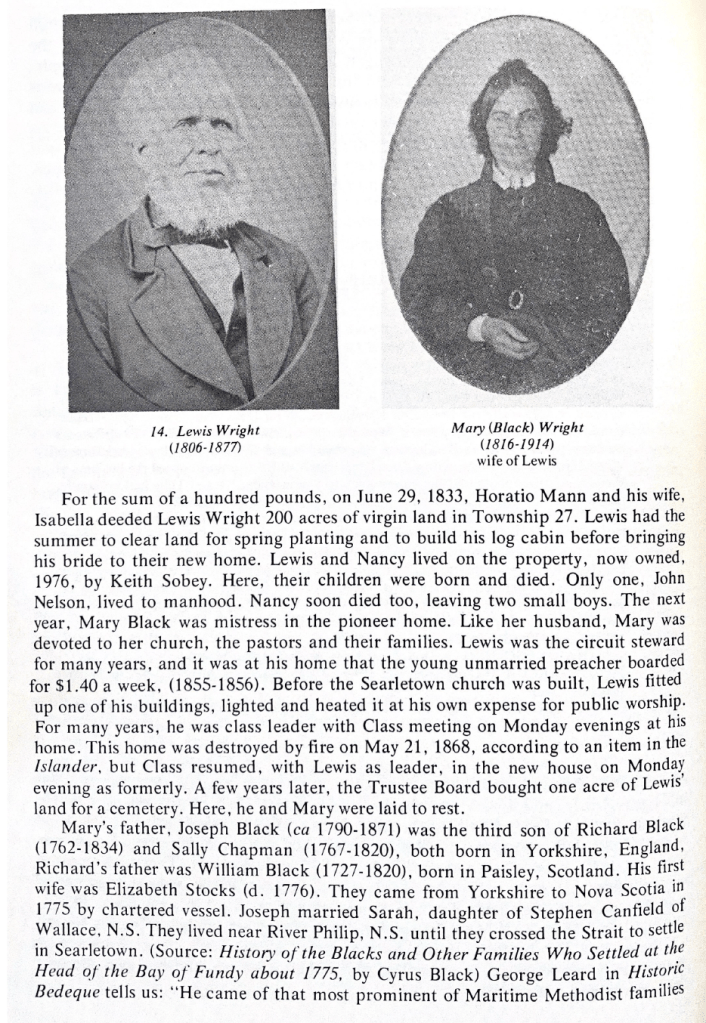
3rd great grandfather Lewis Wright is the first of our ancestors to be born on the island. We now have a picture of him (and his second wife, who was not our ancestor), as well as a reference to the shipwreck of our 3rd great grandmother, Nancy Sloane, en route to North America (another in the long list of incidents that nearly precluded our future existence).
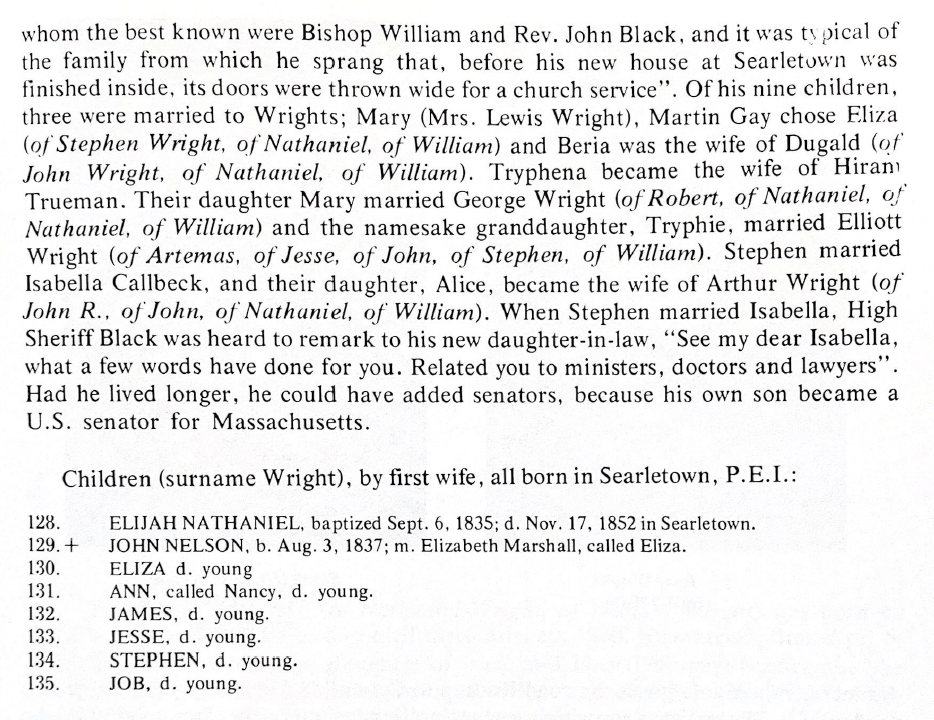
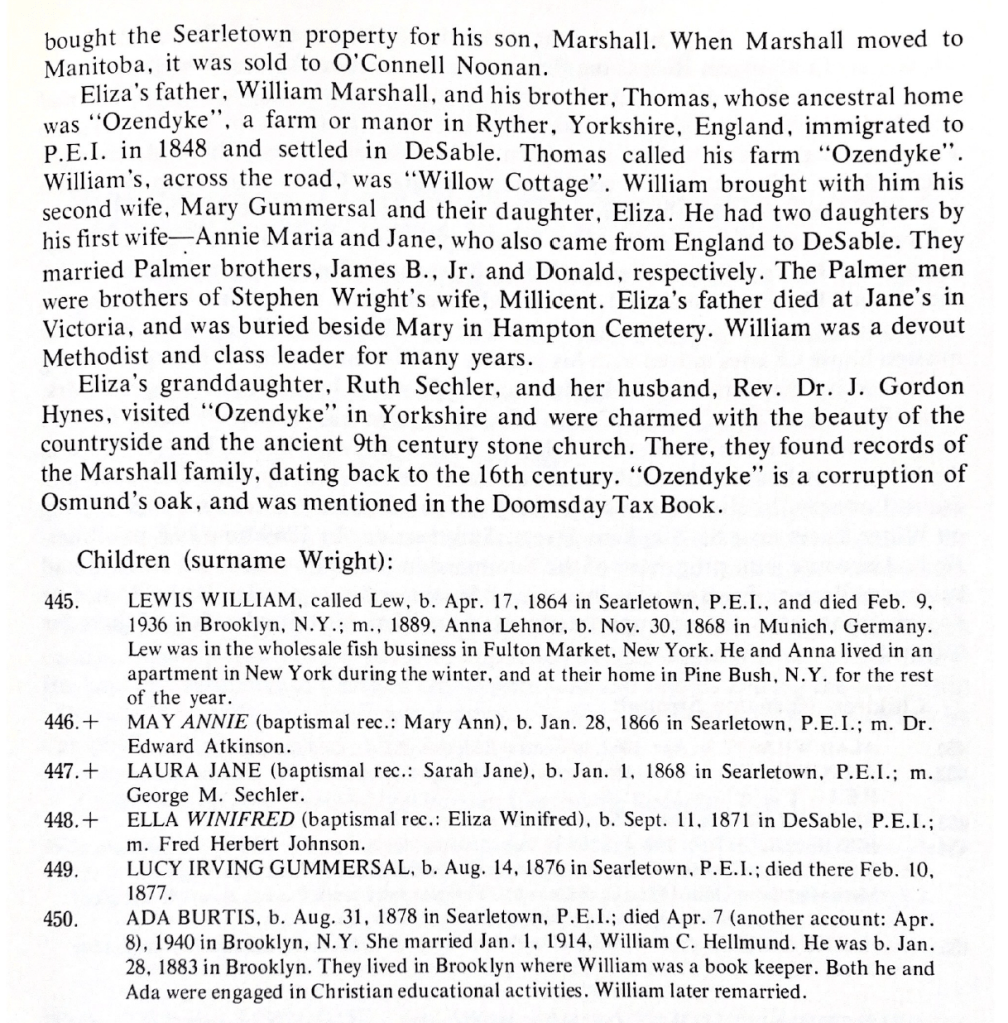
The description of 2nd great grandparents John Nelson and Eliza Marshall Wright provides new information on the family’s decision to return to the United States in the 1880s, although the family’s residence in Groton, Connecticut prior to coming to Brooklyn is not mentioned.
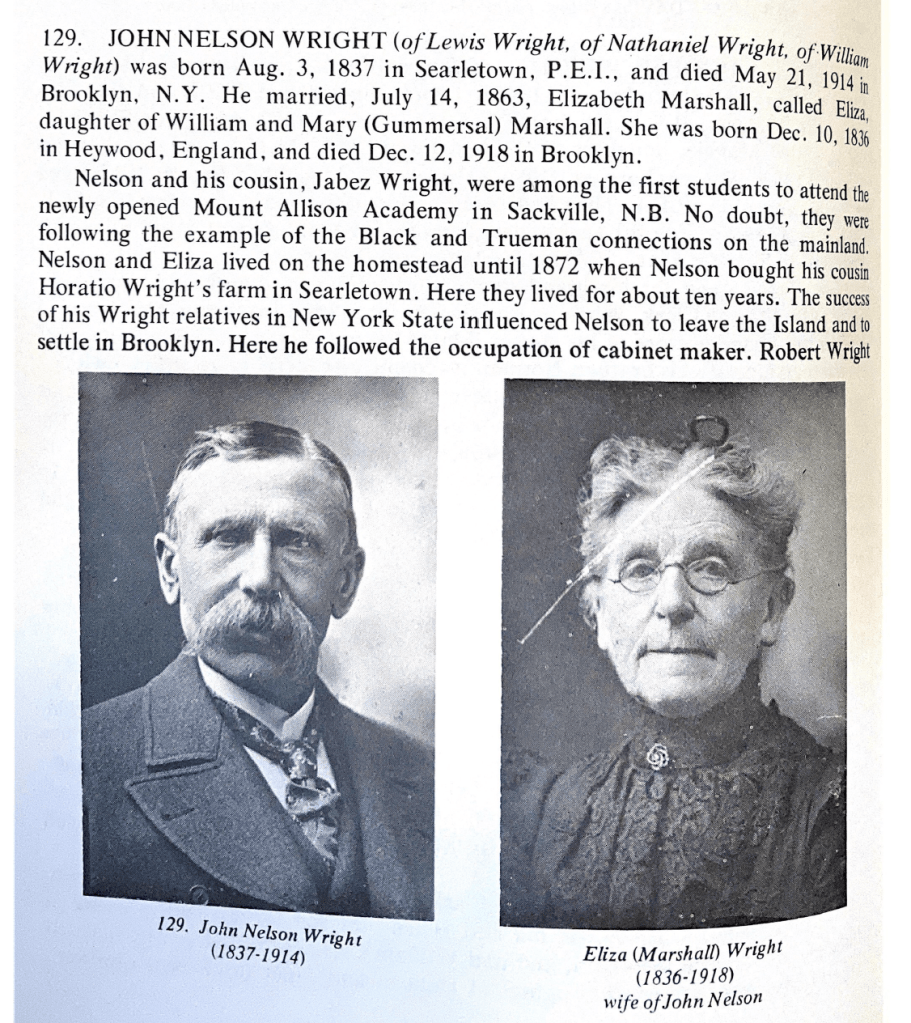
The genealogy continues with descriptions of our great grandmother, Laura Wright, her sister Winifred, and our grandmother Ruth.
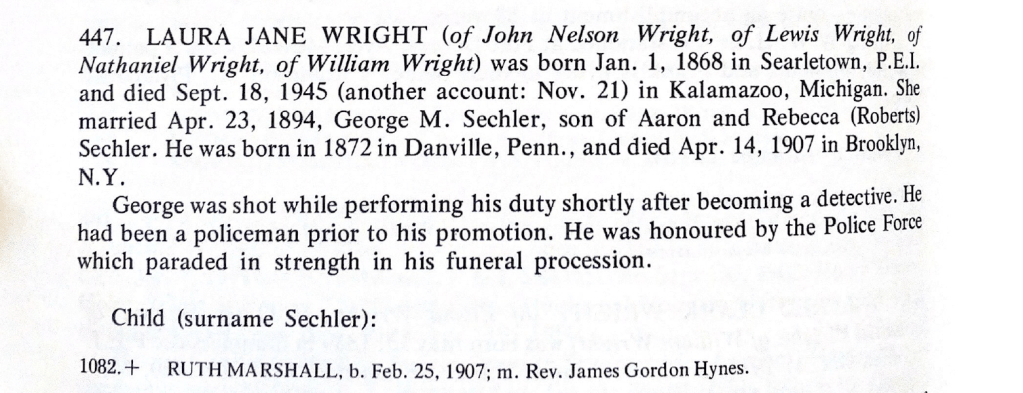
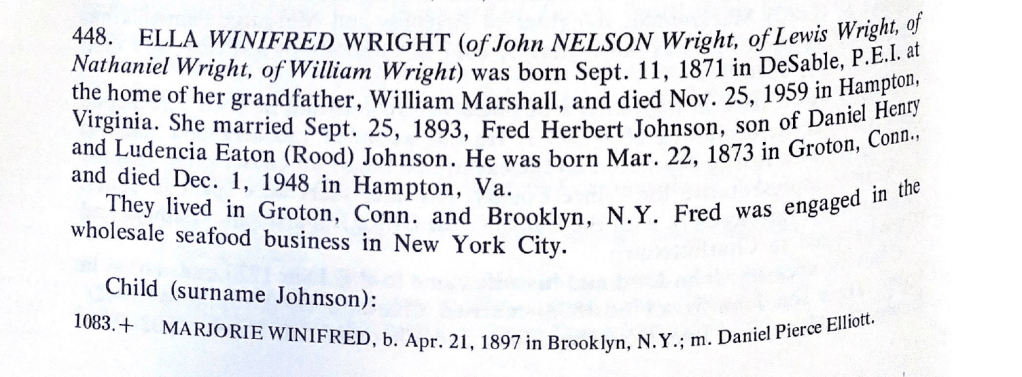
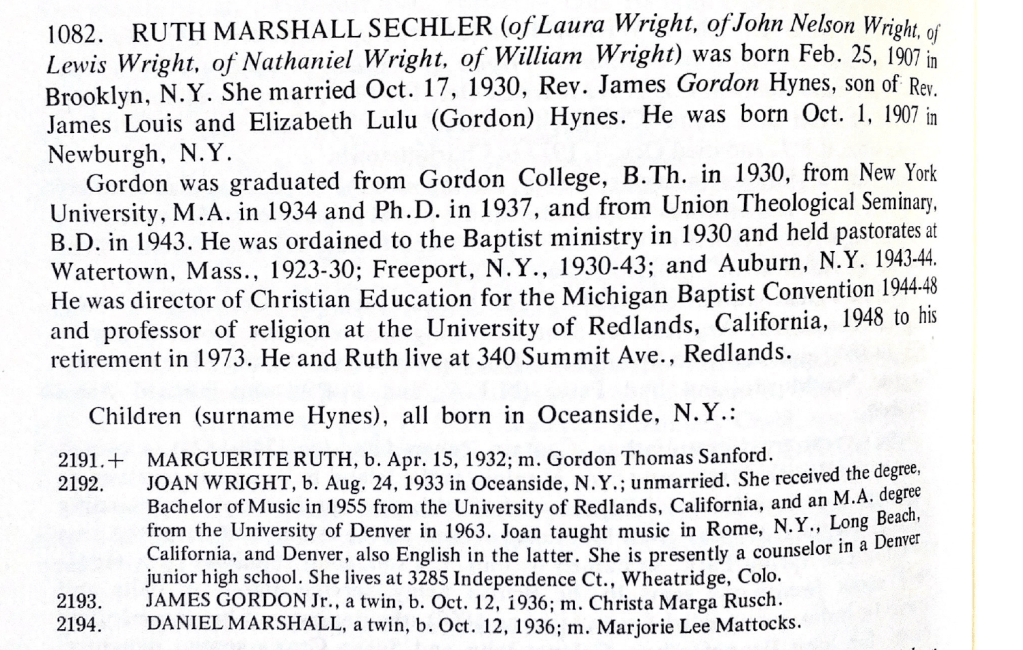
Haslam’s book was published relatively recently, in 1978. As such, it is the first of the many genealogies I have reviewed that continues all the way down to our generation.
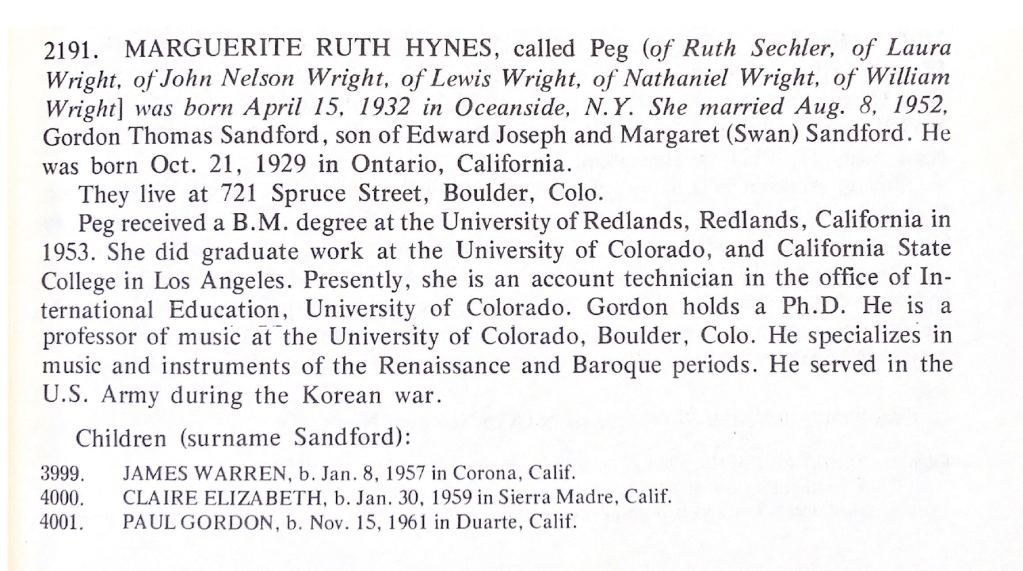
The preface to Haslam’s book includes a description of the process she used to compile the information. Typical of the processes used for these books, she had inherited and accumulated information on the family roots, refining it over many years. She then distributed questionnaires to widely-scattered descendants, asking them to fill out the branches of the family tree. It surely was our grandfather and/or grandmother who provided information for us–our grandfather, being the genealogy enthusiast, probably did much of the work. (Further evidence of their involvement comes from the description of their visit to Yorkshire, given in the section of Eliza Wright, shown above.) Mom does not remember any references to this being done during the 1970s.
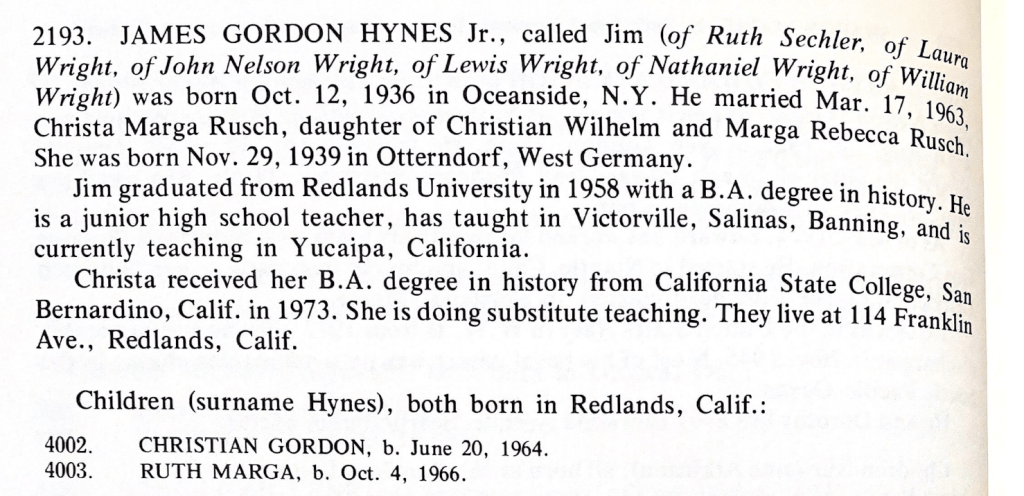
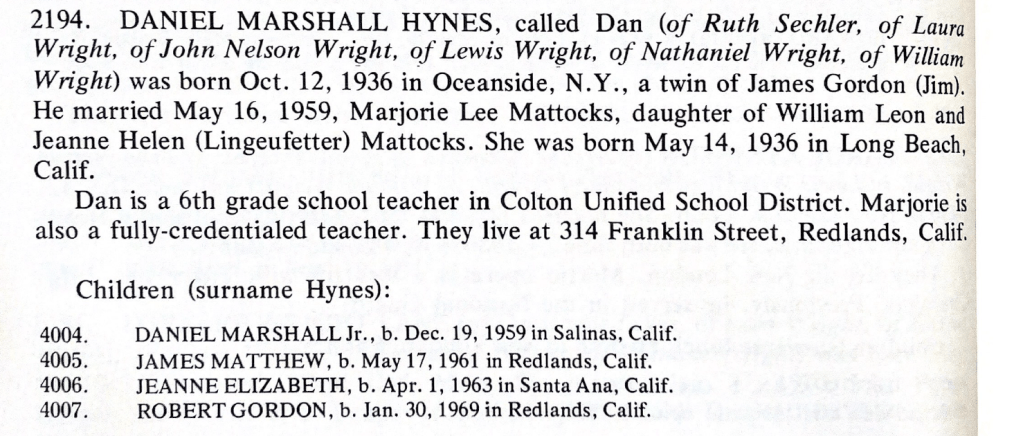
Completing the cycle are the descriptions of our uncles and cousins. (Details on our distant cousins in the Norfolk region are also published, at a similar level of detail.)
The Founding Wrights of the Connecticut Colonies
 Having discussed Sandford and Tuttle origins in early colonial Connecticut, we now turn to another founding family, the Wright branch of Janelle’s family. The ancestors of her maternal grandfather, Arthur Wright, came to New England as early as the mid 1630s, establishing homesteads in Massachusetts, Connecticut, and Rhode Island.
(As a reminder, there is no known connection between Janelle’s Wright ancestors and our Wright ancestors, who came to Connecticut from Prince Edward Island in the 1880s.)
A 1913 genealogy compiled by Janelle’s distant cousins William Henry Wright and Gertrude Wright Ketcham (which we will henceforth refer to as the Wright Genealogy) provides details on Janelle’s Wright ancestry as well as a clearly written summary of the first migrations from the Massachusetts colonies to the new Connecticut colonies.
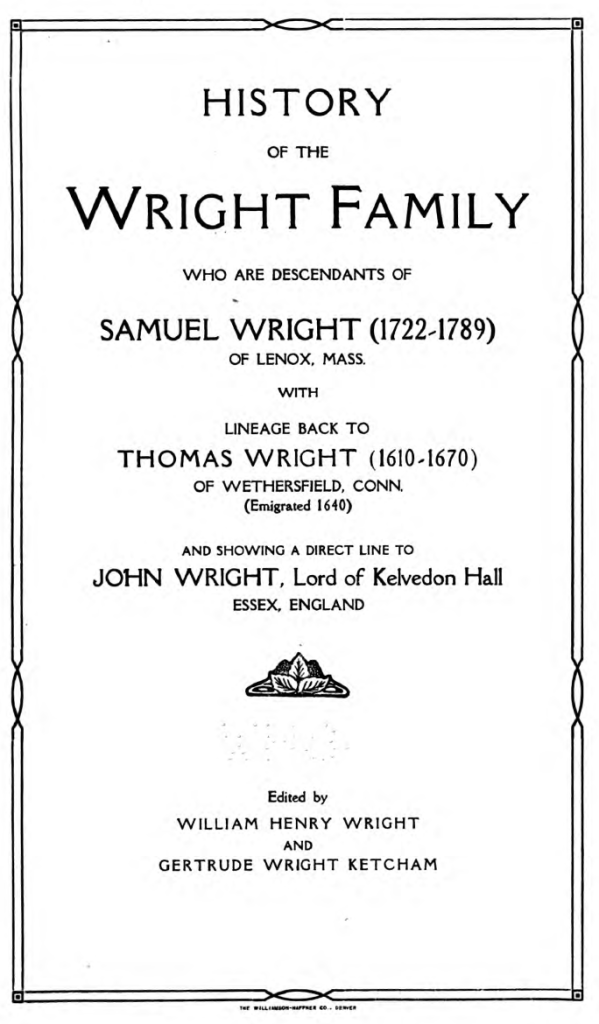
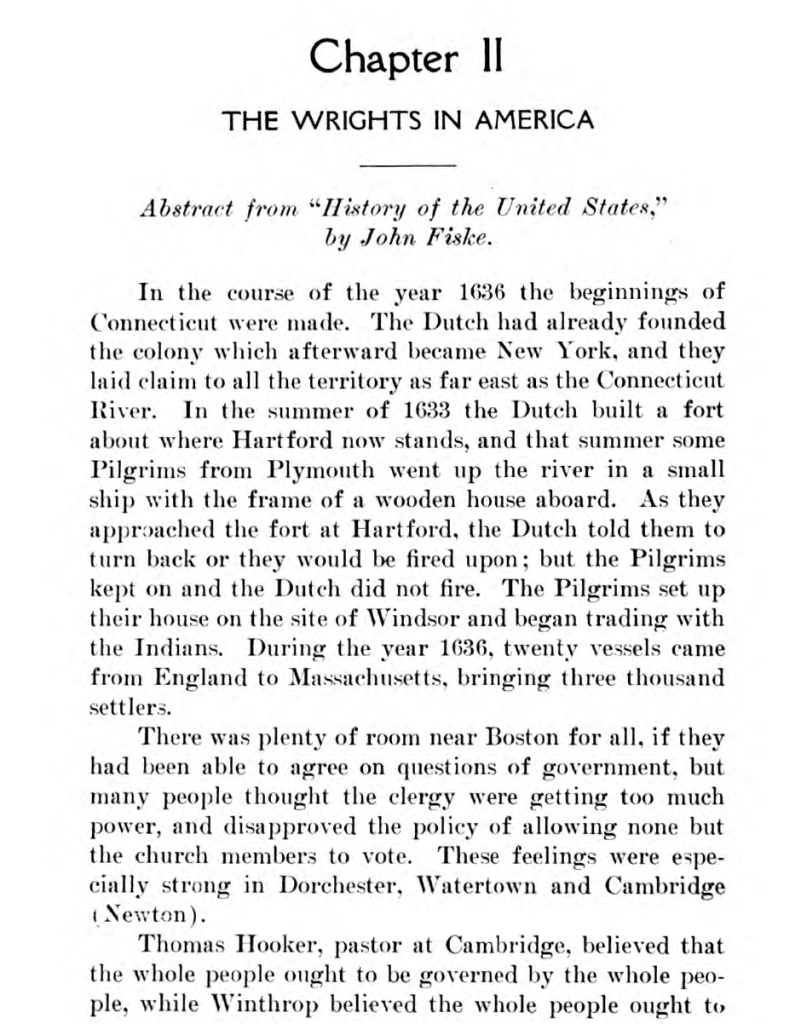
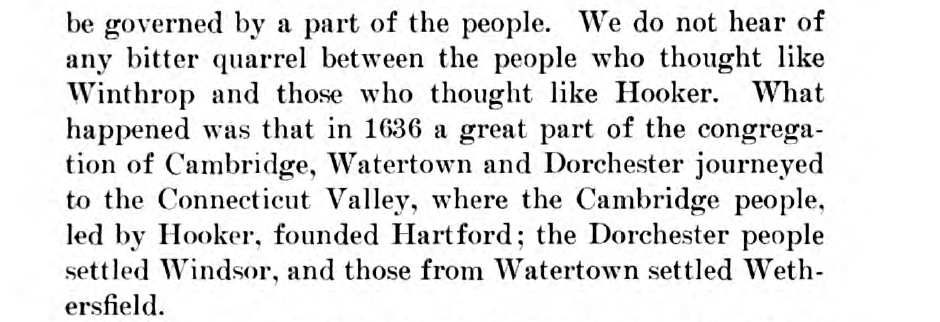

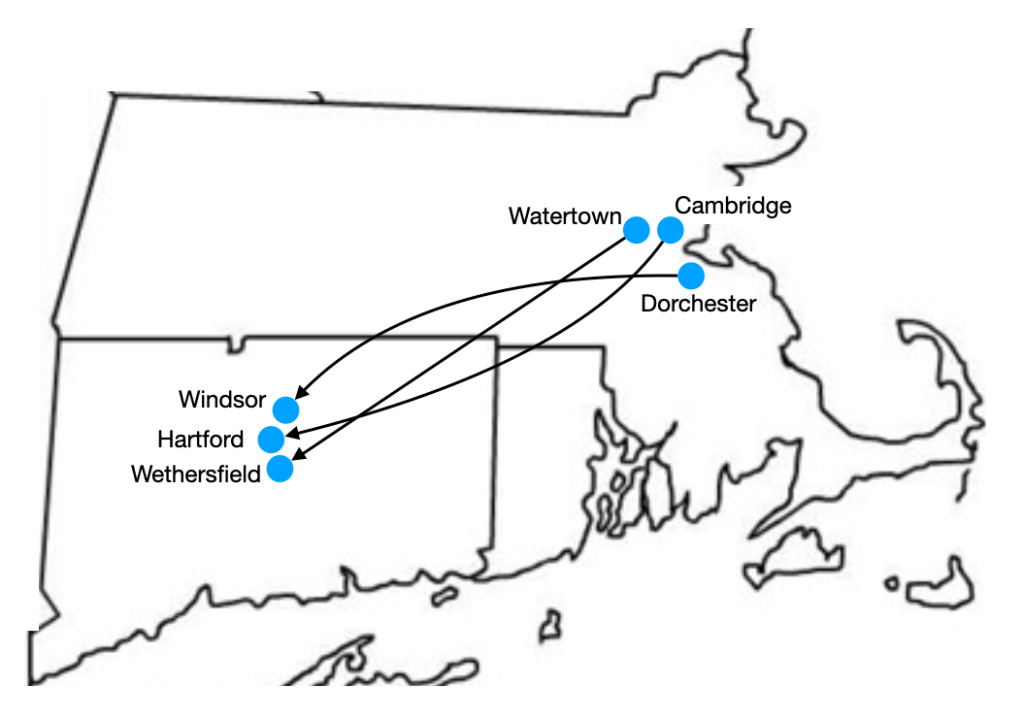
Janelle’s Wright ancestors came to Wethersfield, Connecticut via Watertown, Massachusetts. Our Sandford ancestors (and uncle Andrew Warner) came to Hartford via Cambridge, Mass.
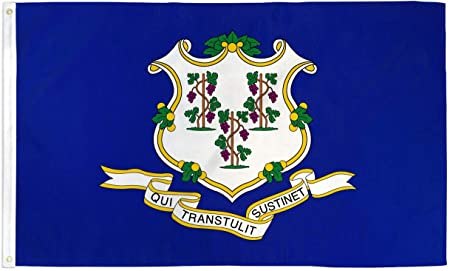
The Connecticut flag has three grapevines, depicting its three original settlements. The Connecticut motto Qui Transtulit Sustinet is problematic in its translation, but roughly means “he who transplanted still sustains”. The meaning of the motto is also problematic but, based on the background above, seems to mean “the sooner we get away from Massachusetts, the better“.
Wethersfield was founded in 1634 and is today considered the oldies city in Connecticut (today it is essentially a residental part of the greater Hartford area). The Wrights, although not among the ten original Wethersfield founders were among its original settlers.
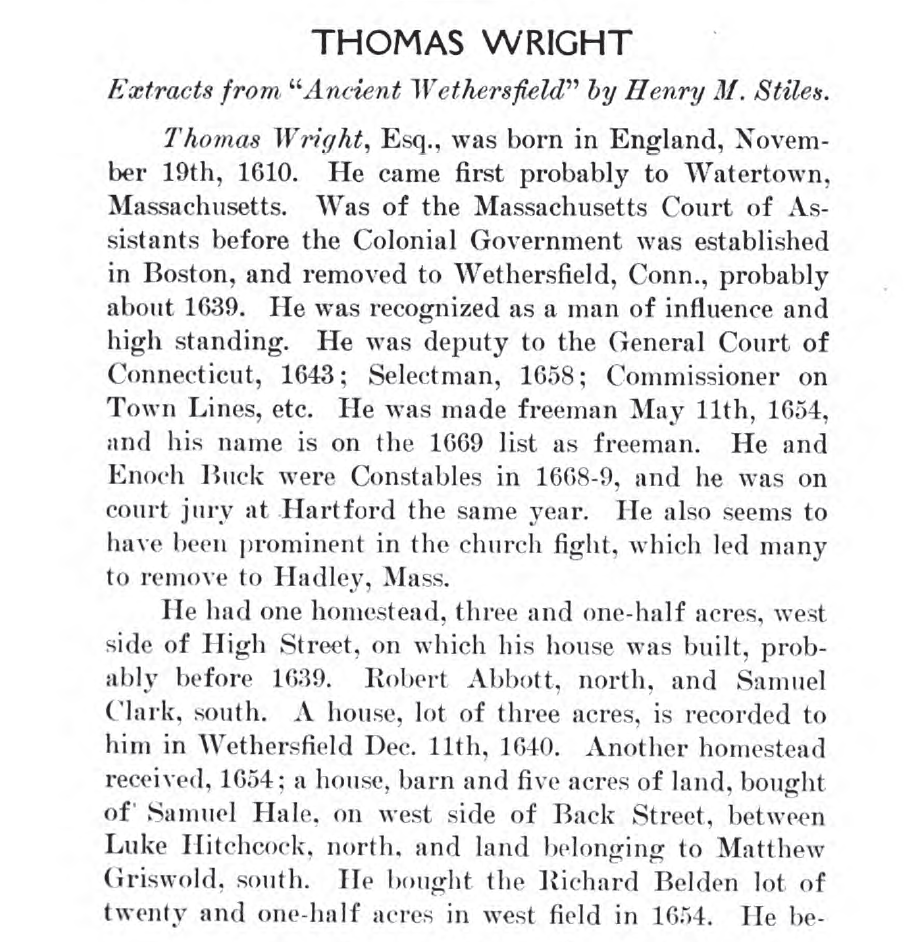
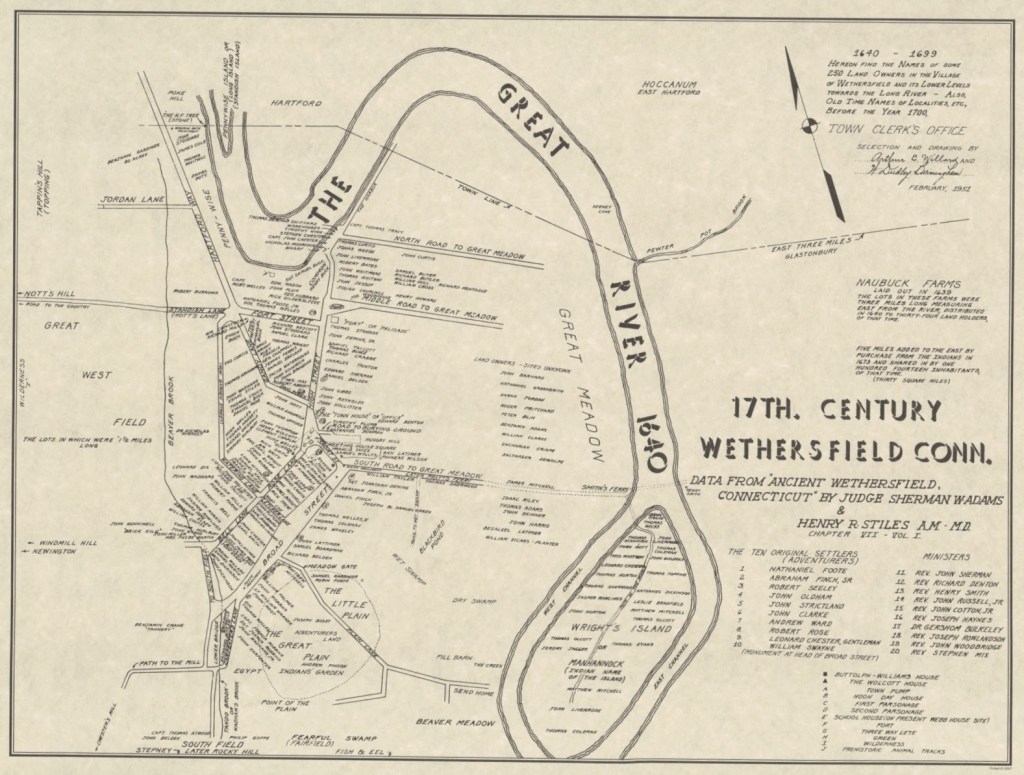
The Wright Genealogy gives details on the life of Thomas Wright, Janelle’s 8th great grandfather, and Wright Island in the Connecticut River, the site of the original Wright homestead in Wethersfield.

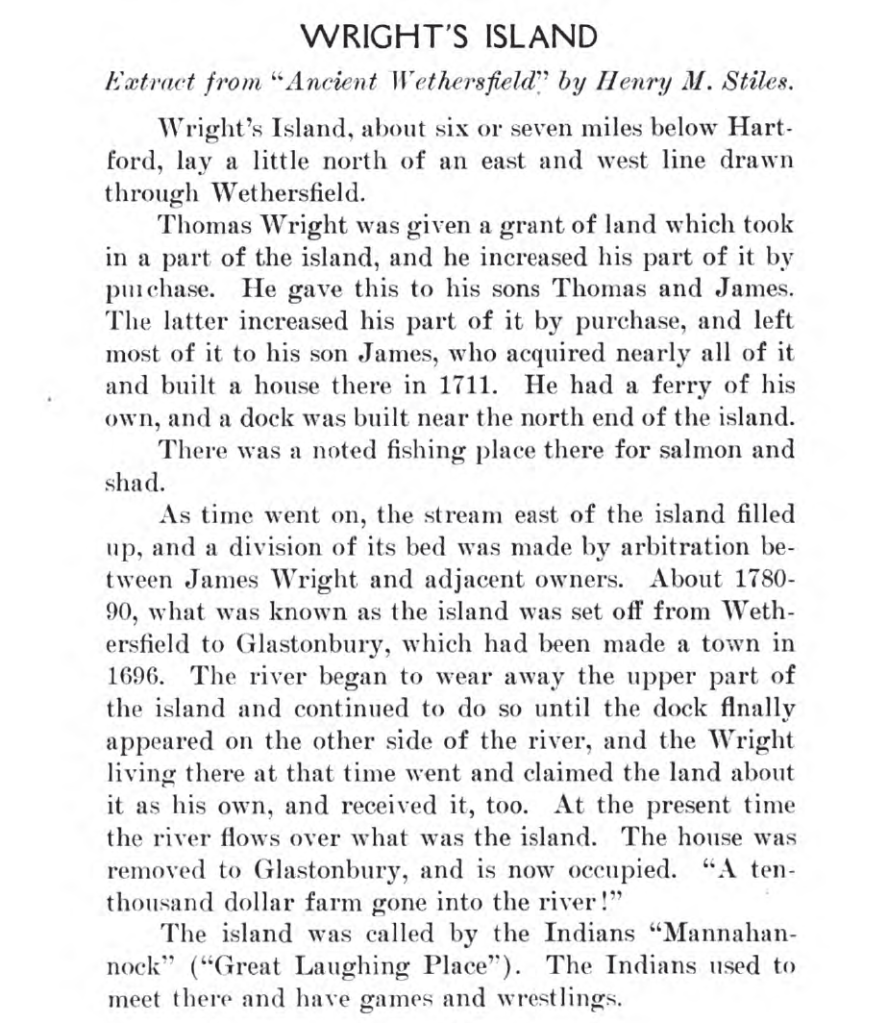
Wright Island no longer exists, having long ago been washed away by the Connecticut River. A recreated 1640 map shows it’s former position relative to the town.
The Wright Genealogy provides information on Janelle’s ancestry down to the level of her 4th great grandfather, Moses Wright.
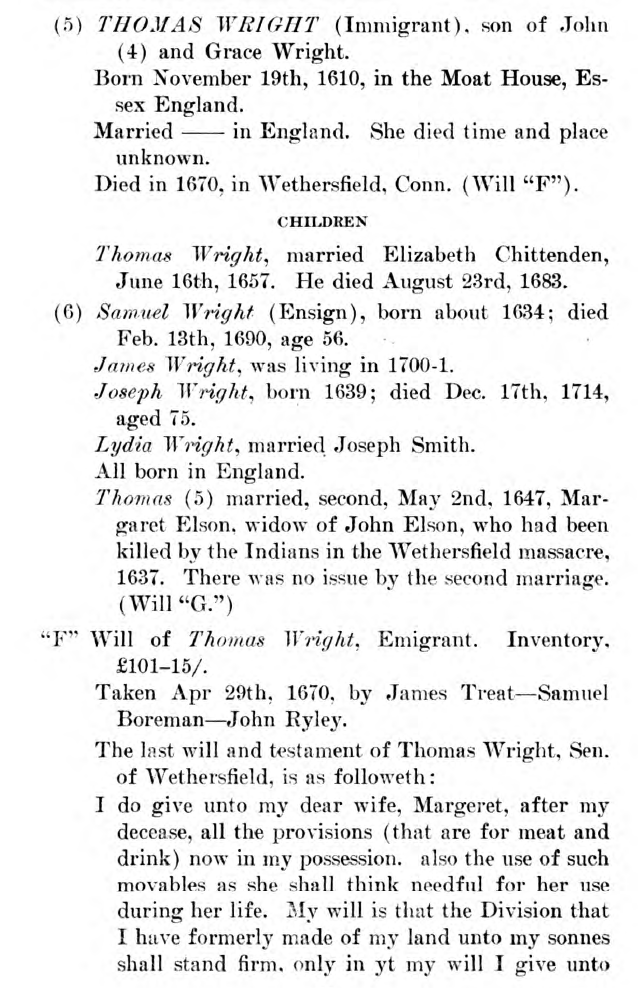
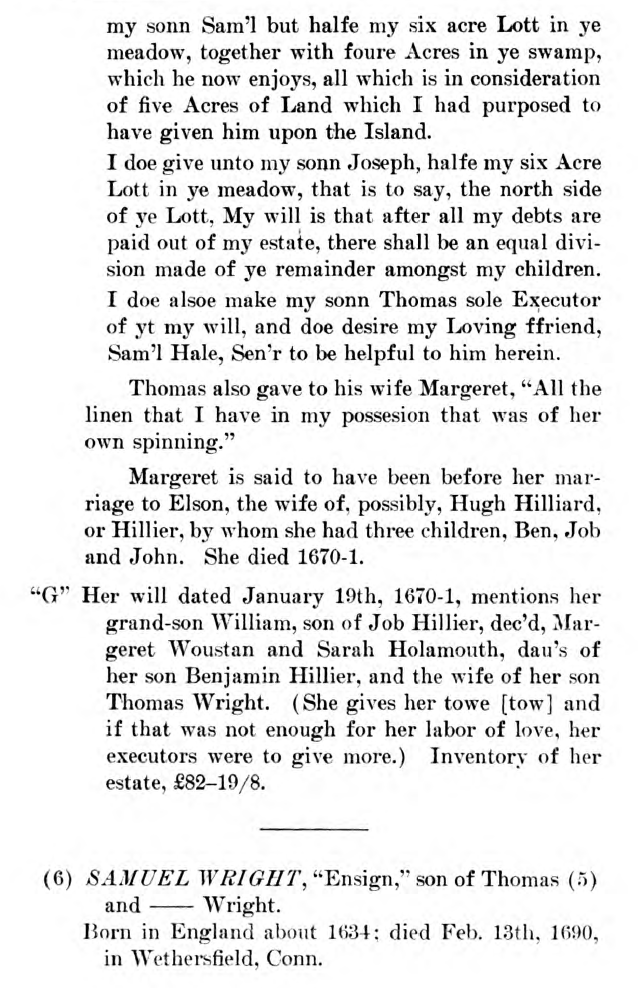
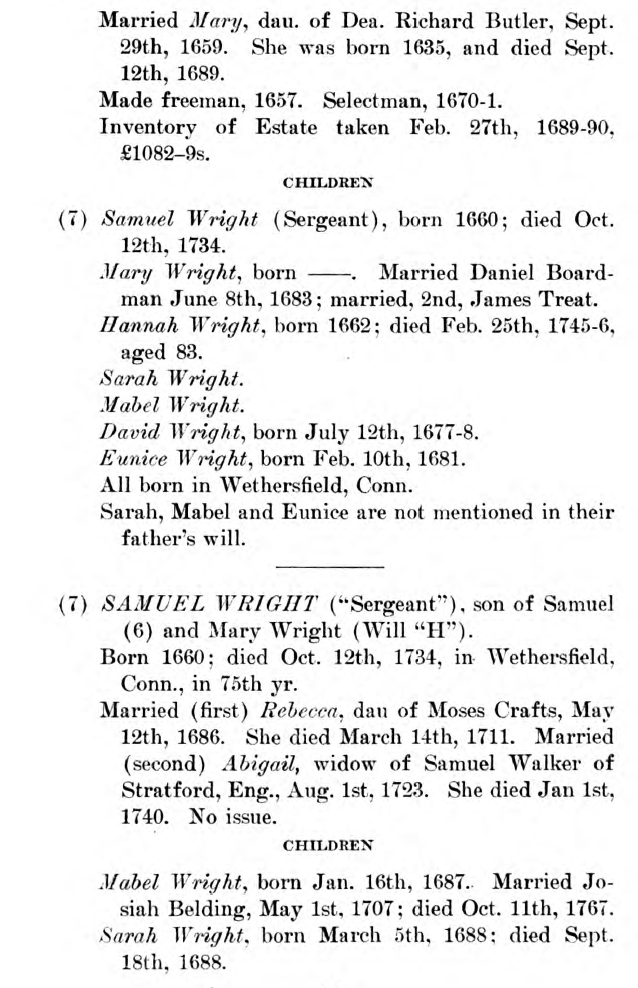
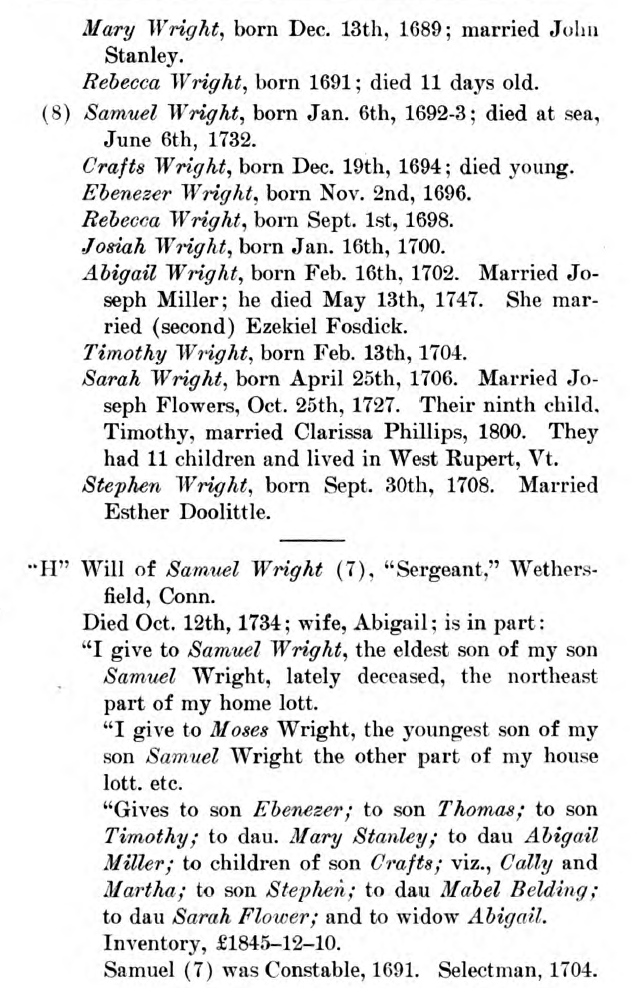
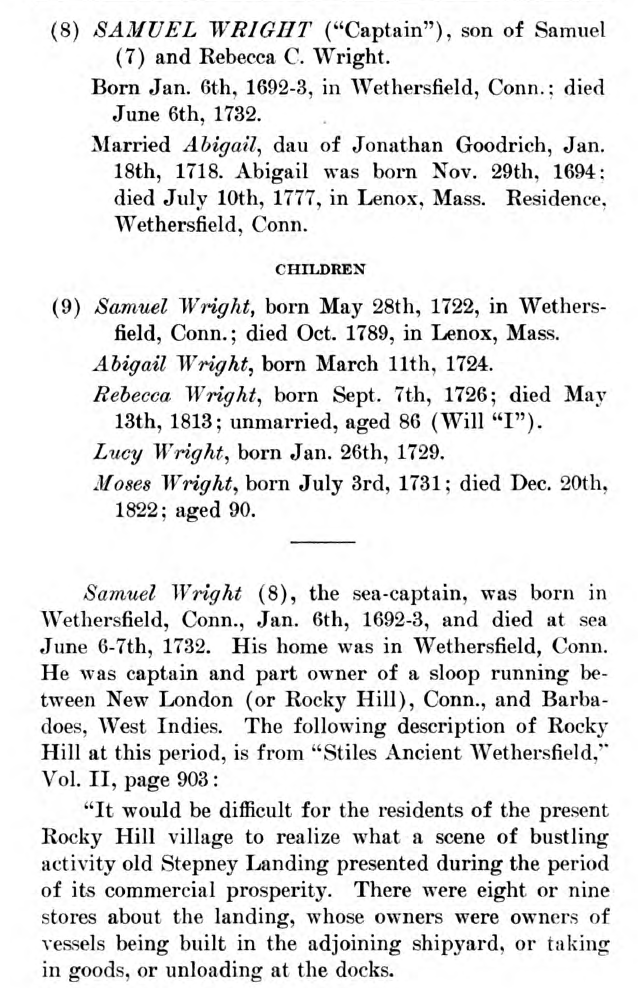
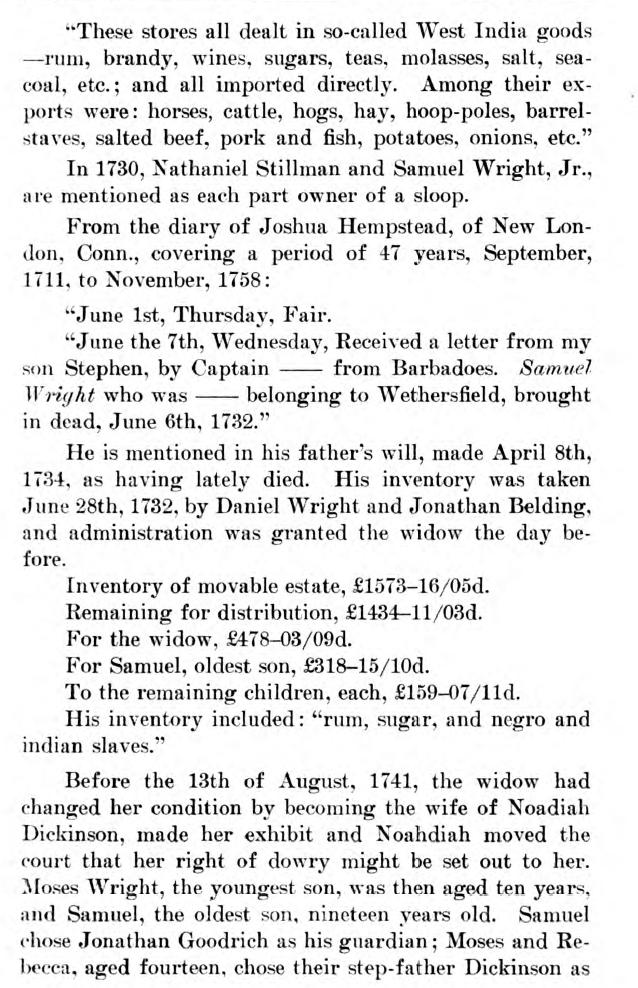
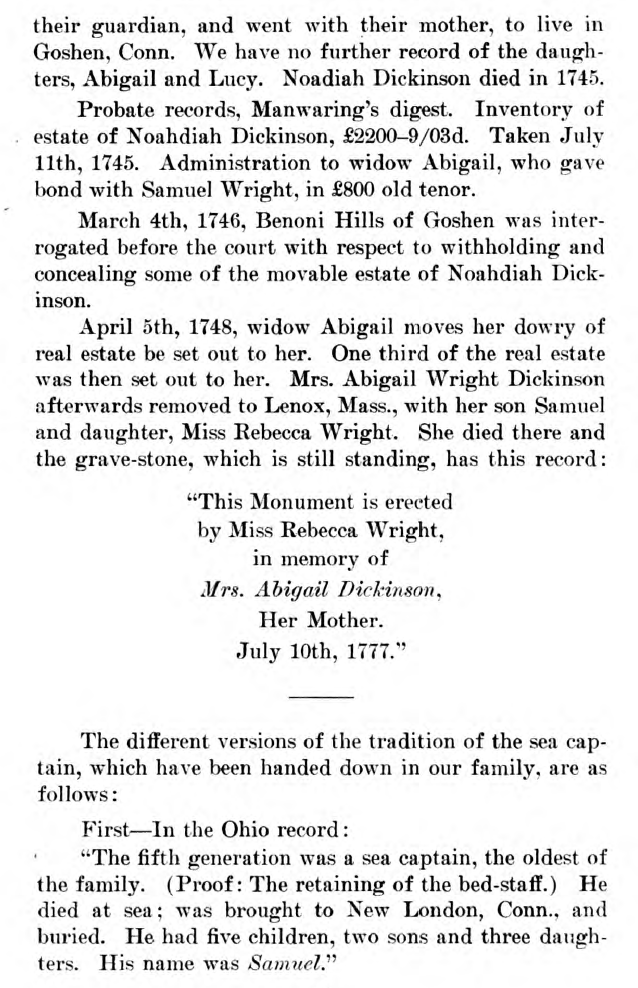
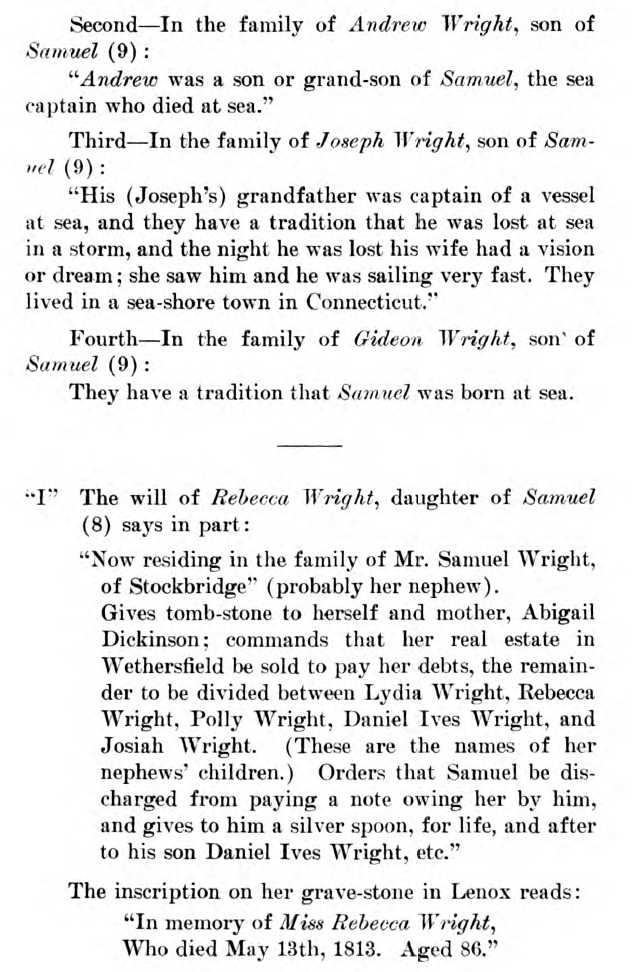
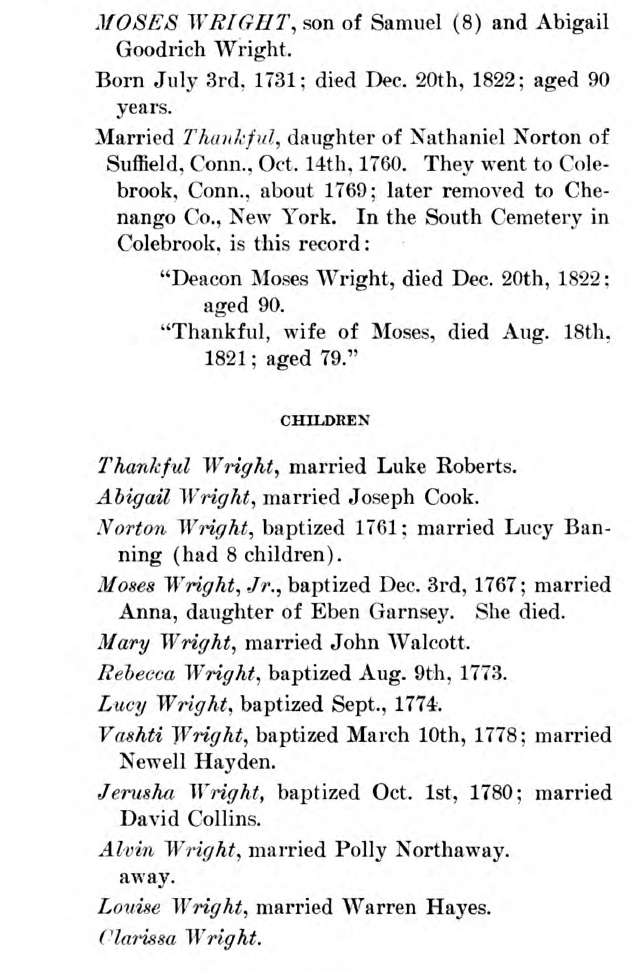
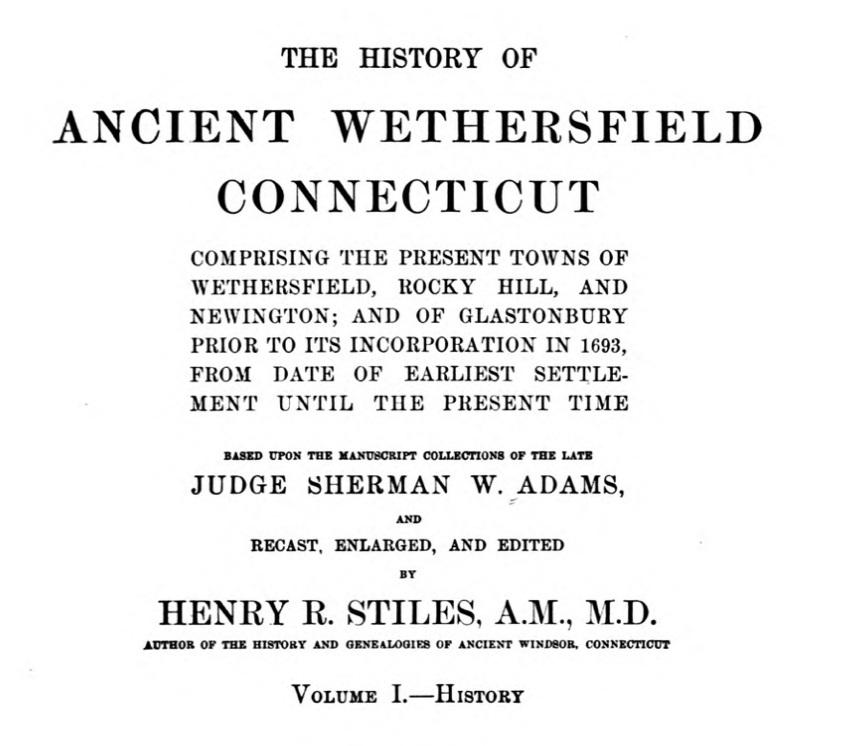
Another source, The History of Ancient Wethersfield, provides corroborating detail on Thomas Wright and two generations of Samuel Wrights that followed.
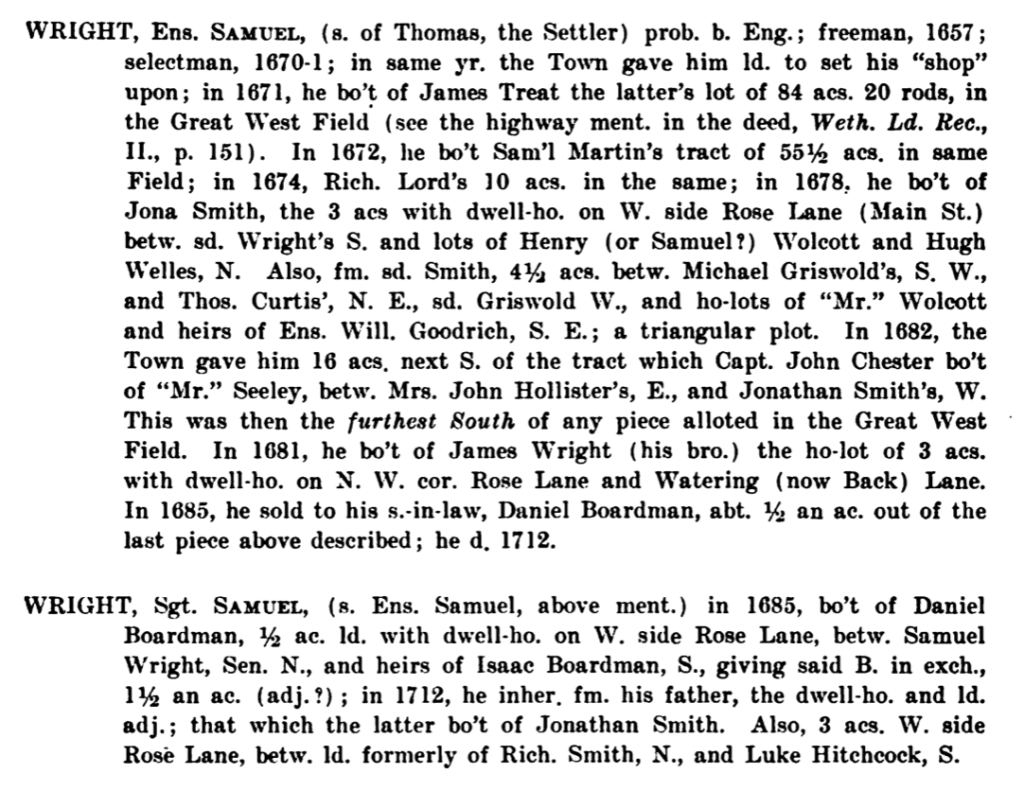
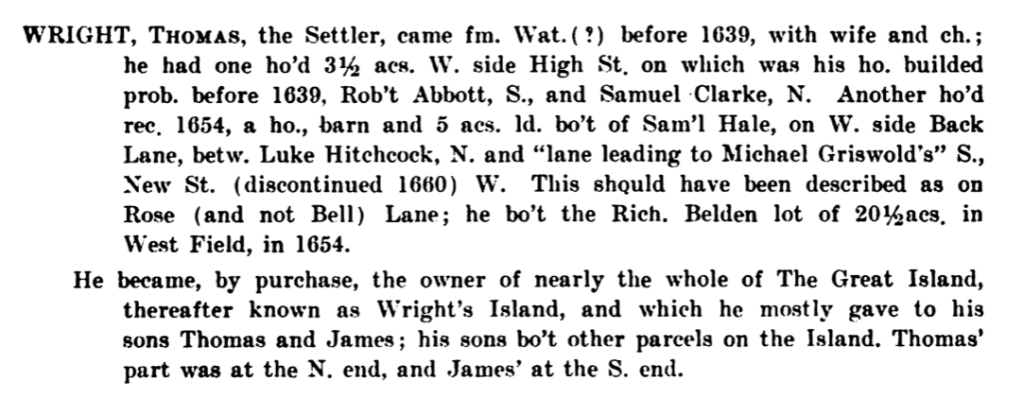

The Wrights remained in Wethersfield for five generations, more than a century, before Moses Wright moved to Colebrook in northwestern Connecticut, the first move in the direction of Lee in western Mass, which would later become the home of Janelle’s grandparents.
Janelle’s Wright ancestry is summarized below…
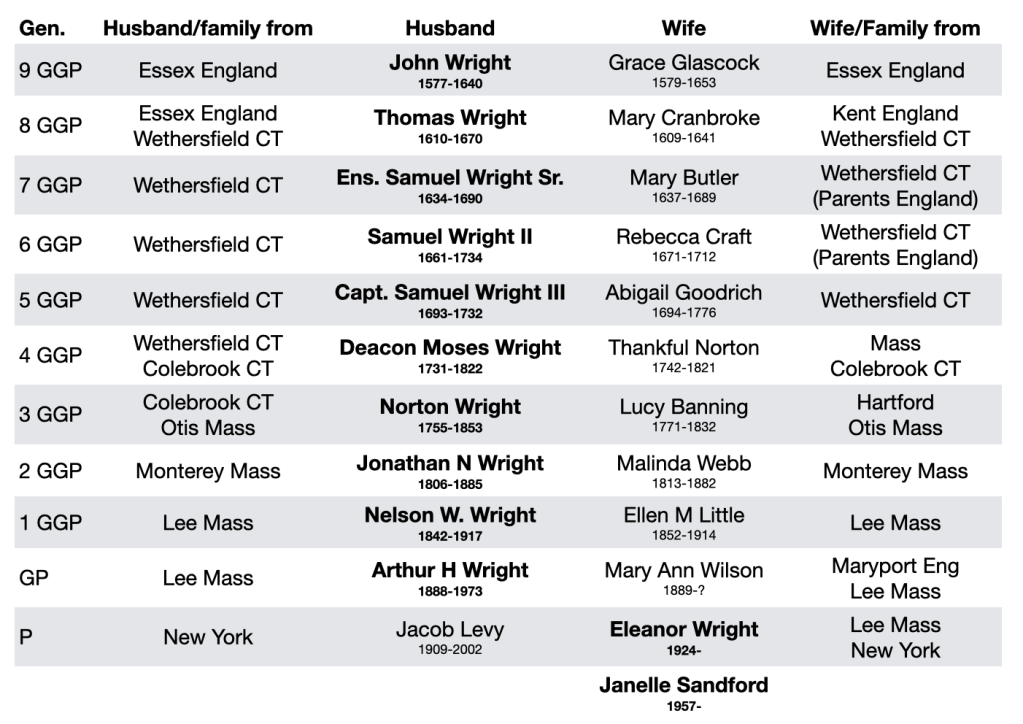
Thomas Wright lived in Wethersfield until is death in 1670, Robert Sandford in Hartford until his death in 1676. So our two eighth great grandfathers lived within a few miles of each other for more than three decades.
The Loyalists’ Ordeal
We’ve discussed the paths taken by our fifth and fourth great grandparents William and Nathaniel Wright, both born in Westchester County, New York and exiled to Nova Scotia and later Prince Edward Island during the Revolution.
The details of the Wrights’ ordeal before getting back on their feet in PEI are harrowing. The following biographical summary appears in a publication of the United Empire Loyalists’ Association of Canada (sort of a historical organization with an attitude–perhaps analogous to the DAR).
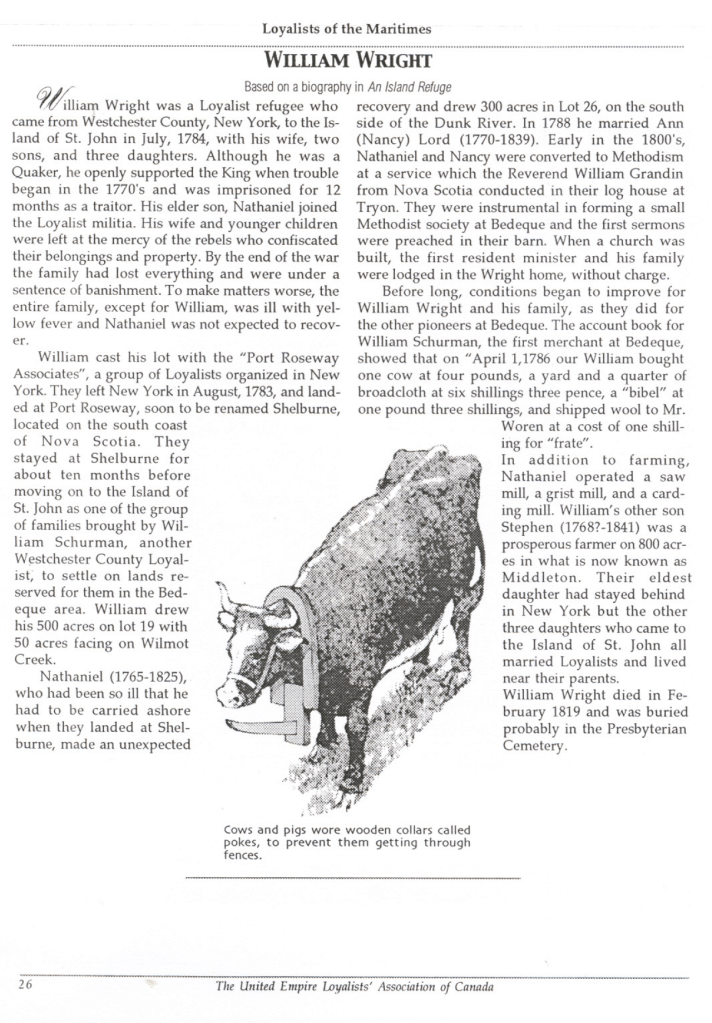
An Island Refuge is a reference to a book by Doris Muncey Haslam, a Prince Edward Island historian and genealogist (and distant cousin of ours) who has written extensively on the Wright family. We will discuss more about her in future posts.
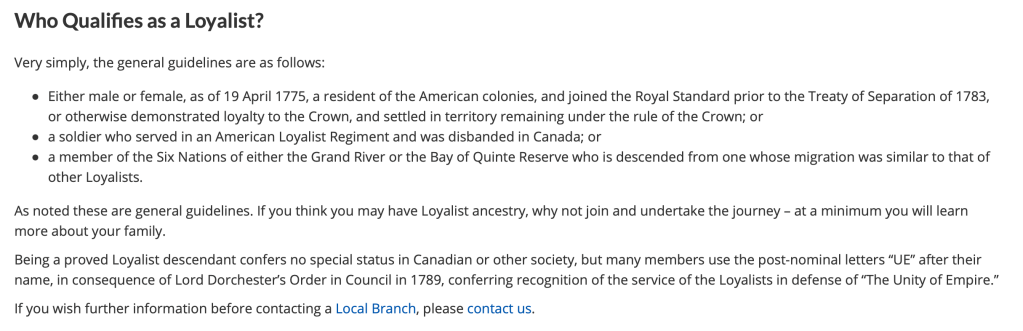
As a side note, the following is from the United Empire Loyalists’ Association of Canada web page. Apparently we would easily qualify for membership, and we have the option of using the UE designation after our names.
July Commemorations
- Born Saturday July 14, 1877 (144 years ago) in Newburgh, New York. Addie Gordon, great grandaunt, sister of Bessie Gordon
- Married Tuesday July 16, 1889 (132 years ago) in St. Johnsbury, Vermont. Edward T. Sandford and Annie Calderwood, great grandparents
- Born Saturday, July 19, 1873 (148 years ago) in Danville, Pennsylvania. George Sechler, great grandfather
- Died Saturday, July 26, 1986 (35 years ago) in Ontario, California. Joe Sandford, grandfather
- Born July 1873 (148 years ago) in Newburgh, New York. Bessie Gordon, great grandmother
Researching Our Gelston Roots: In Vain Pursuit of More Hartford Founders and a Mayflower Ancestor
 Each of us has 64 fourth great grandparents. By the time we work back to the 17th century we are in the realm of eighth and ninth great grandparents, of which each of us has 1024 and 2048, respectively. There are a lot of places to look for interesting ancestors.
Further fueling this math is that, for those of us lucky enough to be able to trace our family roots to the beginnings of colonial America, these many ancestors get squeezed into fewer and smaller colonies as we go back in history. With multiple roots extending so far back in New England, it is virtually impossible that these family roots didn’t bump into each other along the way.
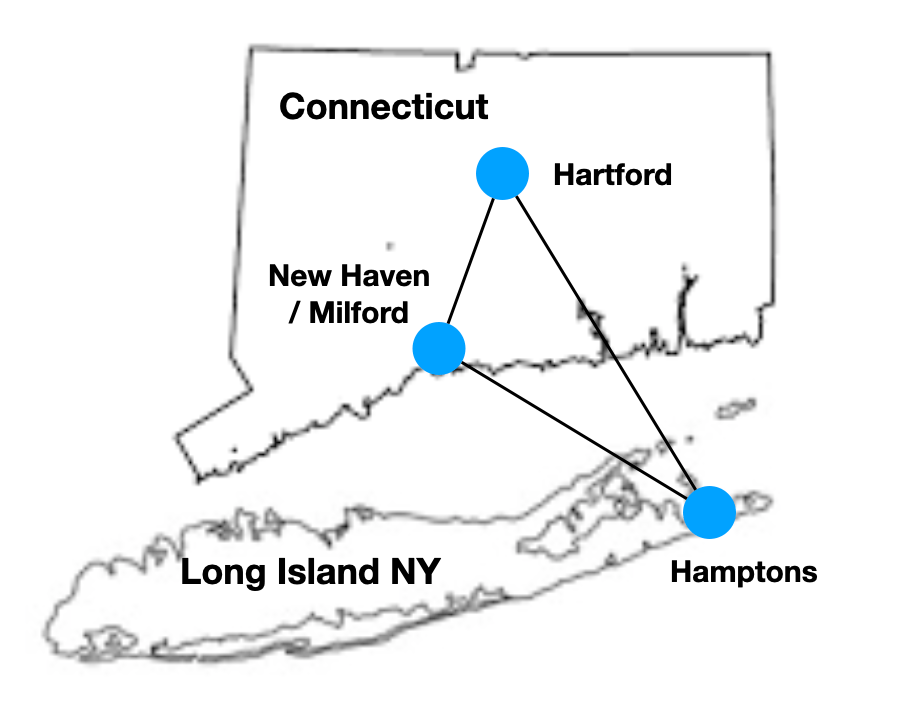
Increasing the chances of intersection even further is that many of our 17th and 18th century family history took place in Connecticut and eastern Long Island–a triangle between the Hartford, New Haven, and Hampton colonies. The deeper one looks at the history of these places, the more evident it becomes that they were very closely linked, with people moving freely between them for trade, work opportunities, marriage partners, and in response to political events. Given favorable tides and winds, the trip from Hartford or New Haven to eastern Long Island was perhaps easier in 1650 than it is today (when traffic on I95 and I495 is never favorable).
We previously introduced Jerusha Gelston, our 4th great grandmother, the daughter of our 5th great grandparents Hugh Gelston and Mary Chatfield. Jerusha and our 4th great grandfather Captain Thomas Sandford both were born on Long Island, followed Arthur Howell to Portland Maine, and were married after Howell’s untimely death. We now trace Jerusha’s branch of the family (one of the 64) to its origins, as best we can.
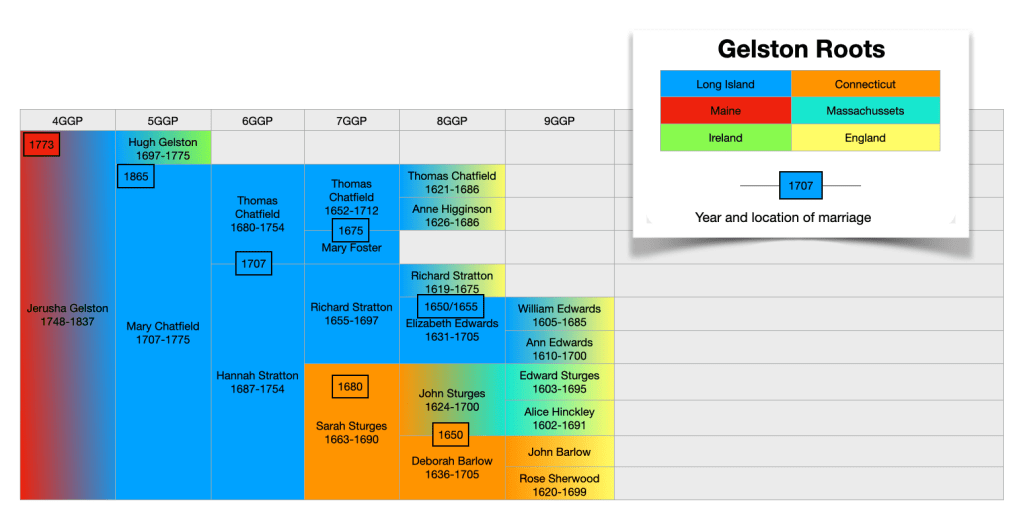
Several branches of Jerusha’s mother’s family tree, take us back to the early 17th century, on Long Island, Connecticut, Massachusetts and Rhode Island, with early settlers immigrating from Sussex, Leicester, Suffolk, Kent and London. Published genealogies help with verification of their details of the Chatfield and Stratton families.
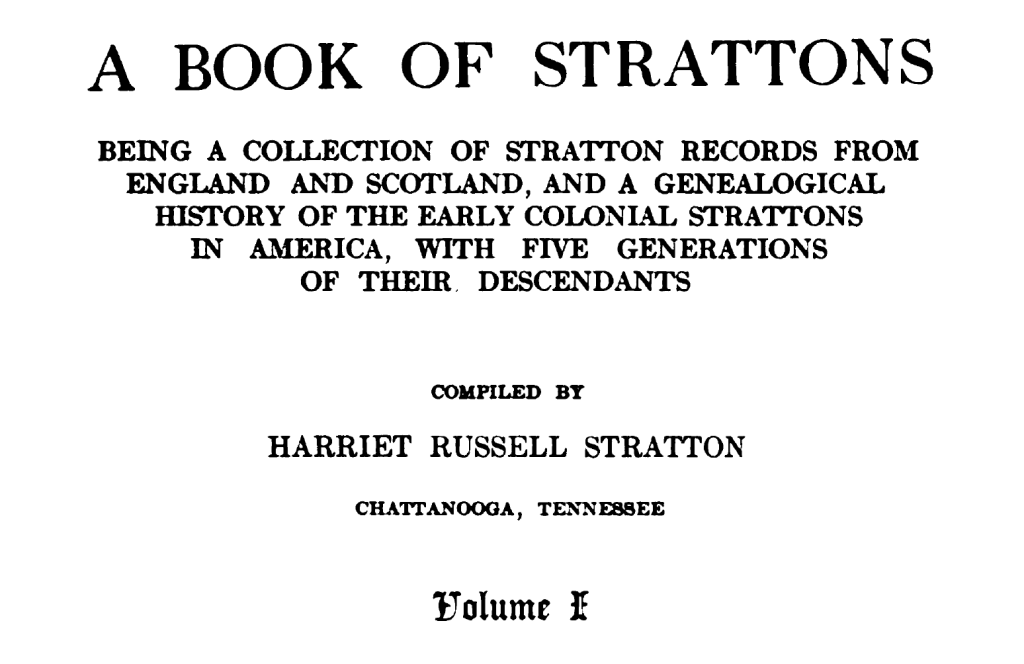
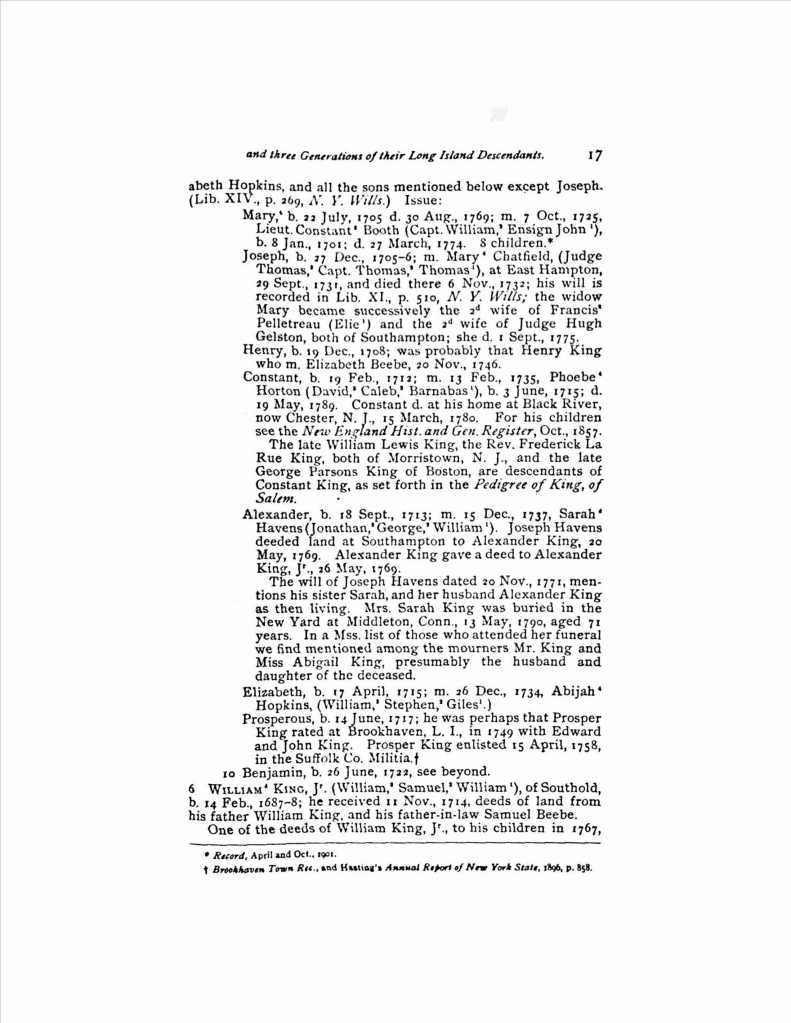
There are two names in Jerusha Gelston’s ancestry that raise questions requiring further investigation are Edwards (Elizabeth and William) and Foster (Mary). Although both of these investigations turn out to be false alarms, I now describe them as illustrations of common genealogical traps, easy to fall into.
The Edwards Red Herring
The name Edwards rings a bell in Connecticut history because of Jonathan Edwards, grandfather to Aaron Burr and great grandson of William Edwards, one of the founders of Hartford. Seeing William Edwards and Elizabeth Edwards in the Gelston ancestry, in the same generation that they appear in Connecticut history raises the question of whether Jerusha Gelston could be descended from this family. The following diagram compares the two families (including known links to our Tuttle ancestors) to examine these possible connections.
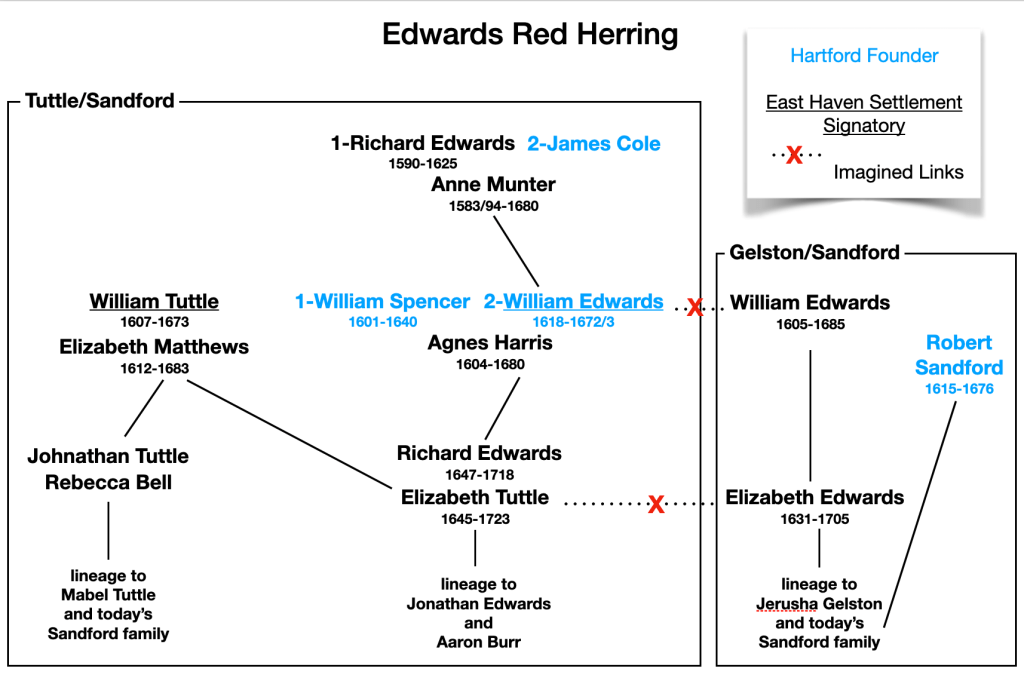
After a few hours of researching and creating this diagram, it become clear that Aaron Burr’s ancestors Elizabeth and William Edwards are not the same people as Jerusha Gelston’s ancestors Elizabeth and William Edwards. The dates don’t quite match up, and Elizabeth Tuttle Edwards is William Edwards’ daughter-in-law, not daughter. Just as well, as this would have greatly complicated the relationships between the Sandford and Tuttle branches of our family tree. We can still see, however, that both branches were closely linked to the origins of Colonial Connecticut.
The Foster Red Herring
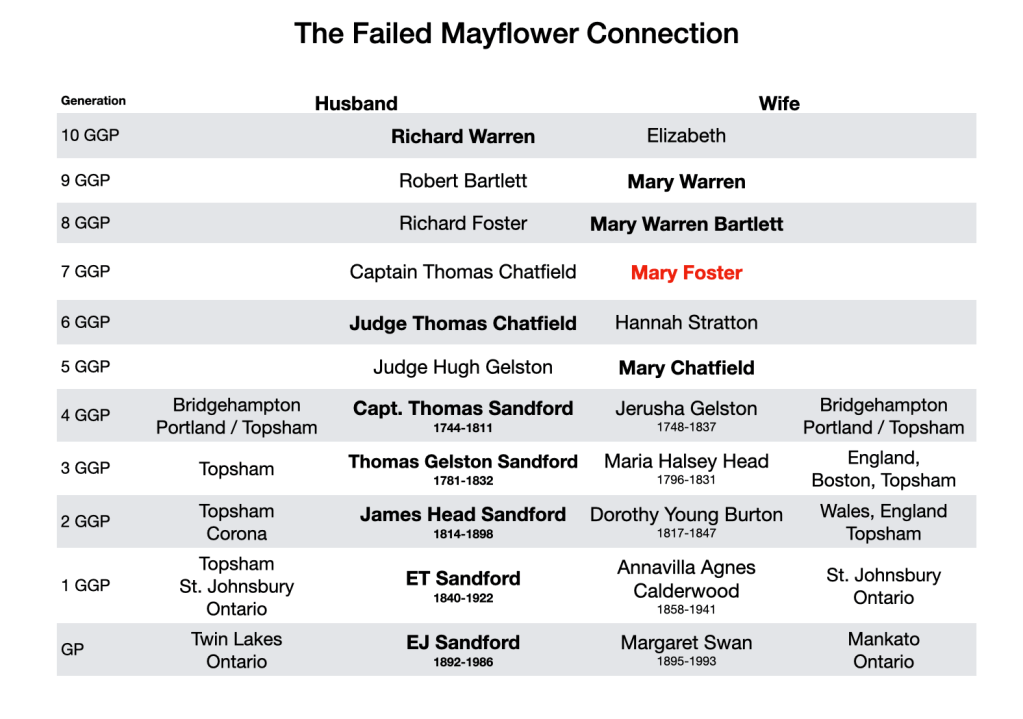
The name Mary Foster sets off alarms in Ancestry databases because it is linked to descendants of the Mayflower. There is probably no subject more studied in North American genealogy, so a soon as such a name comes up in a family tree, one is immediately drawn into all this research and it is very easy to begin believing that perhaps you could be a Mayflower descendant.
The Mayflower carried 102 people to Plymouth in 1620, all of whom have been carefully documented. One passenger was Richard Warren, who had a great granddaughter named Mary Foster.
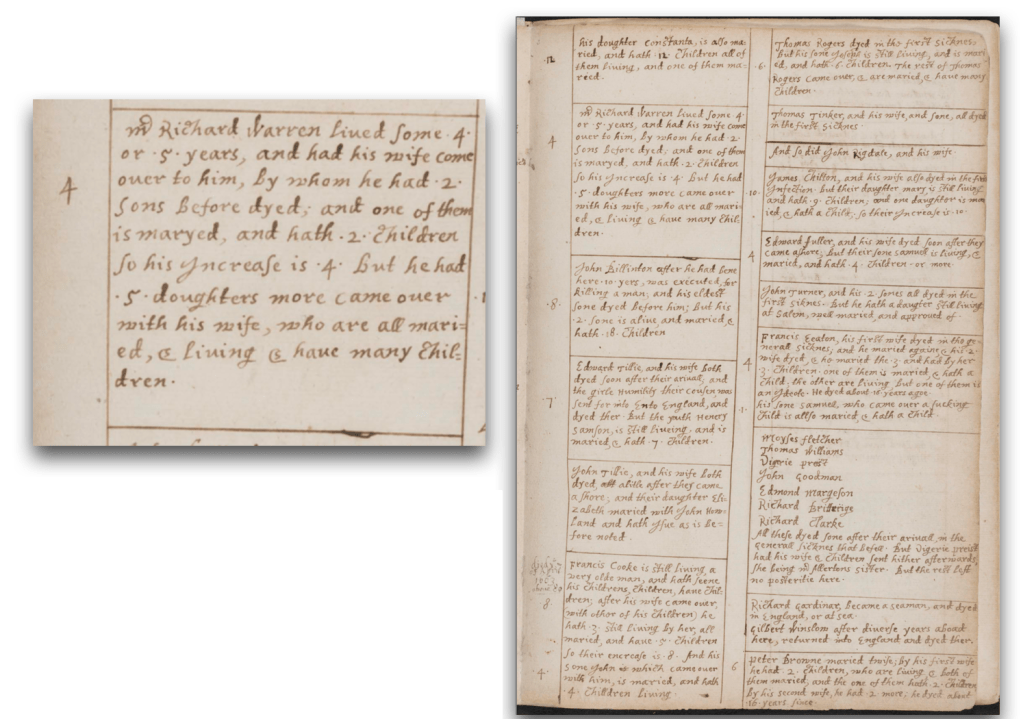
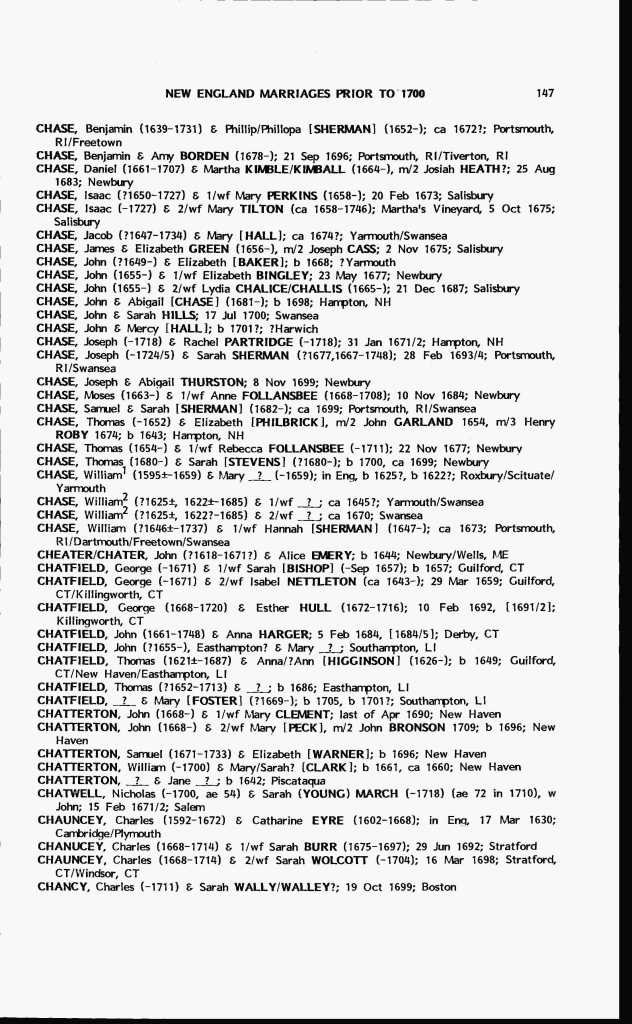
Wishful thinking is easy to find in the Ancestry databases, and there are a number of people who have linked our ancestor Captain Thomas Chatfield II with the Mary Foster descended from Richard Warren, in their family trees. The link begins to look suspicious, however, when nobody seems to have any supporting documentation for this marriage. There is documentation for Chatfield’s marriage to a woman with this name, but she was someone who was born and died on Long Island, whereas the Mayflower descendant Mary Foster was born and died in Massachusetts. It becomes clear that they were two people of the same generation with the same name. (A third Mary Foster seems to have been a victim of the Salem Witch Trials.)
June Commemorations
- Died Saturday, June 9, 1906 (115 years ago) in Danville, Pennsylvania. Rebecca Roberts, 2nd great grandmother, mother of George Sechler
- Died Friday, June 15, 1888 (133 years ago) in St. Johnsbury, Vermont. Saada Spear, first wife of great grandfather Edward Thomas Sandford
- Died Tuesday, June 21, 1932 (89 years ago) in Newburgh, New York. Nettie Johnston, 2nd great grandmother, mother of Bessie Gordon
- Born Friday, June 23, 1826 (195 years ago) in Ryegate, Vermont. Elizabeth Walker Smith, 2nd great grandmother, mother of Annie Calderwood
- Shot behind enemy lines (survived) June 1864 (157 years ago) near Ream’s Station, Virginia. Edward Thomas Sandford, great grandfather
 Bridging the Silences