 Among the prominent historical figures found in our family tree is Nathan Sanford (1777-1838), a lawyer and politician who served twice as a United States Senator from New York, and once ran for Vice President as Henry Clay’s running mate.
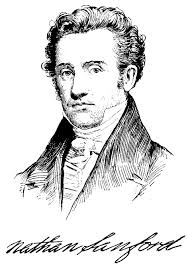
Nathan Sanford was of the same generation as our fourth great grandfather Captain Thomas Sandford (1744-1811), although considerably younger. Both were born in Bridgehampton, Long Island, New York. By the time Nathan was born, Captain Thomas had already established his new life in Portland Maine.
Nathan was educated at Yale University and later at the Litchfield Law School in Connecticut. Somewhere along the line, Nathan dropped the first “d” from the name Sandford, using the Sanford spelling throughout his career. Perhaps he picked this up through association with some of his Connecticut cousins from the Thomas and Andrew Sanford family branches, which had already assumed the shortened spelling. Or perhaps as someone with political ambitions he simply decided he did not want to spend his entire life correcting others on the spelling of his last name.
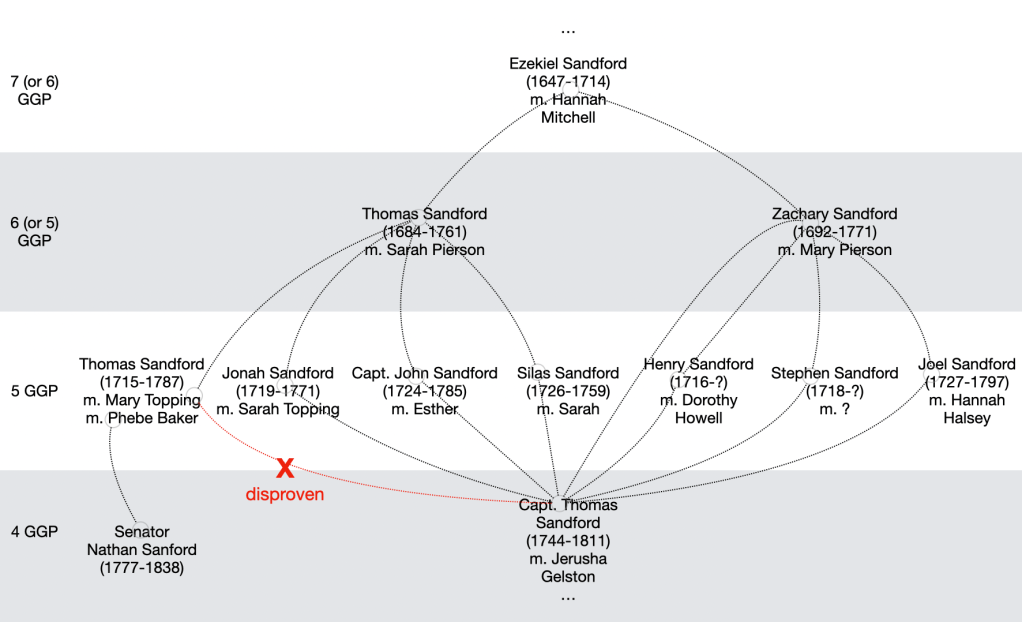
Our exact relationship to Nathan Sanford depends on the unknown answer to the lacuna question, i.e. the identity of our 4th great grandfather Captain Thomas Sandford’s father on Long Island, as we have previously discussed in detail. Nathan and Captain Thomas are likely first or second cousins. Both were great grandsons of Ezekiel Sandford, the bridge builder, and may have had the same paternal grandparents. (Josephine Sandford Ware’s genealogy identifies Nathan and Captain Thomas as half brothers, but this relationship has been disproven.) We are likely Nathan’s first or second cousins (six times removed).
Highlights of Nathan Sanford’s political career include the following:
- In 1803 he was appointed as the State’s Attorney of New York by President Thomas Jefferson. He remained in this post through 1815.
- Between 1808 and 1811 he served in the New York State Assembly.
- He served as United States Senator from 1815 to 1821, in the Democratic-Republican political party. He was defeated for reelection by Martin Van Buren.
- He was a delegate to New York’s state constitutional convention of 1821, which produced the state’s second constitution.
- He served as Chancellor of New York from 1823 to 1826.
- He ran unsuccessfully for United States Vice President in 1824 with Henry Clay (who was defeated by John Quincy Adams).
- He served again as United States Senator from New York between 1826 and 1831.
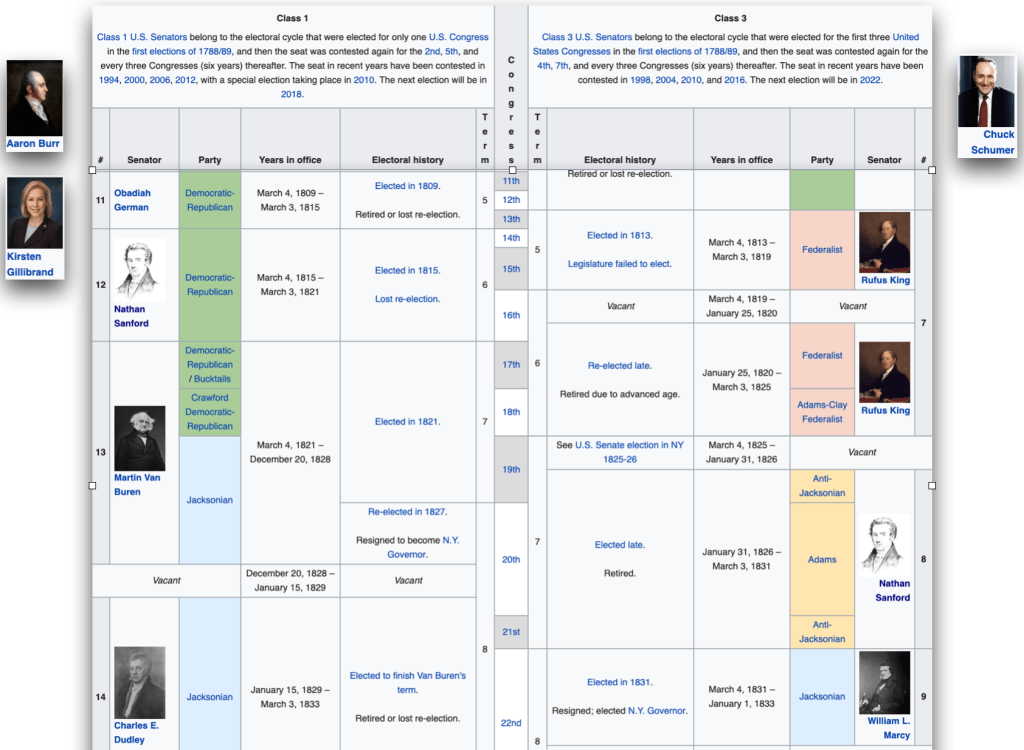
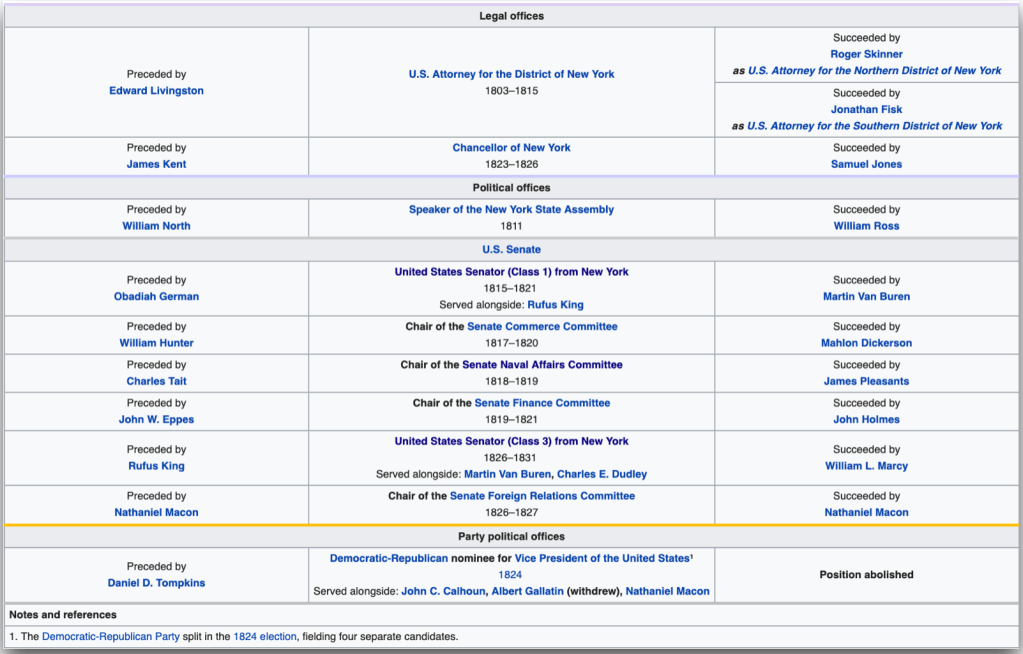
The following diagram shows the context of Nathan’s two terms in the United States Senate. In his two terms he occupied both New York seats (the seat occupied today by Kirsten Gillibrand and the one now occupied by Chuck Schumer).
At different times Senator Nathan Sanford was:
- Chairman of the Foreign Relations Committee
- Chairman of the Finance Committee, Chairman of the Commerce, Science and Transportation Committee
- Chairman of the Naval Services Committee (which maps to today’s Armed Services Committee)
In her 2017 biography Reluctant Reformer, Nathan Sanford in the Era of the Early Republic, author Ann Sandford, our distant cousin from Bridgehampton, New York, examines the life of Nathan Sanford in great detail. Through painstaking and disciplined academic research, Ann Sandford paints a portrait of our mutual cousin as a highly ambitious man who, while leading a life of privilege and wealth, did not shy away from hard work and careful thought, often leading him to take valorous positions on important issues of the day. His positions sometimes conflicted with his direct personal interests, giving rise to Ann’s Reluctant Reformer appellation. During his legal and political careers, Nathan addressed key issues including anti-slavery, central banking reform, and voting equality. He worked with, and against, a long list of the era’s better known political figures in New York and the nation.
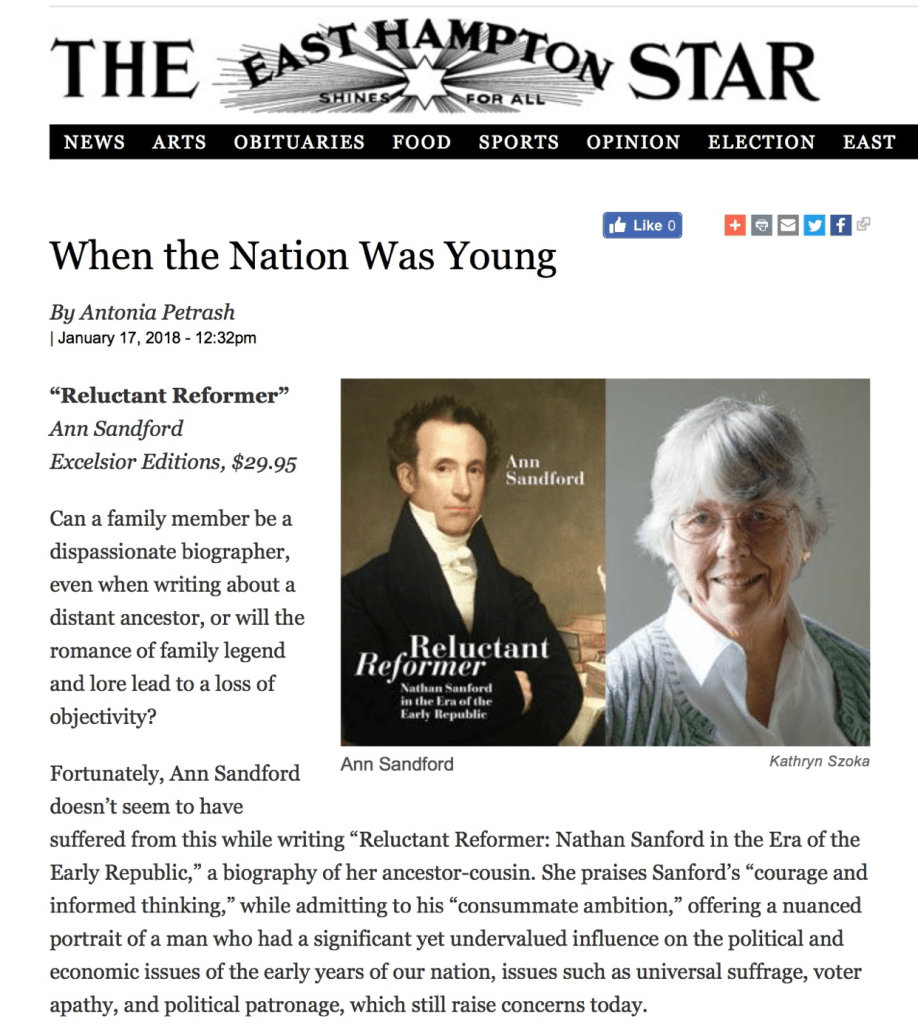
Ann Sandford, a historian with a Ph.D. from New York University has written extensively on the history of Europe and Long Island. She is also the author of Grandfather Lived Here: The Transformation of Bridgehampton, New York, 1870–1970, which traces homes and histories of long-established families of eastern Long Island, including the Sandfords, to modern times.
Upon leaving the Senate in 1831, Nathan returned to his home in Flushing, Queens, New York, where he continued to practice law. He built a large home, Sanford Hall, there in 1836. He died two years later and the house was later converted to a high-end mental institution. Ann recounted to me her search of the area for remnants of the home–I believe she concluded that it no longer stands.
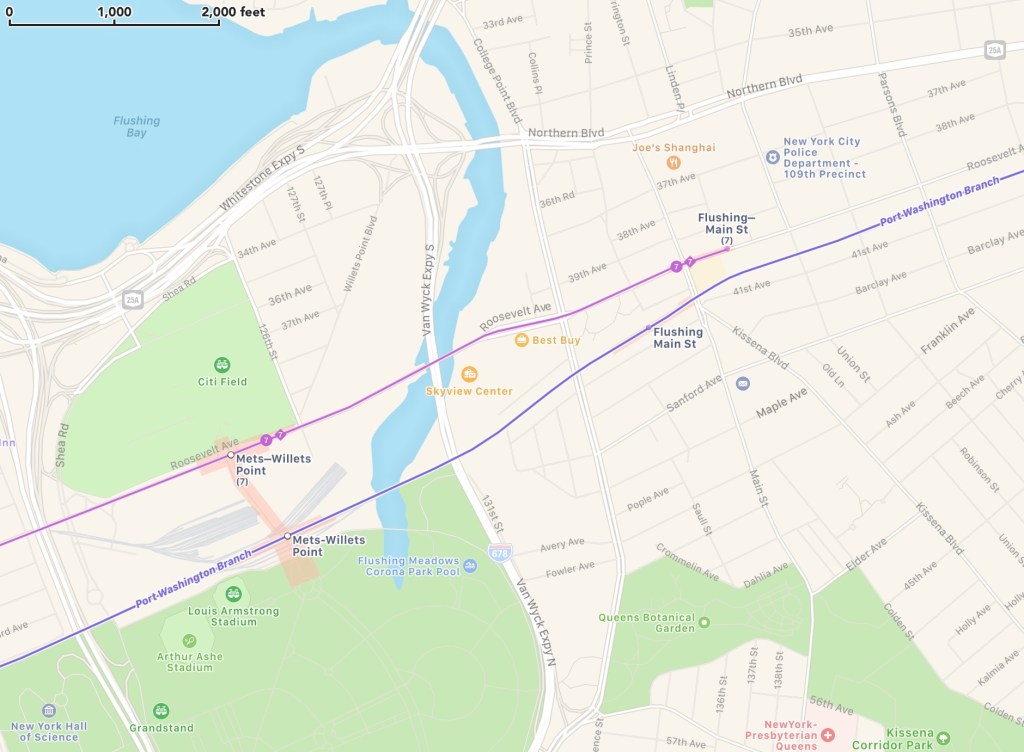
But a look at today’s map shows the location of Sanford Avenue, two blocks south of the Flushing Main Street transit stations, less than a mile from Citi Field (NY Mets), Arthur Ashe Stadium, and the World’s Fair site.
 Bridging the Silences
Dear Jim,
thank you for this excellent summary with the added information (to me) about the precise relationship between you, Nathan, and Thomas. I have to study the details. So well written. Best, Ann
LikeLike