


 Having tracked the Sandford and Tuttle family branches back to the origins of colonial Connecticut in the 1630s, a compelling question arises: did the two families know each other?
The Sandford(Sanford) brothers, Thomas, Robert and Andrew came to America in the 1630s and participated in the founding of Hartford and Milford before our ancestor Ezekiel Sandford moved to Long Island in the late 1660s.
William Tuttle arrived in New Haven in 1638 to become a founding member of the community where our ancestors would remain for a half dozen generations before migrating west in the 19th century.
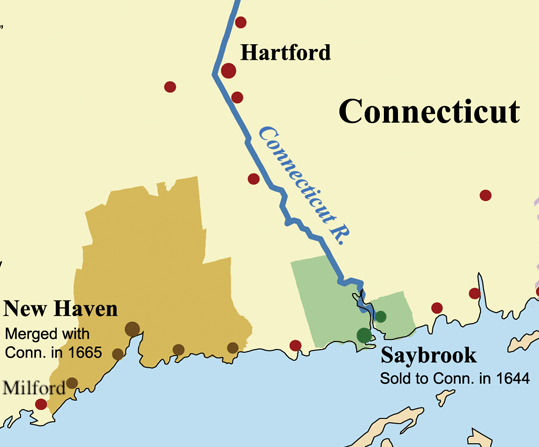
At first glance, the geography seems to work against us. Although today’s Interstate 91 links New Haven and Hartford directly, no such direct path existed in the water routes of the 17th century. New Haven is about 30 miles west of the mouth of the Connecticut River on the Long Island Sound, Hartford being more than 35 miles upriver. Supply ships traveling from Massachusetts likely went to one or the other, but not both. On a daily basis, the two colonies were far enough apart that there would be little or no interaction between them.
But an entry found in Carlton E. Sanford’s Thomas Sanford, The Emigrant to New England, Ancestry Life and Descendants reveals a family connection.
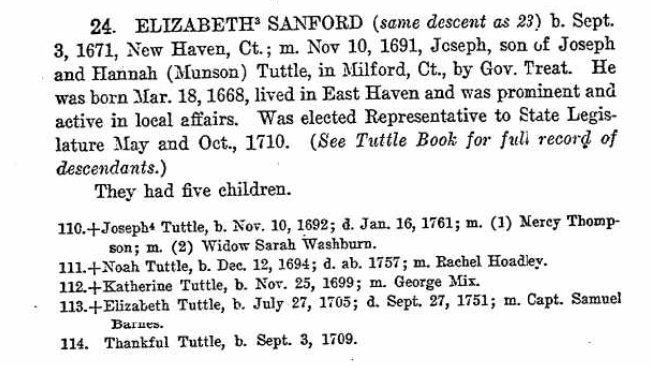
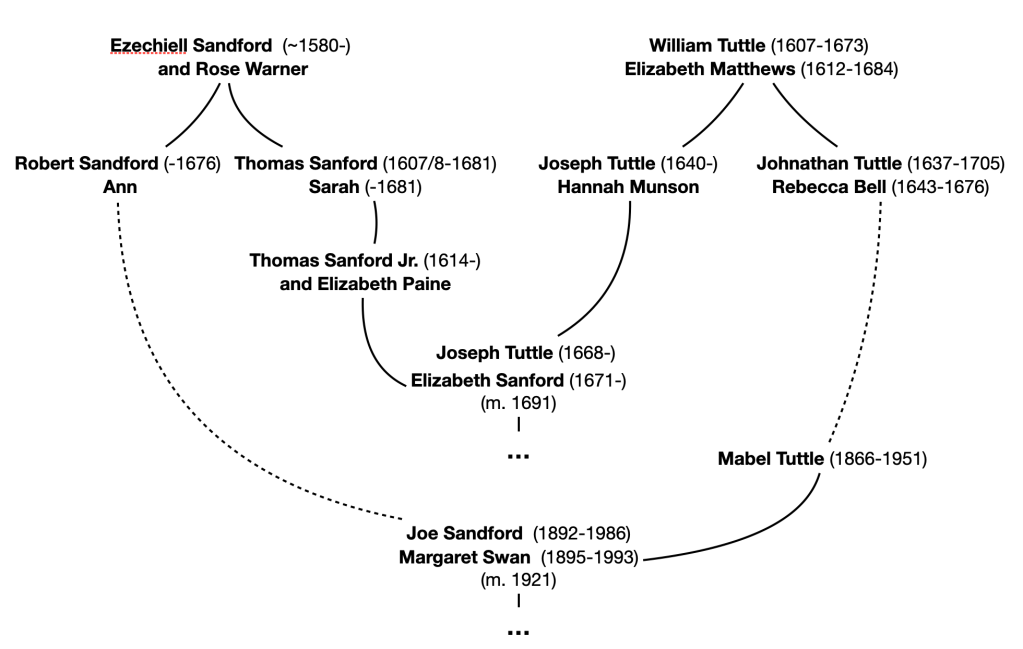
An Elizabeth Sanford was married to a Joseph Tuttle in 1691, in Milford, by the Governor of Connecticut, Robert Treat.
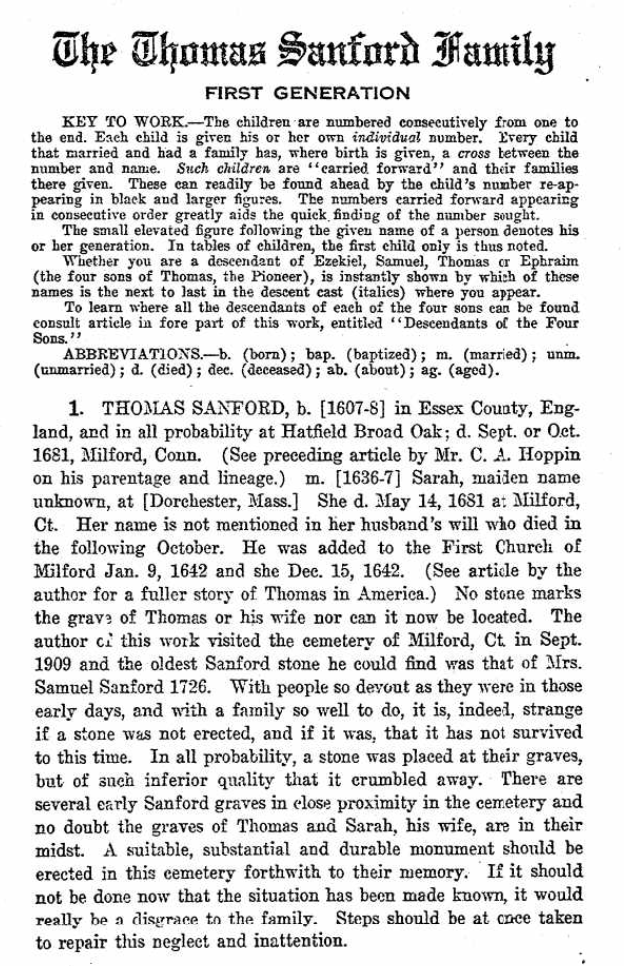
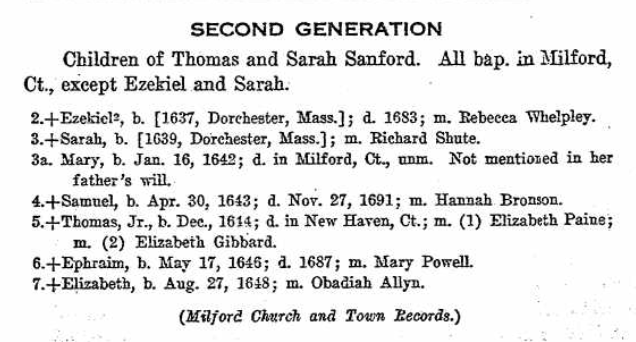
Carlton Sanford’s 1911 genealogy shows that Elizabeth was a granddaughter of the original Thomas Sandford who came to America with his brothers and settled in Milford.
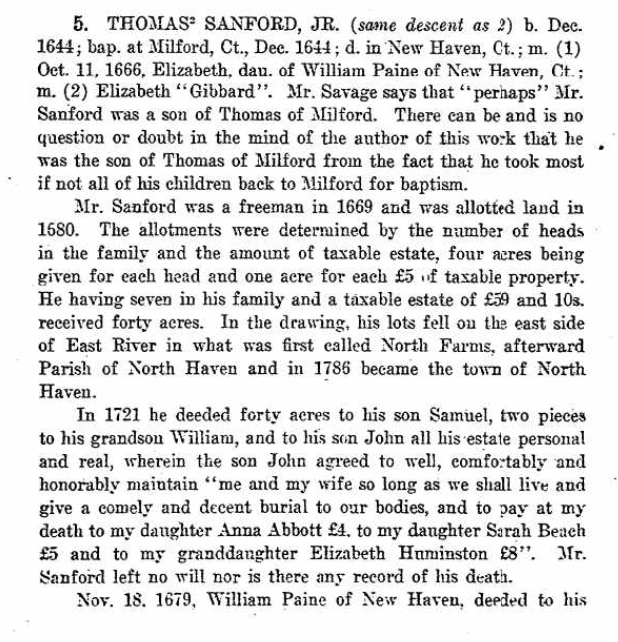
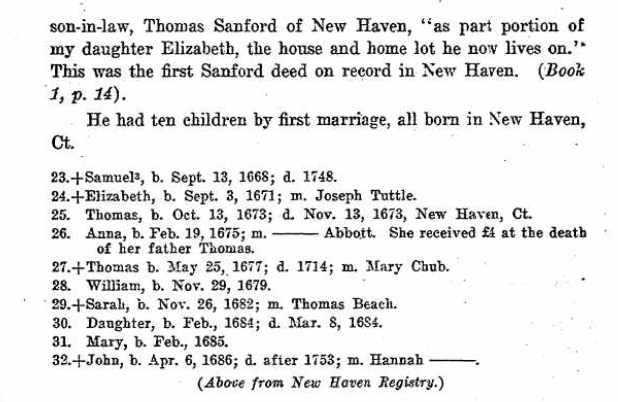
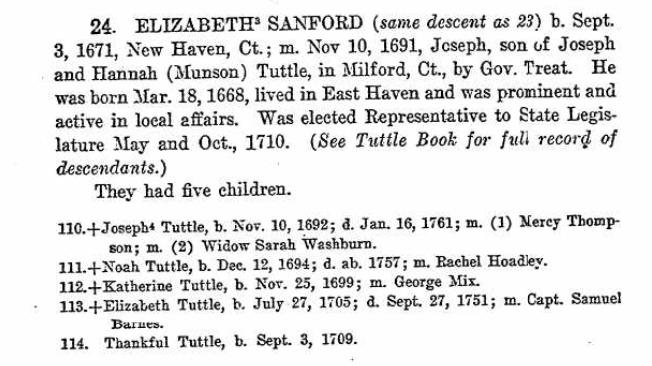
George Frederick Tuttle’s 1883 genealogy The Descendants of William and Elizabeth Tuttle shows that the Joseph Tuttle who married Elizabeth Sanford was a grandson of William Tuttle, founder of New Haven.
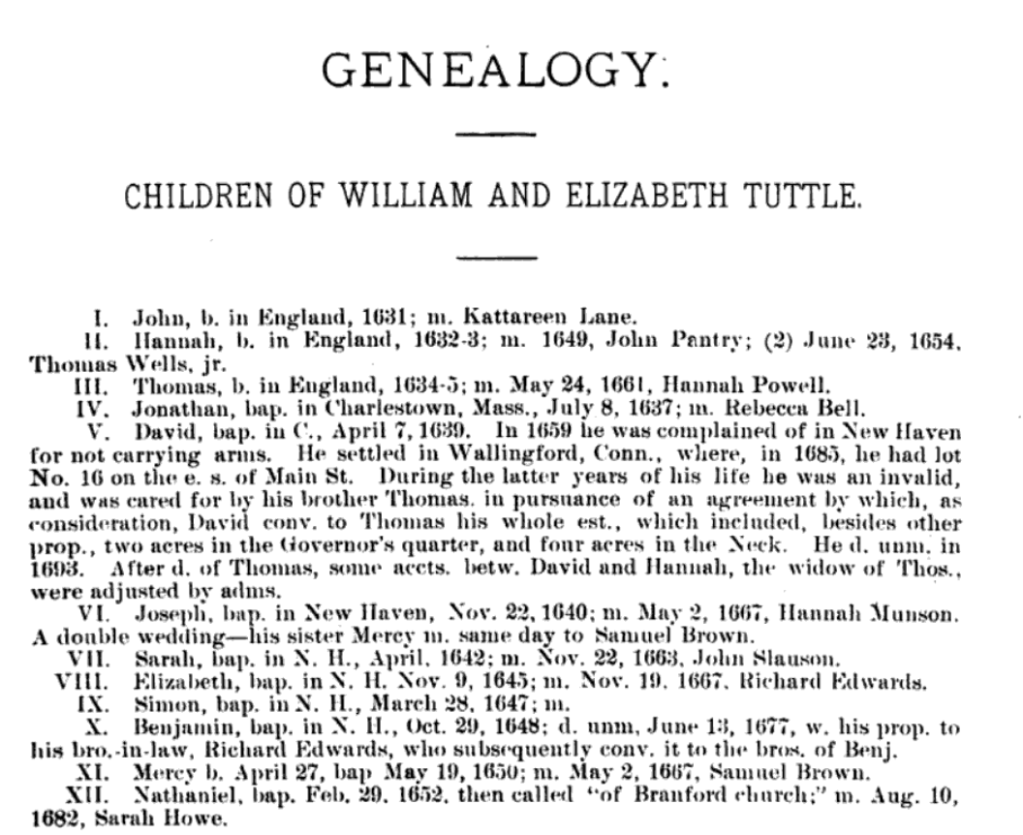
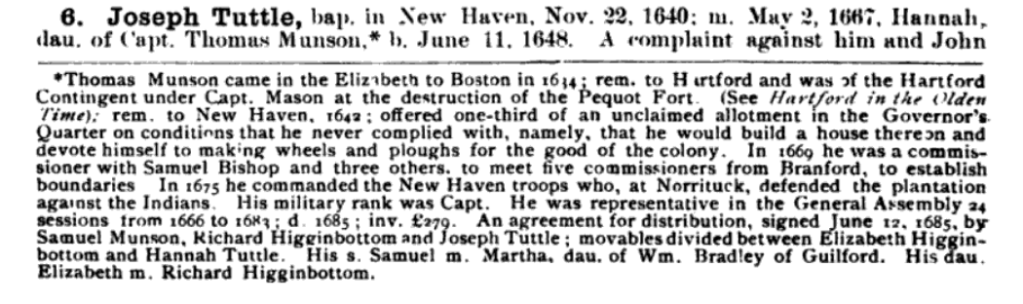
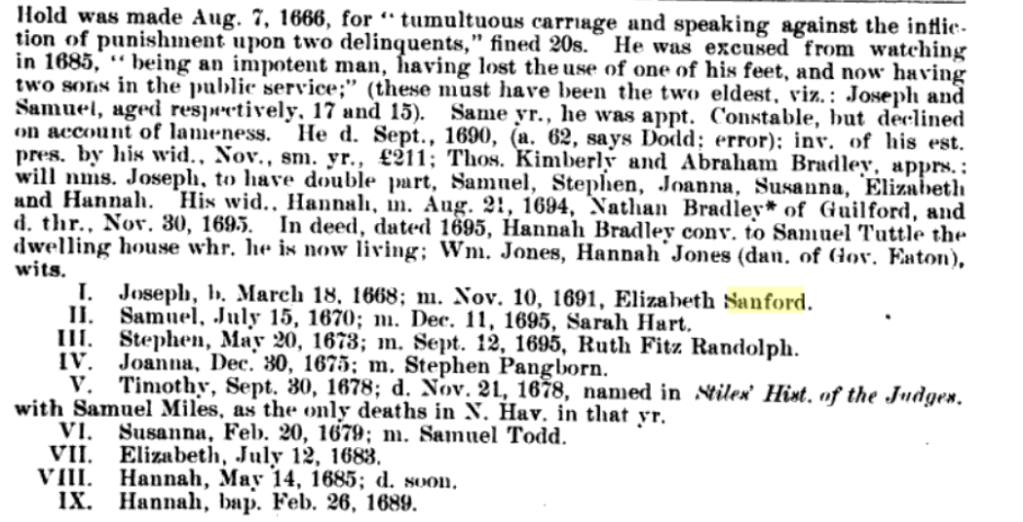
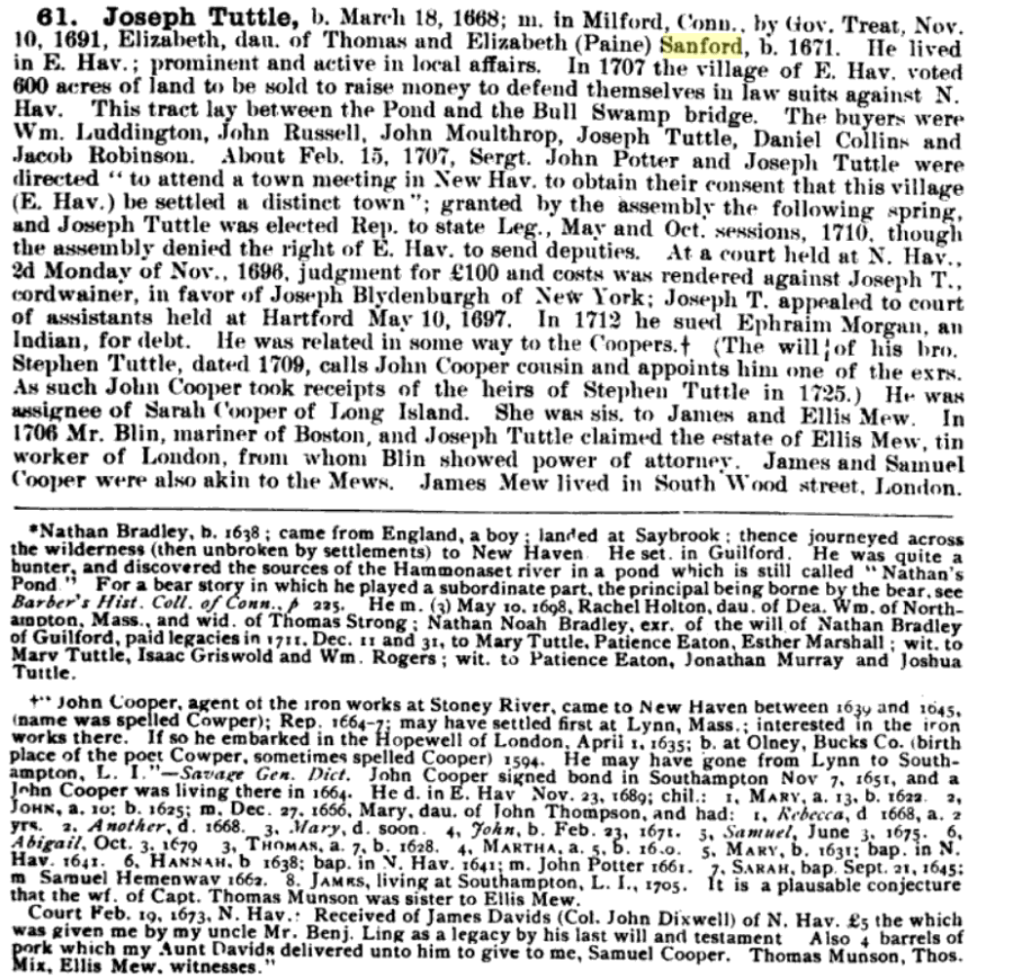
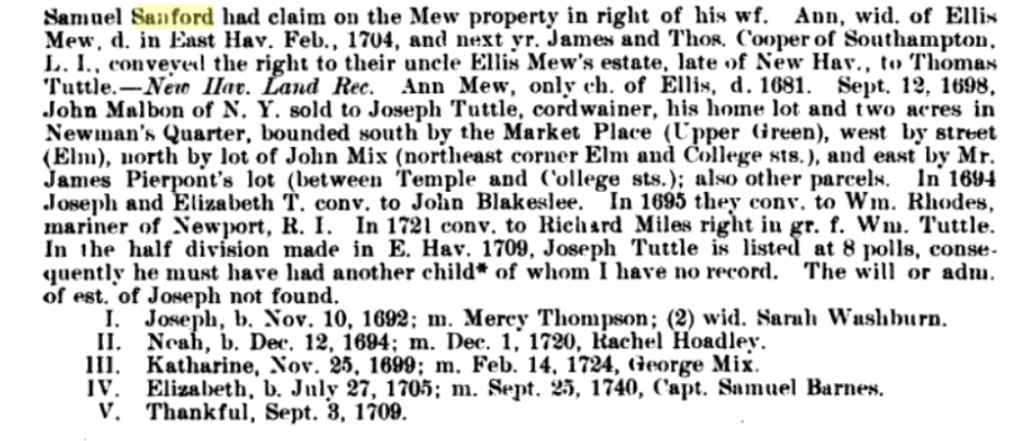
The following diagram summarizes the relationships detailed above.
It is important to note that there is nothing unusual or improper about the situation described here. There were no marriages of cousins, even distant cousins, to each other.
When Thomas Sanford (and, later, bother Andrew Sanford) left his brother Richard Sandford in Hartford to settle in Milford, he bridged the geographical gap between the Sanford and Tuttle families.
In our genealogical studies, we have come across a number of examples of something that was very common in the colonial days. In Connecticut, Long Island, Maine or any other new colonial region there were large extended families (having a dozen children was the norm) but not that many different families (perhaps numbering in the hundreds). With lots of children coming of age and looking to get married, repeated marriages between prominent families were common, in fact essential. Our Long Island family tree, as another example) has many repeated family names of spouses: Howell, Pierson, Topping, and so on.
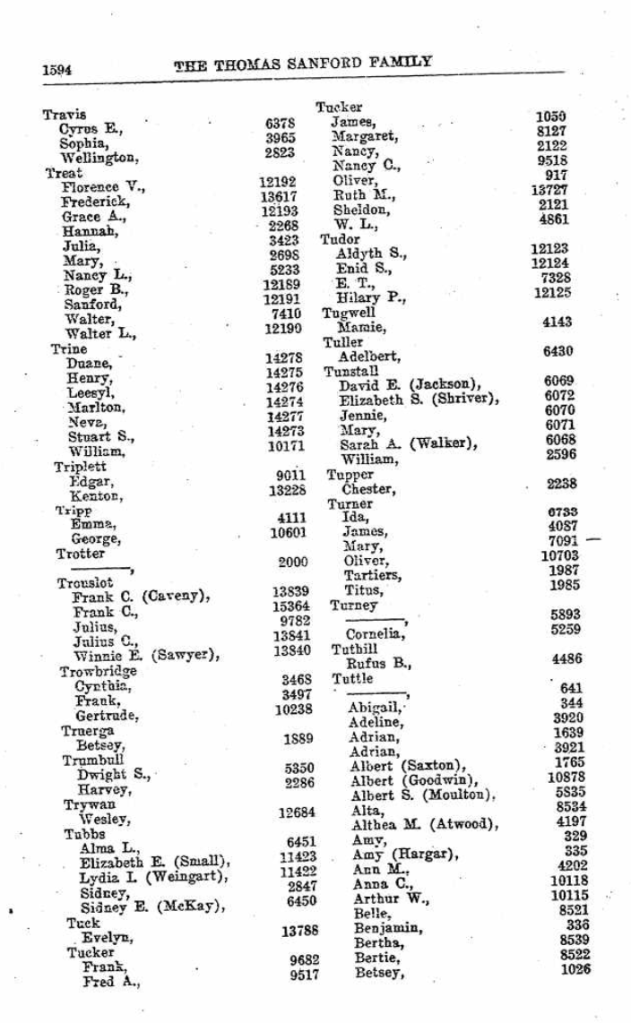
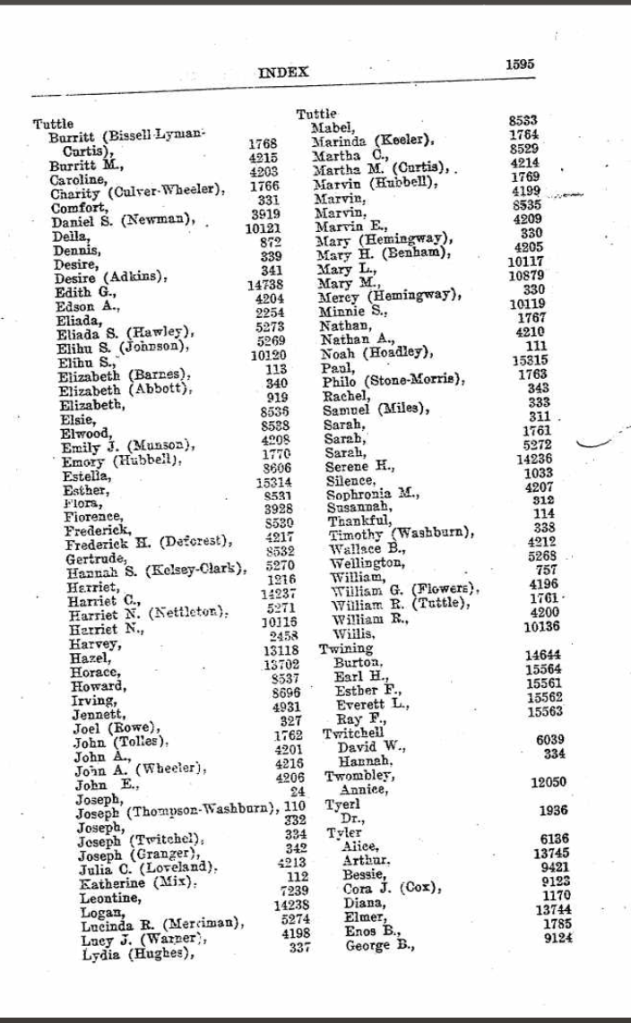
There are probably many other intersections between the Sandford and Tuttle families. Entries for the name “Tuttle” in the names index of Carlton Sanford’s genealogy run for more than a page.
Conversely, looking at the Tuttle genealogy (which has no index but can be searched on-line) the name Sanford appears 30 times, the name Sandford 3 times.
More generally, any time two families are fortunate enough to be able to trace their roots back to the origins of the same American colony, the likelihood that the families knew each other is very high, simply because there were not very many families present in the colony at that time.
As another case in point, Janelle’s Wright ancestors (with no known connection to our Wright ancestors from Prince Edward Island and New York) also trace back to the origins of Hartford. In 1640 there were perhaps 150 family homesteads in Hartford. It is inconceivable that our Sandfords and Janelle’s Wrights would not at least been aware of each other’s presence.
 Bridging the Silences