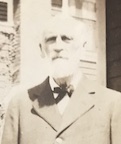
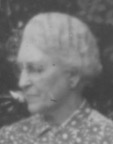
 After the death of Edward Sandford in October 1922, his wife, Annie, and their daughter, Helen, remained in the family home at 541 East D Street in Ontario, California. Helen, who we knew as Aunt Honey (our grand aunt), was 24 in 1922.
Census and city directory entries through the 1920s list Helen initially as a clerk, but soon as a music teacher and a pianist (I do not know if Annie was a musician and developed Helen’s interest and talent), but Helen had extreme ambitions and was not satisfied. Through a combination of talent, genius, hard work, and stubborn persistence she studied with prominent musicians in the Los Angeles area, eventually setting her sights on becoming an orchestra conductor, something unheard-of for a woman in the 1920s. She muscled her way into some of the most prestigious music programs in the world, winning them over with her abilities and ultimately spending two years between 1926 and 1928 in Europe, including Vienna. The following article from the Los Angeles Times in April 1929 explains Helen’s path.
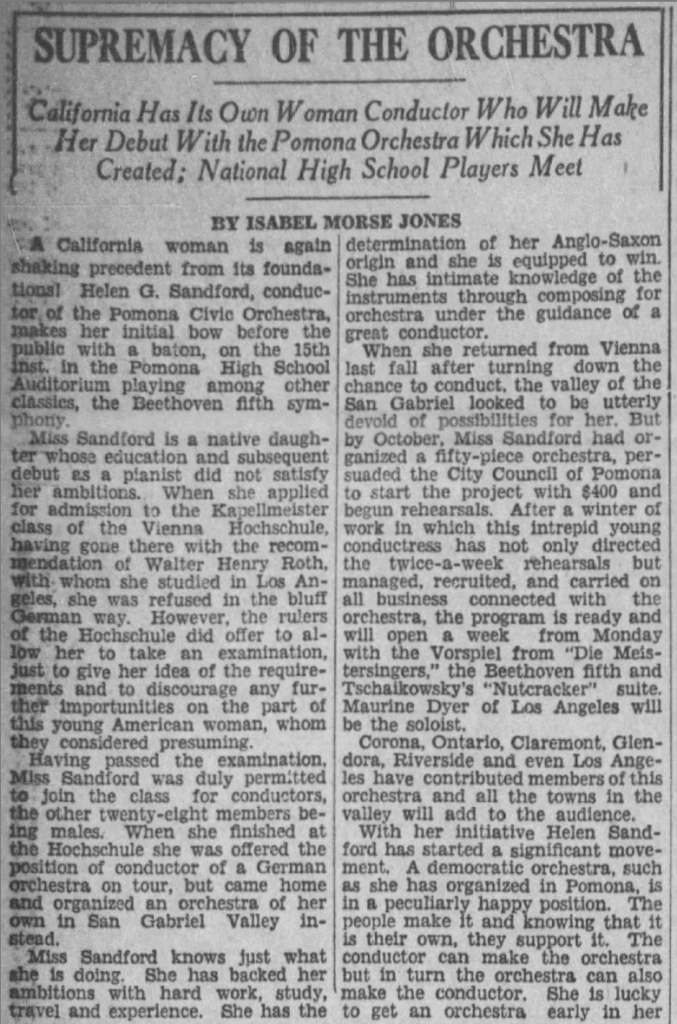
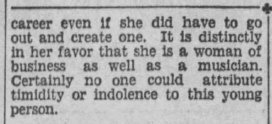
It is extraordinary that Helen turned down an offered conducting position with a German orchestra, opting instead to return home and start her own orchestra. But this is exactly what she did, the Valley Symphony Orchestra giving its first performance in April, 1929 in Pomona.
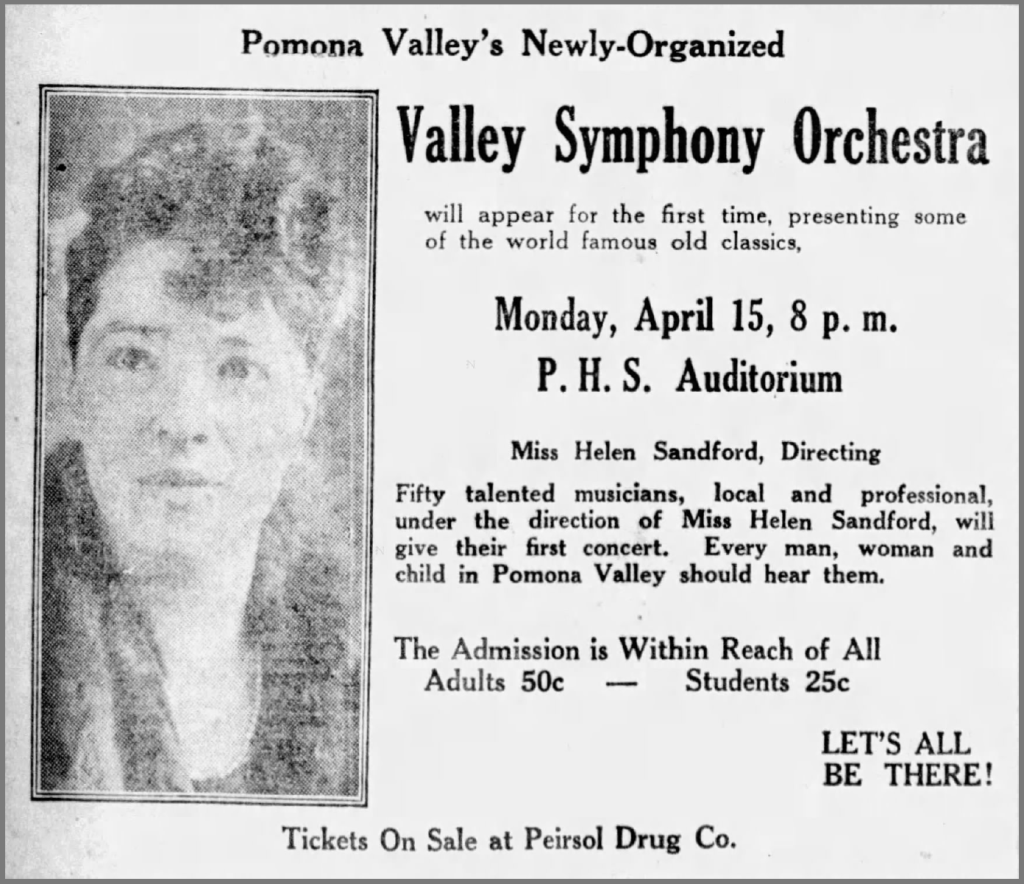
April 12, 1929
Helen and her orchestra received reviews that went far beyond the norm for even the best of community orchestras, rising to the level of “Genius Praised”. It was not only a matter of performance quality–the level of ambition and planning of her programs was off the charts, including guest performances by some of the most talented performers in Southern California.
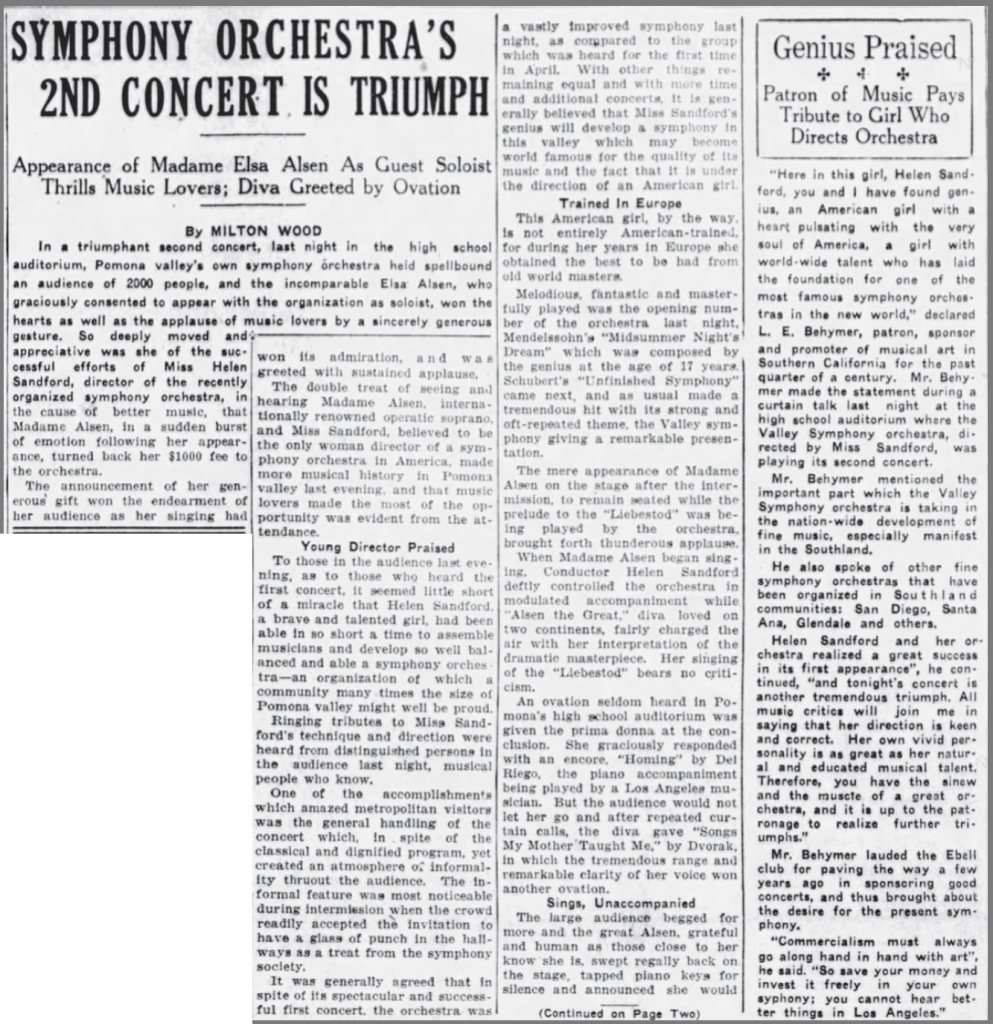
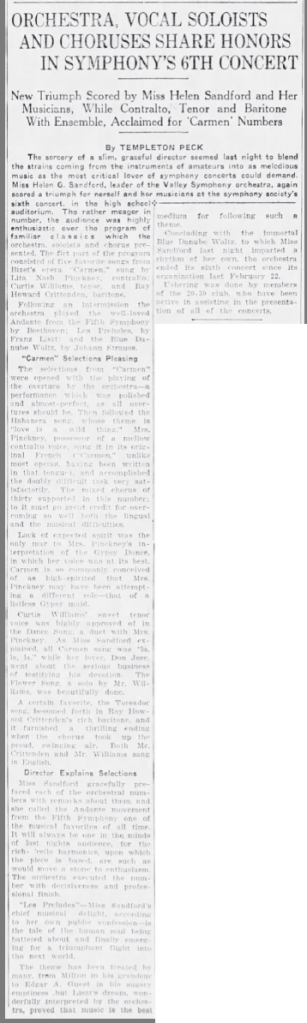
The orchestra’s rave reviews continued through the season, each performance topping the one before…
Things changed quickly around 1930 when Helen was drawn to New York, turning leadership of the orchestra over to other talent. What drew her away was probably her future husband, Edgar Bircsak, a prominent architect, of German family heritage, born in Michigan and raised in Missouri and Kansas. Edgar lived in Lawrence, Kansas until around 1923, then apparently spent time in Europe where he must have studied architecture. It seems likely that Edgar and Helen met somewhere during their overlapping studies in Europe–if so, their relationship must have been a complicating factor as Helen was making career decisions and forming her orchestra. They were married in New York in March 1931, where Edgar must have returned to work after completing his studies overseas. They remained in New York over the next few years, making regular visits to Ontario. By 1936 the couple had permanently moved back to Southern California and had their first son, Robert.
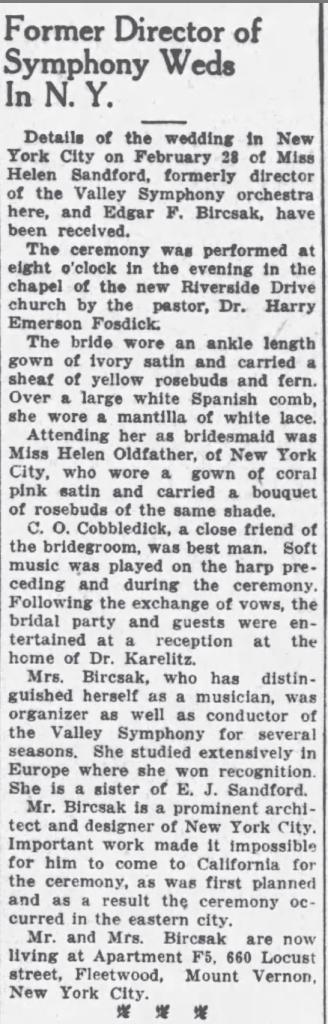
March 30, 1931
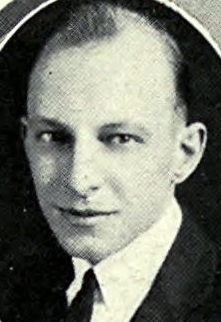
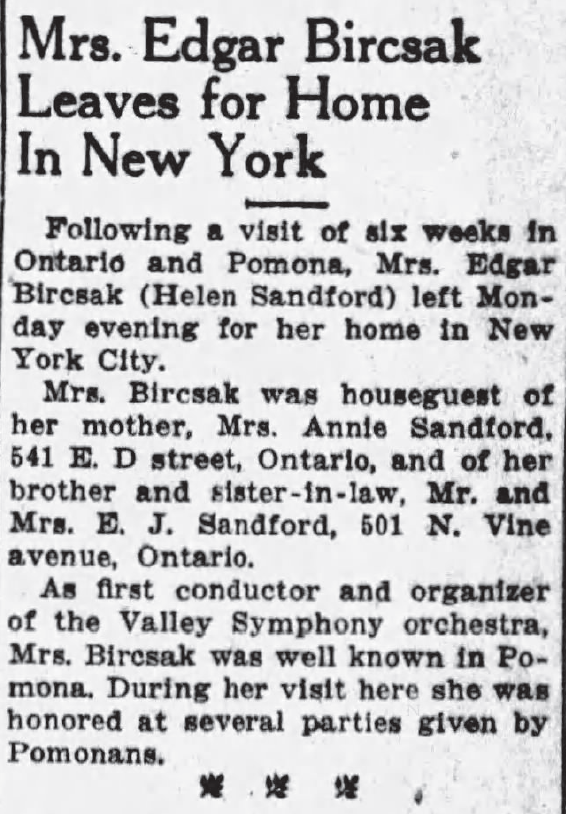
Feb 17, 1932
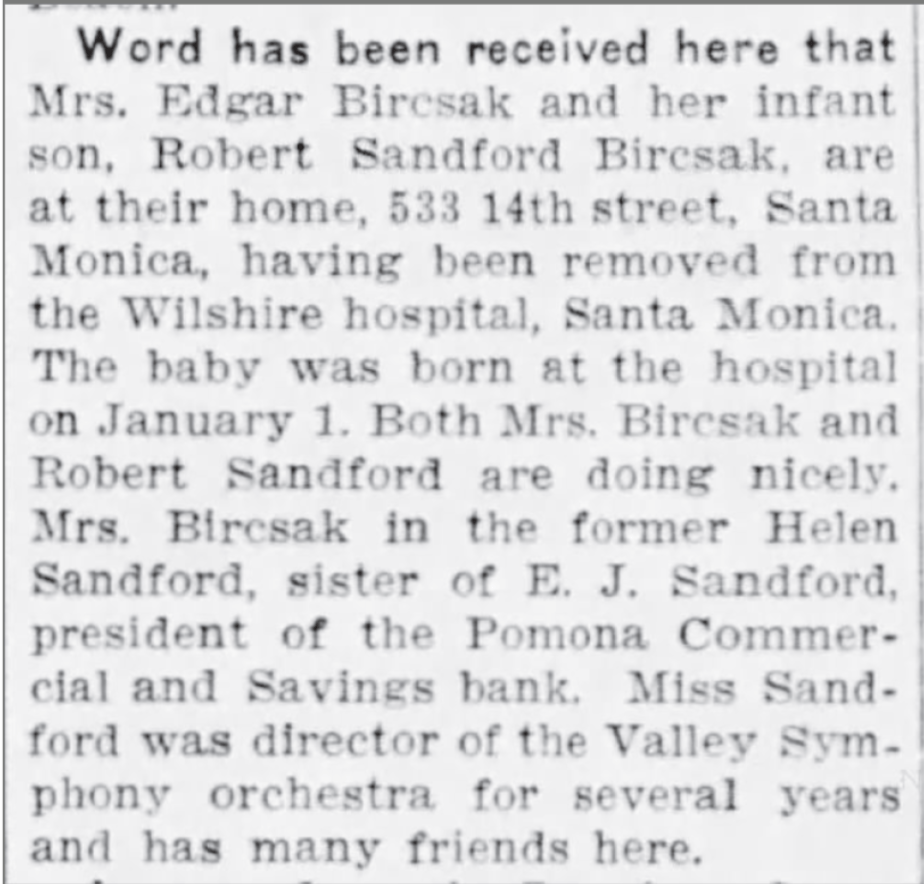
Jan 15, 1936
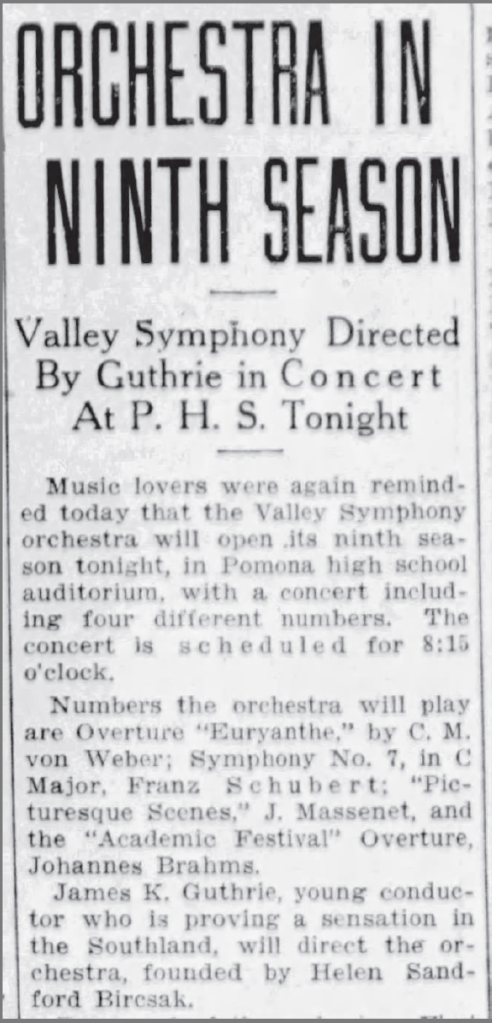
Dec 7, 1936
The orchestra lived-on. In 1936 they were still giving concerts, and Helen was still being credited as the founder. Wikipedia identifies James Kelley Guthrie, who occasionally conducted Helen’s orchestra, as “an American symphony conductor and newspaper executive who, at the age of 15 [1929], founded the San Bernardino Community Orchestra, which is today the San Bernardino Symphony“. It appears that Helen’s Pomona Valley Symphony Orchestra provided inspiration and direct competition to James Guthrie’s nearby orchestra, today’s San Bernardino Symphony.
Annie remained at the home on East D Street until her death in December 1941 her son Joe and his family living blocks away.
Helen and Edgar remained in California for most of the rest of their lives–we can remember visiting the home where they intrepidly, happily remained (and raised sheep) long after it had become surrounded by some of the worst Los Angeles neighborhoods of the 1960s and 1970s. Edgar passed away in 1981. Helen spent her final time with family in Chelmsford, Massachusetts where she passed away in 1993.
 Bridging the Silences
2 thoughts on “Helen’s Orchestra”