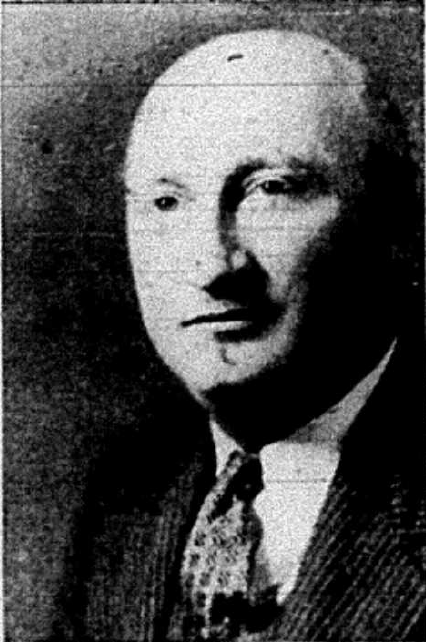
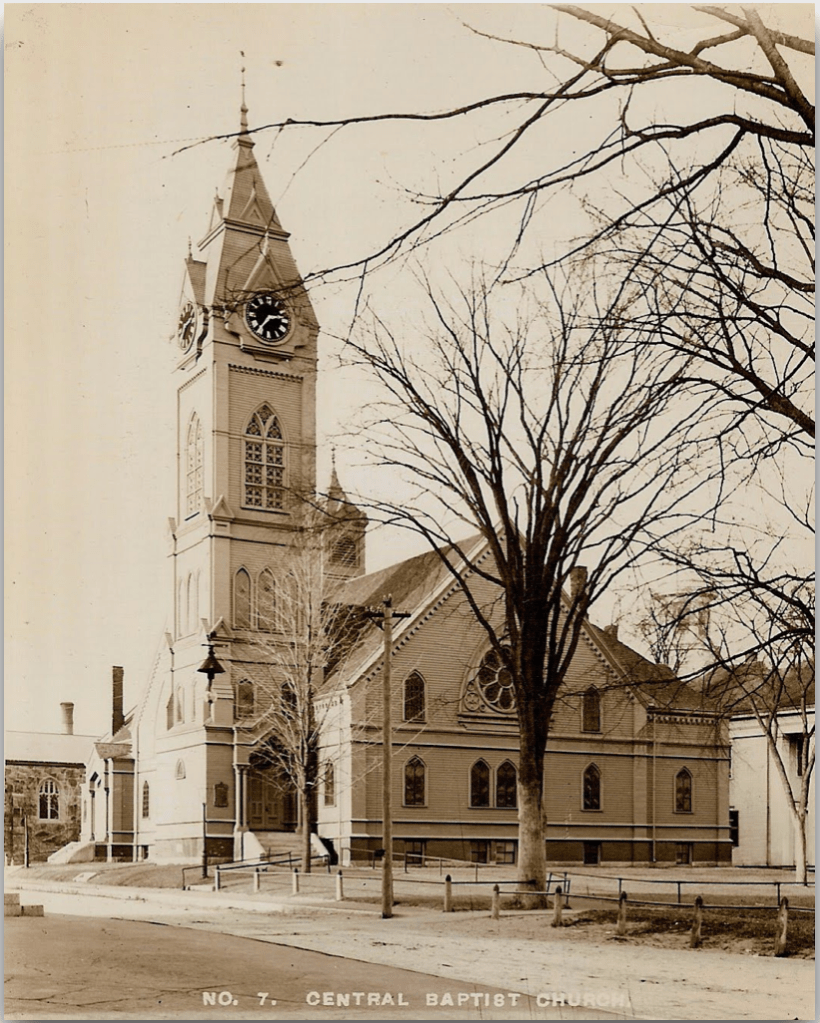
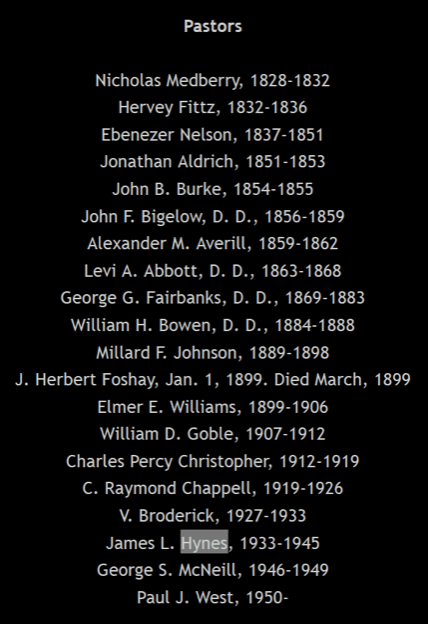
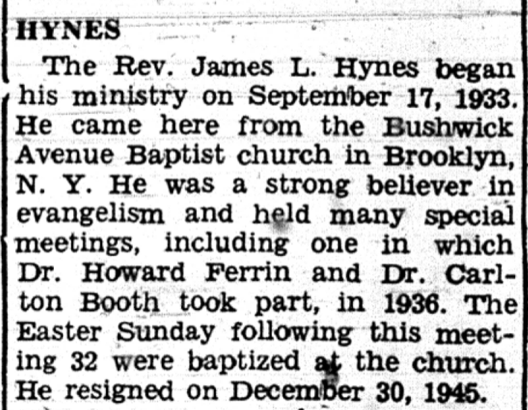
 In the fall of 1933, our great grandparents James and Bessie Hynes moved to Middleboro, Massachusetts, south of Boston, following the depression-driven decline of the Bushwick Avenue Baptist Church in Brooklyn. Recall that we previously examined James’ welcome as pastor of the Central Baptist Church in Middleboro, skipping ahead because of the important biographical information revealed in newspaper summaries of the event.
James brought his skills for promotion of his causes in the local newspapers, honed over his decade in Brooklyn, to his new post in Middleboro. James’s work and writings during this period follow the same patterns we have seen previously–a great deal of heavy-handed, inscrutable theology, with little hint of any cause other than religion for its own sake. On the softer end of the spectrum, James also wrote poetry on a regular basis (still inscrutable), to which he must have devoted a great deal of care and effort.
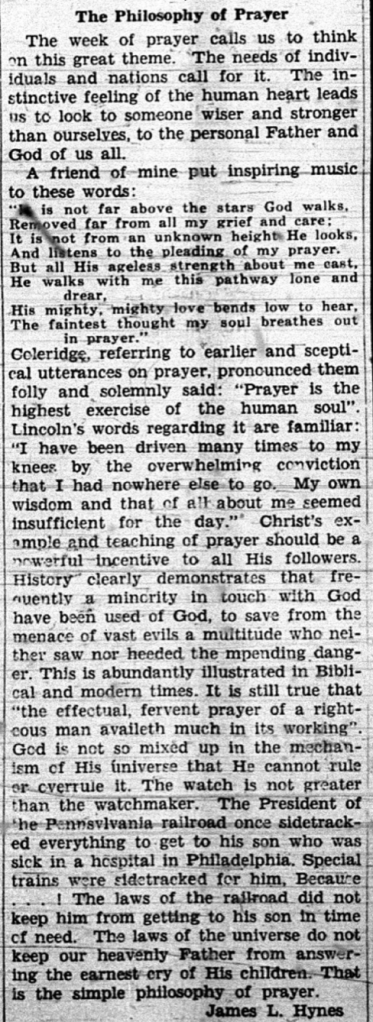
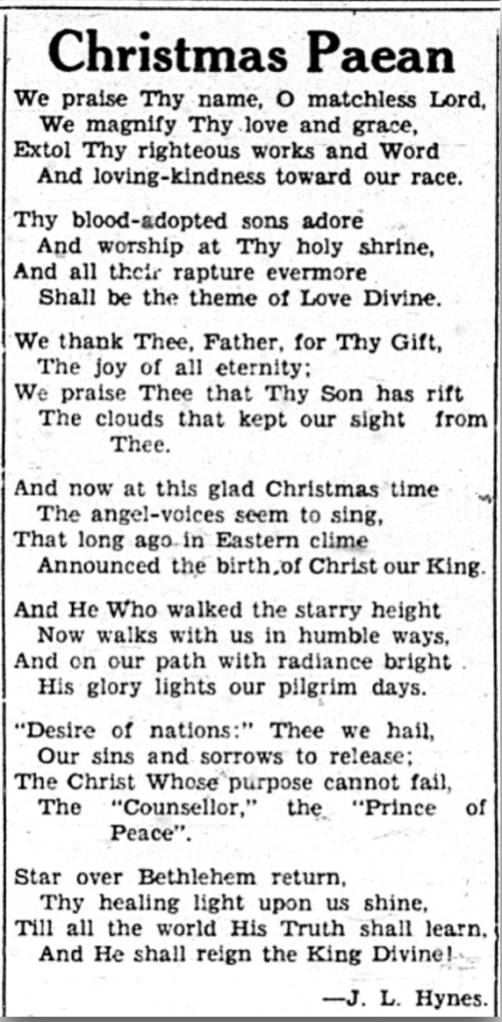
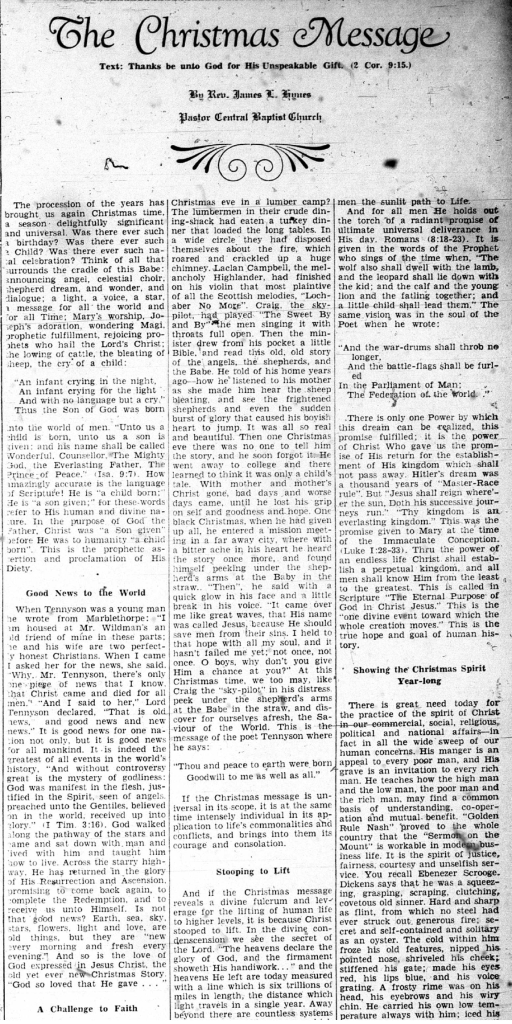
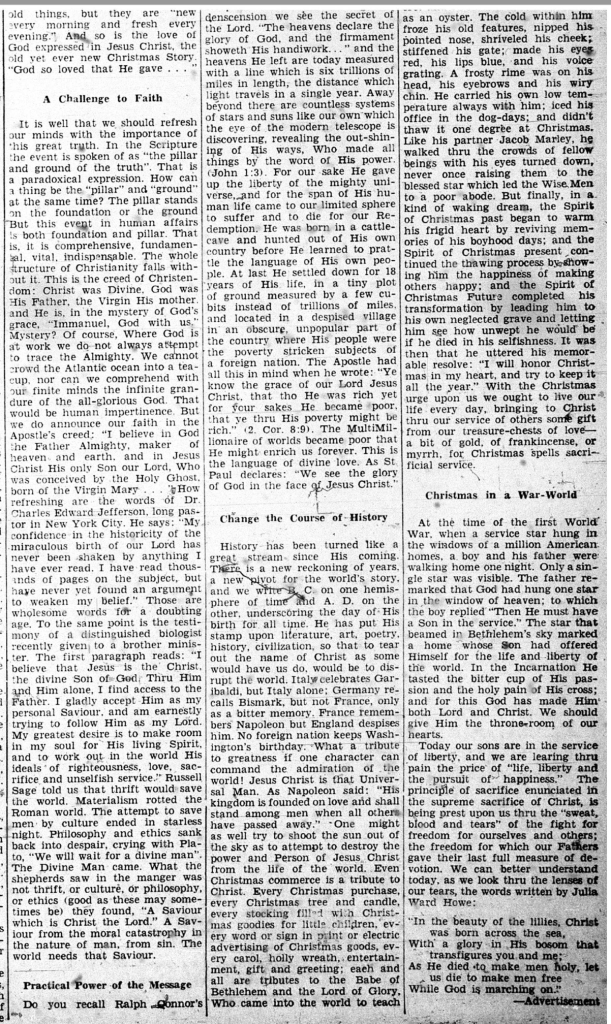
If James’ 1944 Christmas Message, published in the Middleboro Gazette was any indication, sitting through his sermons must have been tests of fortitude and patience.
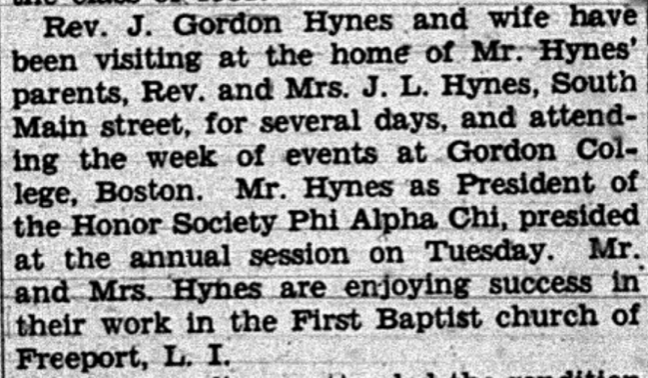
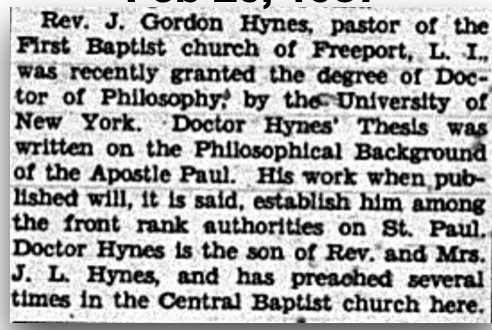
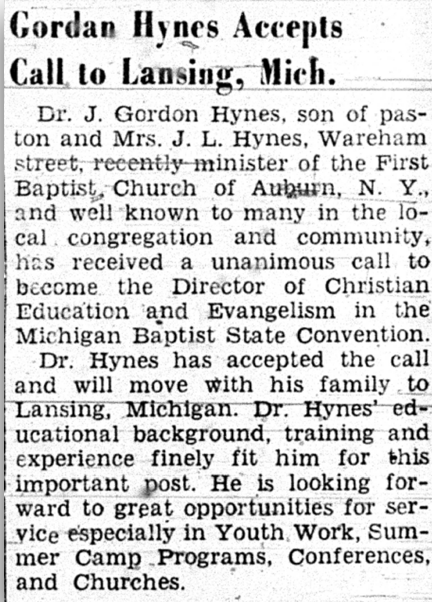
Surely with James’ encouragement, the Middleboro Gazette regularly followed the progress of the professional career of his son, Reverend Gordon Hynes, in Freeport and Auburn, New York, and in Lansing, Michigan.
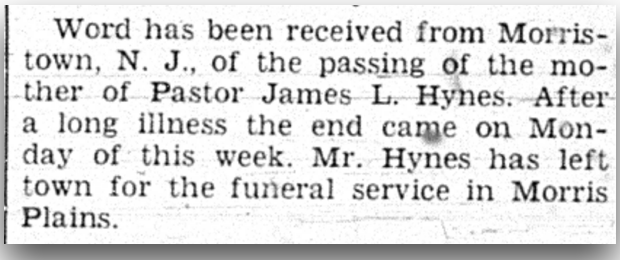
James’ mother, Hannah Cobb Hynes died in New Jersey in March, 1943 (apparently not having returned to Newfoundland, as previously thought). Hannah’s path to Morristown is unknown, her whereabouts having been unclear since 1910 when she lived with daughter Blanche in Brooklyn. At this time, Bessie still had family connections in northern New Jersey and Newburgh, but there is no evident explanation that would link James’ mother to this region. Recall that Hannah’s husband, James’ father Matthew Hynes had died in 1905 in New Haven.
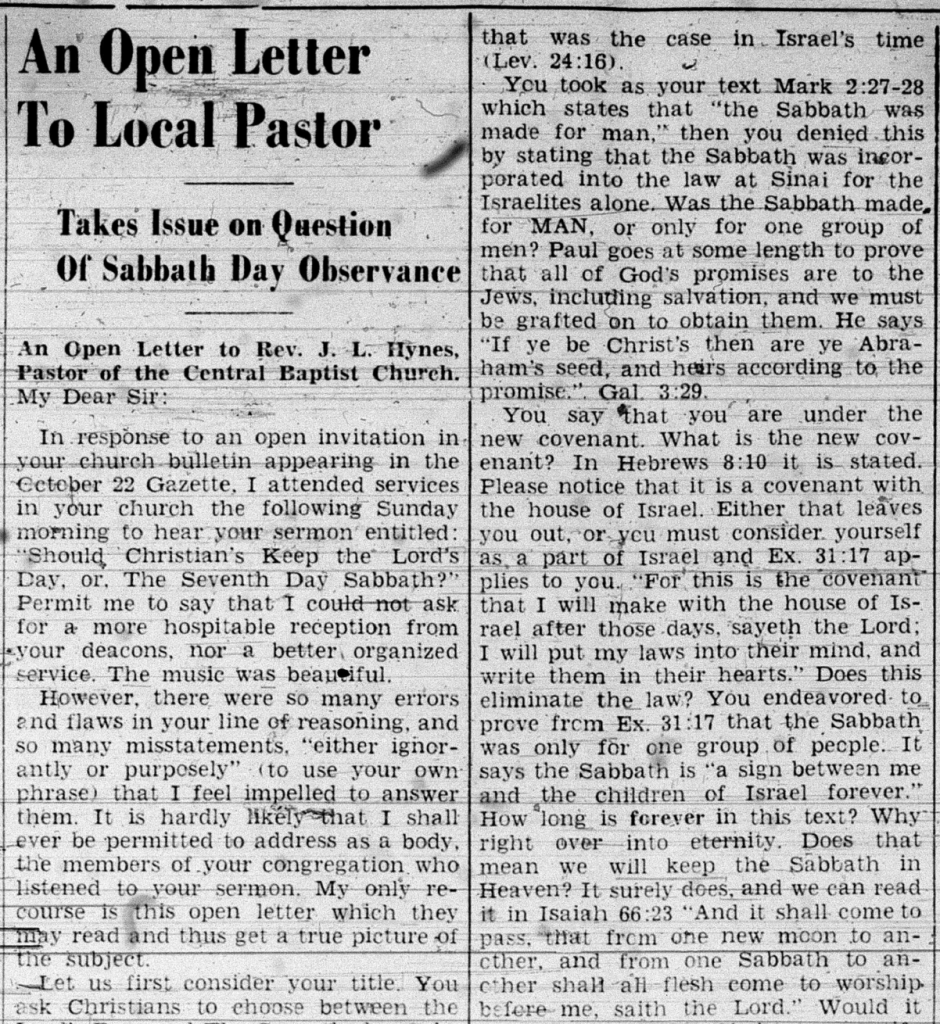
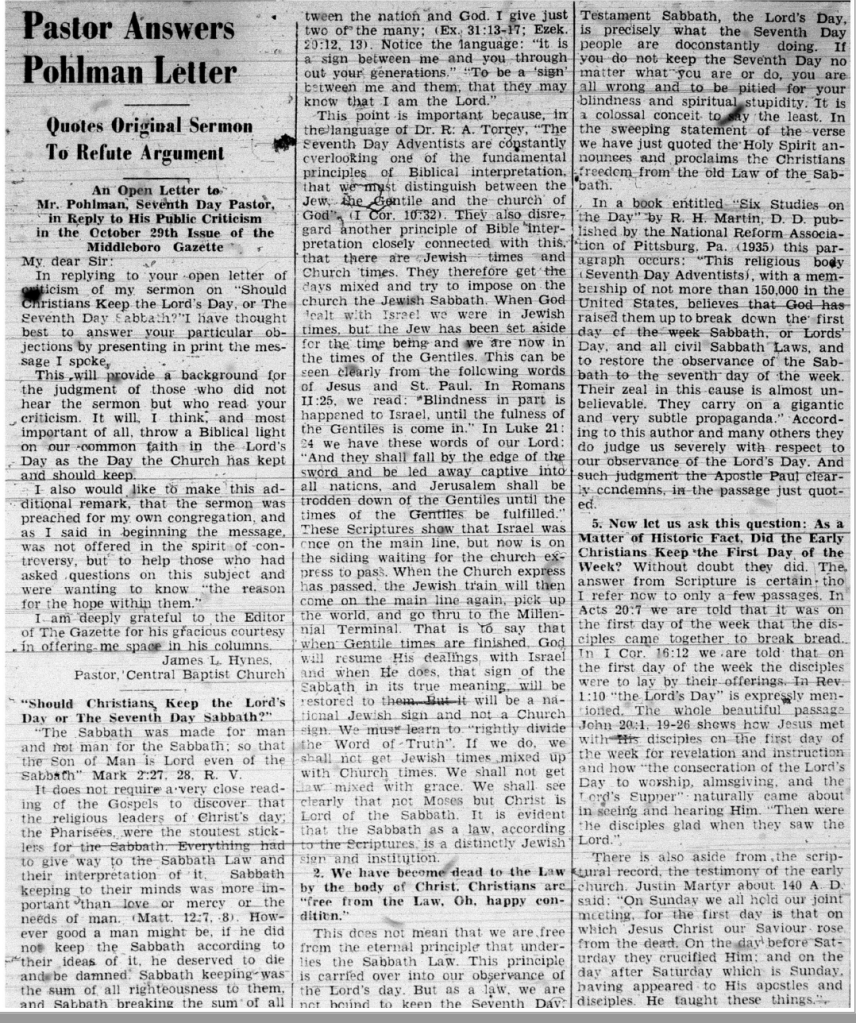
James continued to be a prolific writer and defender of his religious principles throughout his tenure in Middleboro. In 1943 he got into what would today be described as a troll fight with a critic, reverend A.B. Pohlman who took issue with his preachings. Pohlman’s letter occupies more than a half a page in the Gazette…
James replied a week later in a letter that took an entire newspaper page, and must have taken several days to write. Bonus points to anyone who can read, never mind understand, this debate all the way from start to finish.
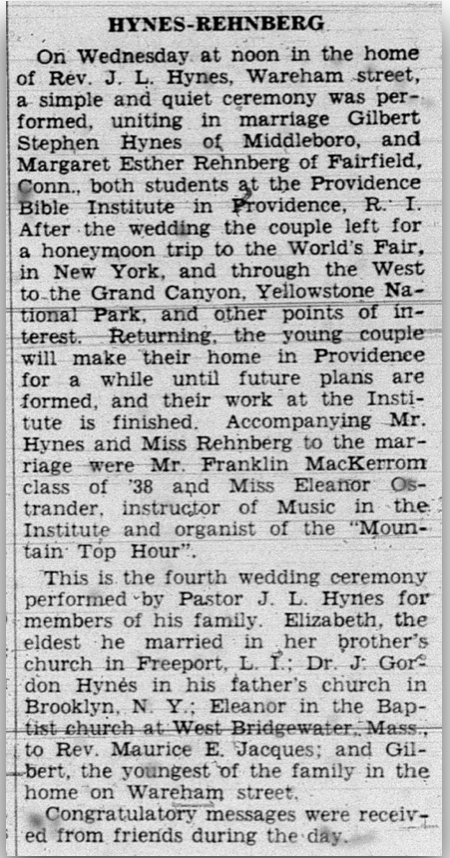
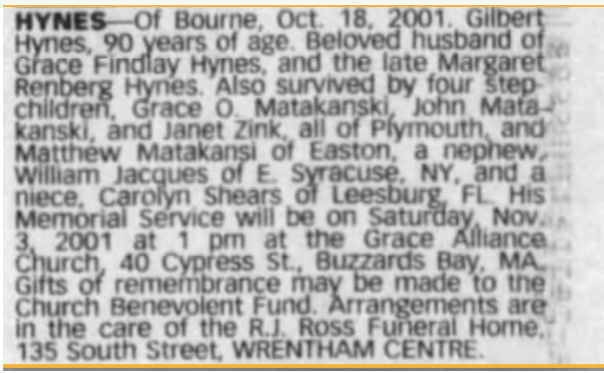
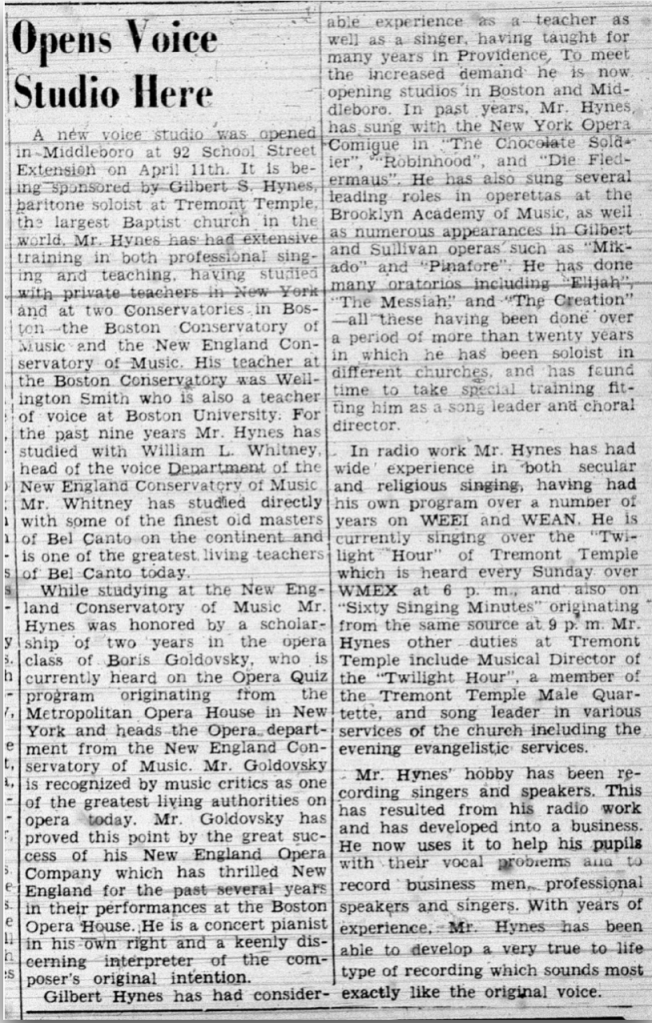
The Gazette also tracked the professional career of James’ and Bessie’s youngest son, Gordon’s brother Gilbert. Gilbert and his wife Margaret were successful classical musicians and gospel singers in Massachusetts and Rhode Island.
James Hynes resigned abruptly from the Central Baptist Church in 1945. The article explaining his resignation creates as many questions as it answers. It reads more like a cold exposition of (veiled) facts than the departure of a beloved leader (in both directions, the article’s descriptions of James as well as James’ descriptions of the church he is leaving).
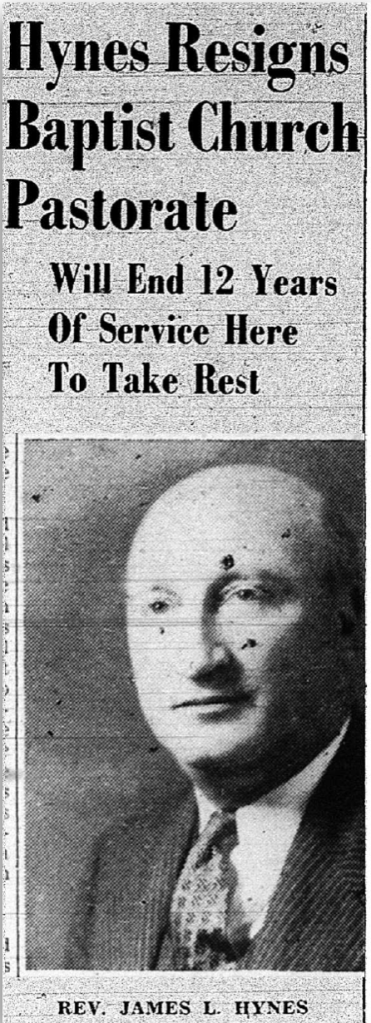
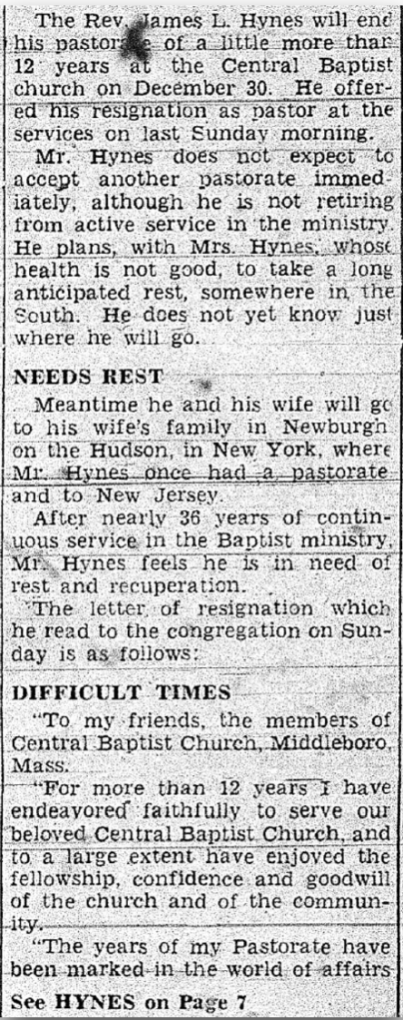
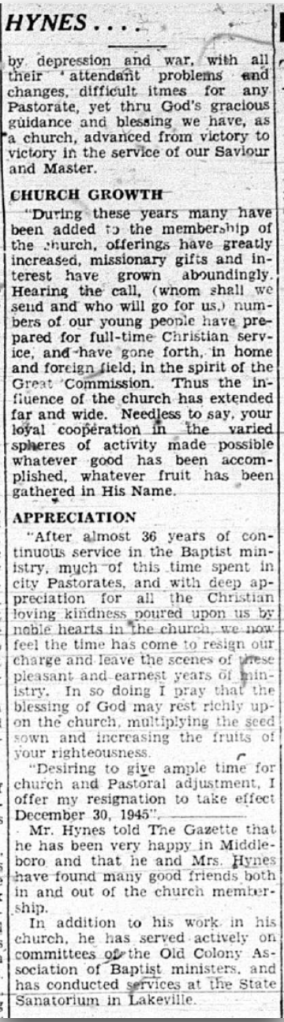
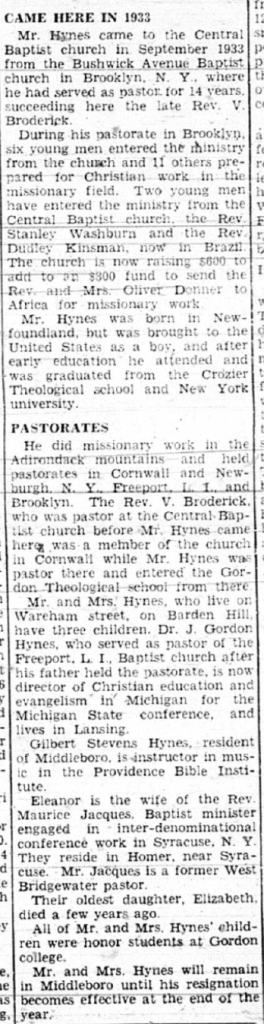
James’ offered reason for resignation, “desiring to give ample time for church and Pastoral adjustment”, goes beyond obfuscation, and begs the question, “adjustment from what?”
James’ stated intentions to visit Bessie’s family in Newburgh upon his departure, then to move somewhere in “the South” are intriguing. They suggest that he was caught without a plan and that he and Bessie had no idea where else to go except back to Newburgh. The unknown details of Bessie’s poor health may also have driven them there. In 1945, Bessie’s sister Addie was living alone in Newburgh, the only other known family there being McClughan cousins, also on Bessie’s side of the family. (In 1947 Bessie’s and Addie’s brother Dr. Edward Gordon, having lost his wife Grace in 1939, would move back into the Newburgh house, living there with Addie until his death in 1958.)
James harmed a lot of people over the course of his life–that he was a hard-working, literary man who brought passion to his work cannot offset the damage inflicted on the other side of his double life. Whether or not his departure from Middleboro had anything to do with his past catching up with him, it seems fitting and ironic that his exit took him straight to the home of his sister-in-law Addie, probably the living person in the world most able to see right through him, the person who continued to devote her life to undoing the kinds of damage caused by people like him, before he disappeared into obscurity.
There is no evidence that James and Bessie stayed in Newburgh for any extended length of time, nor is there any trail of where they spent the final years of their lives, in the South or elsewhere. They do not show up in the 1950 census. It is unusual for there to be no trace of prominent people of this era in today’s massive genealogical database. There remains a chance that answers will emerge in the future as more records (perhaps some obscure Southern newspaper) are digitized and added to the record.
In 1945, James was 60, Bessie was 72, and Addie 68. James would live another 8 years, Addie another 26. No information has come to light on Bessie’s final years, or if she outlived her husband. The last word from James or Bessie that I can find is a brief notice of James’ death which appeared in the Middleboro Gazette in 1953. It is very brief and contains neither fond remembrances nor helpful details other than its publication date.
 Bridging the Silences
3 thoughts on “An Enigma Passes into Obscurity”