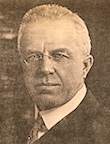
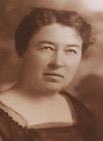
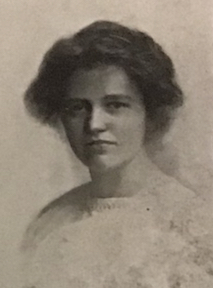
 By 1903, our great grandparents Henry and Mabel Tuttle Swan had permanently moved from Mankato, Minnesota to Ontario, California. Henry was 40 years old, Mabel 37. Their daughter Margaret, our grandmother, was 8.
The population of Ontario, the Model Colony, grew from around 700 in 1900 to over 4,000 by 1910 and 8,000 by the early 1920s, its economy fueled by a combination of agriculture (made possible by the recent introduction of irrigation systems bringing water from the mountains to the north) and commerce (driven by people looking for the culture and comforts of city life but removed from the growing urban environment of Los Angeles, 35 miles to the west).
The Swans followed Mabel’s parents, Burton and Jane Tuttle, to Ontario, they having moved there from Minnesota a decade earlier. In 1910, according to the U.S. Census, Burton and Jane lived at 515 N. Vine Avenue, the site of Burton’s orange grove. In 1910 the Swans lived two blocks away, at 404 West D Street.
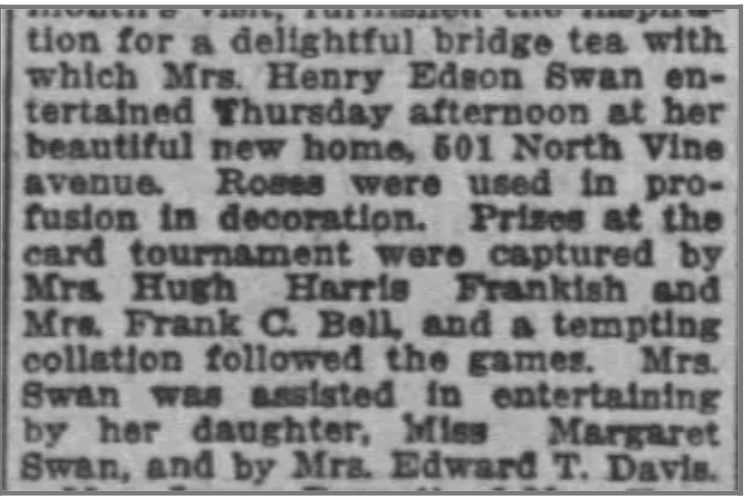
After Burton and Jane died, within weeks of each other in October 1911, the Swan family moved into the 515 N. Vine Avenue home. They built at least two more houses adjacent to that one. In 1920 they moved into the house at 501 N. Vine Ave which would become the Sandford homestead for the next 70 years. A third home at 509 (the “Finsterbach” house, as we knew it), between the other two, would be the house where our grandparents would live when they were first married. The land and the orange grove, thus, would be handed down via daughters from the Tuttles to the Swans to Sandfords.
The orchard that we knew, remaining on the family property in the 1960s, was about one city block in size; the orchard of the 1910s, before parcels of land on the perimeter were sold off for building homes, was perhaps twice that size.
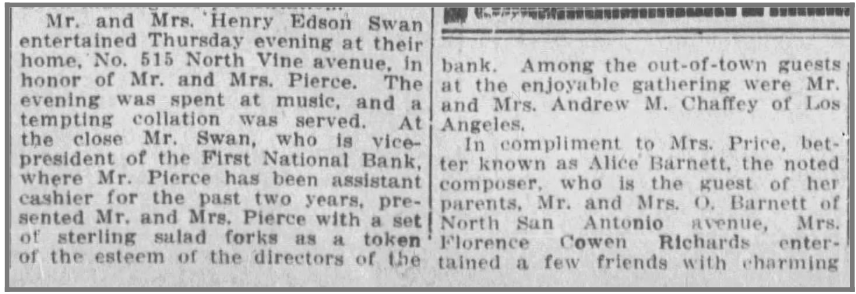
Henry Swan was a banker. Directory listings from Mankato show him moving up the ladder at the National Citizen’s Bank, listing him as an assistant cashier in 1900 and a cashier in 1902. In Ontario, he became a banking pioneer, as described in the words of his son-in-law, Joe Sandford.
Margaret’s father was a pioneer banker here, as I mentioned. He had to do with the developing of the First National Bank of Ontario. He pioneered at the First National Bank of Upland, which is now the Crocker Bank. He used to operate the two banks, and the day came—there’s always a little jealousy in two communities: Ontario-Upland, Ontario-Pomona. He decided that it would be better if they brought in someone else to operate the Upland Bank, which he did. He brought in a very fine man who was a success. Then he continued to operate here. The Chaffeys were tied in to the development of these two banks. George Chaffey and then the son, and other men. The men in those days backed up the people and supported the people and tried to assist them in finding what was best: production of the navel orange, the Valencia orange, lemon, the citrus trees, the deciduous trees and all farming activities. We sense a loss of some of that today. Bankers are out to make money, and they don’t have a deep interest and pride. There was more of that deep interest on his part.
Joe Sandford, 1973 Living History Interview
We will see in future posts that Joe inherited a great deal of his father-in-law’s traits and sensitivities as a banker who supported his clients with a deep interest and pride.
In his banking career, Henry specialized in development of the local citrus industry. He was highly respected as a businessman who would go the extra mile to find ways to support the local farmers and to treat them fairly. He would later be remembered as someone who sometimes went too far in taking on the problems of other people. His personal ownership of a small citrus orchard at his home certainly contributed to his interest and understanding of the challenges faced by the full time growers. At various times, Henry served on board of directors of the California Fruit Growers’ Exchange, was President of the Citrus Fruit Association of Ontario, and President of the Ontario Cucamonga Fruit Exchange.
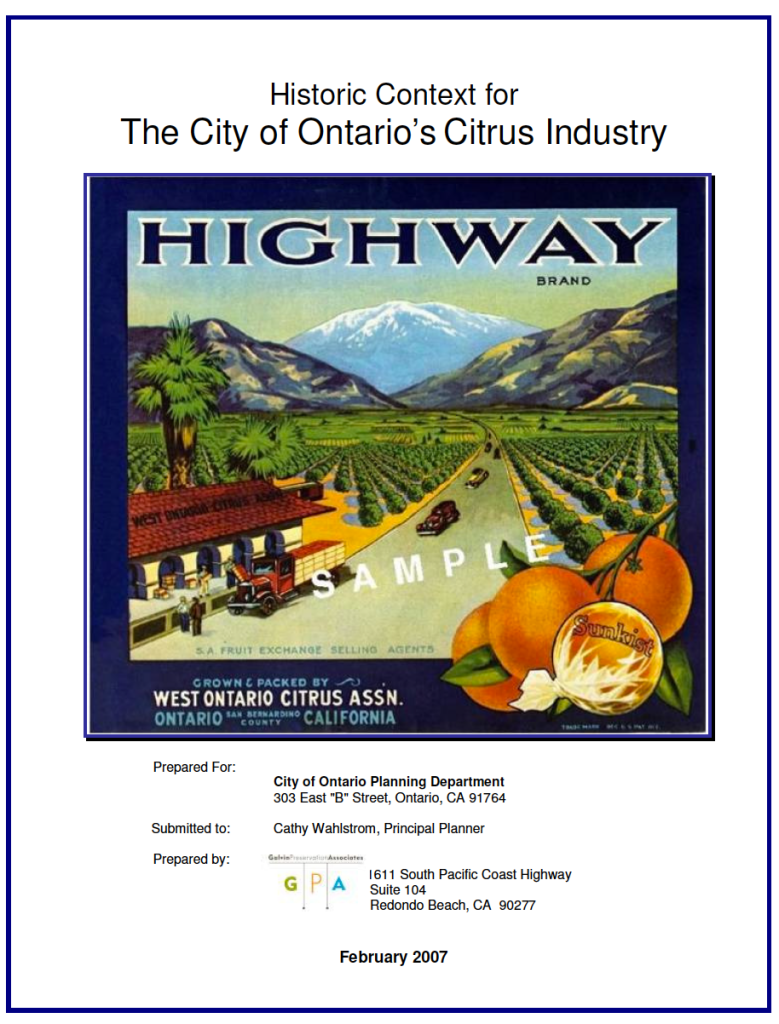
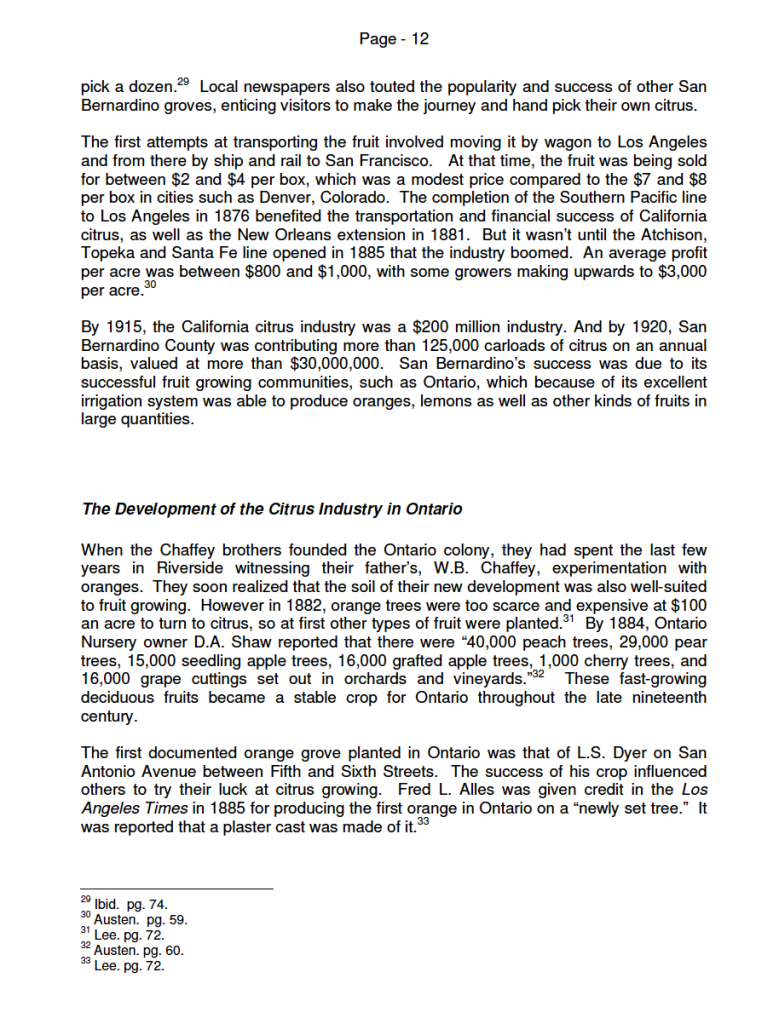
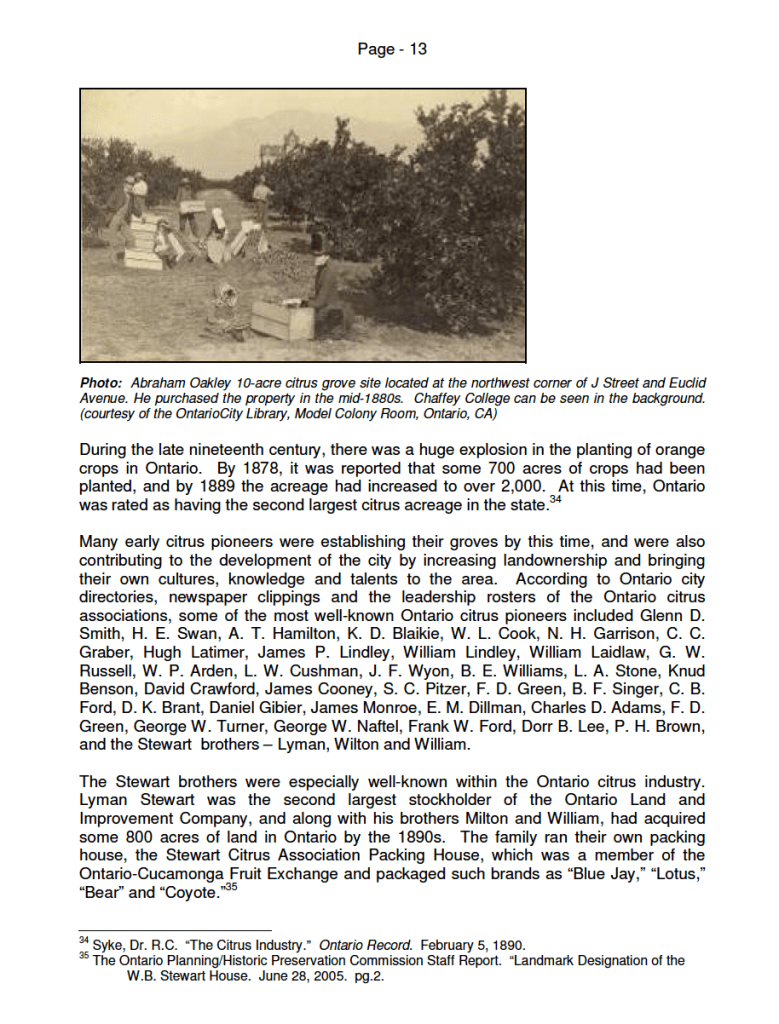
A 2007 pamphlet on the history of the Ontario Citrus industry lists Swan among the pioneers of the industry.
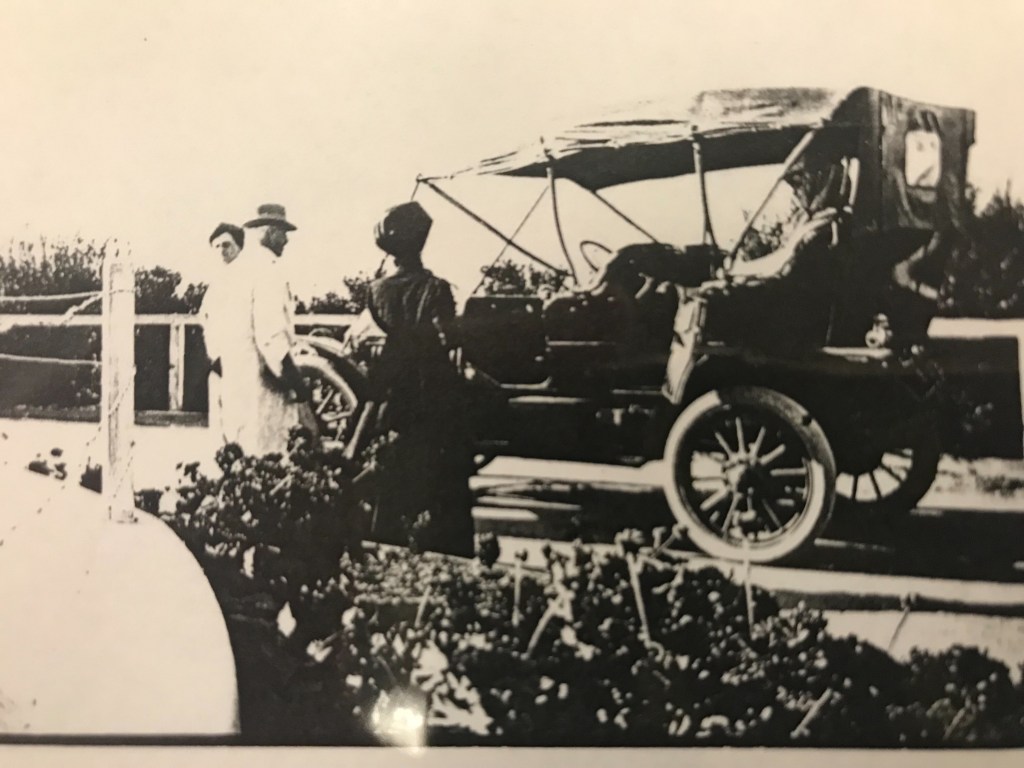
The Swan family was certainly among the town’s prosperous elite of the era. A 1910 photograph, preserved in the Model Colony History room at the Ontario City Library shows Henry with his Maxwell automobile, of which there could not have been many in Ontario at the time.
Mabel was a socialite who made regular appearances in the society pages of the Los Angeles Times and San Bernadino Sun. She would be remembered as an active supporter of the Red Cross, the Ontario Women’s Club, the San Antonio Hospital Auxiliary, and the Westminster Presbyterian Church. Mabel and Henry threw their share of social events in the area.
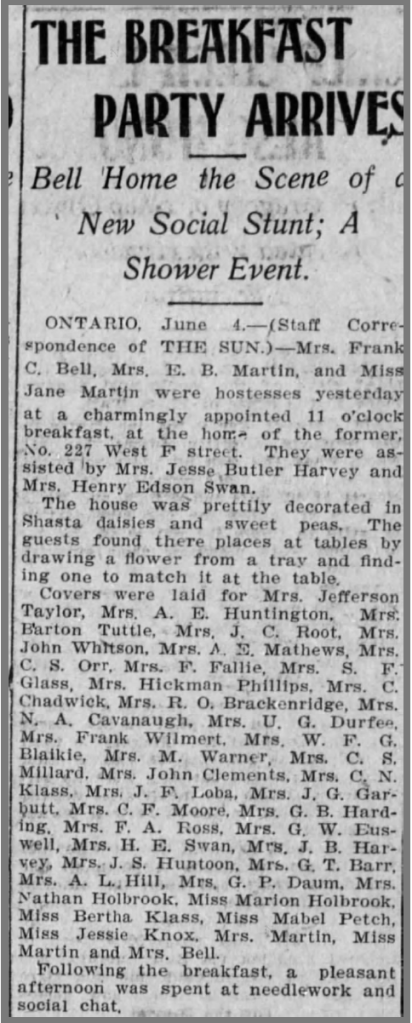
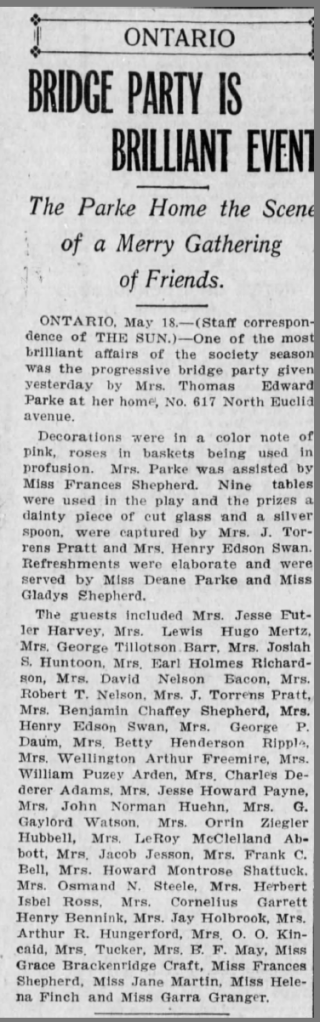
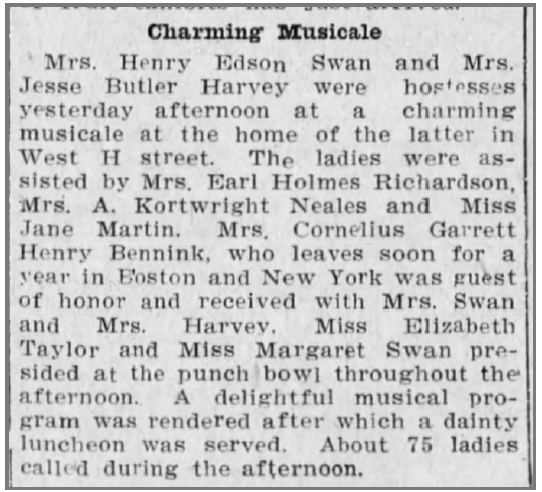
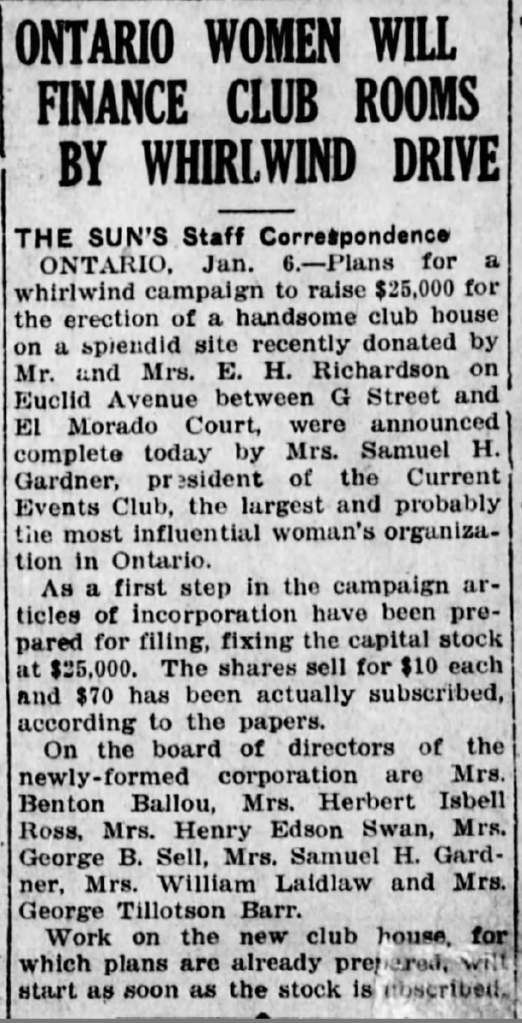
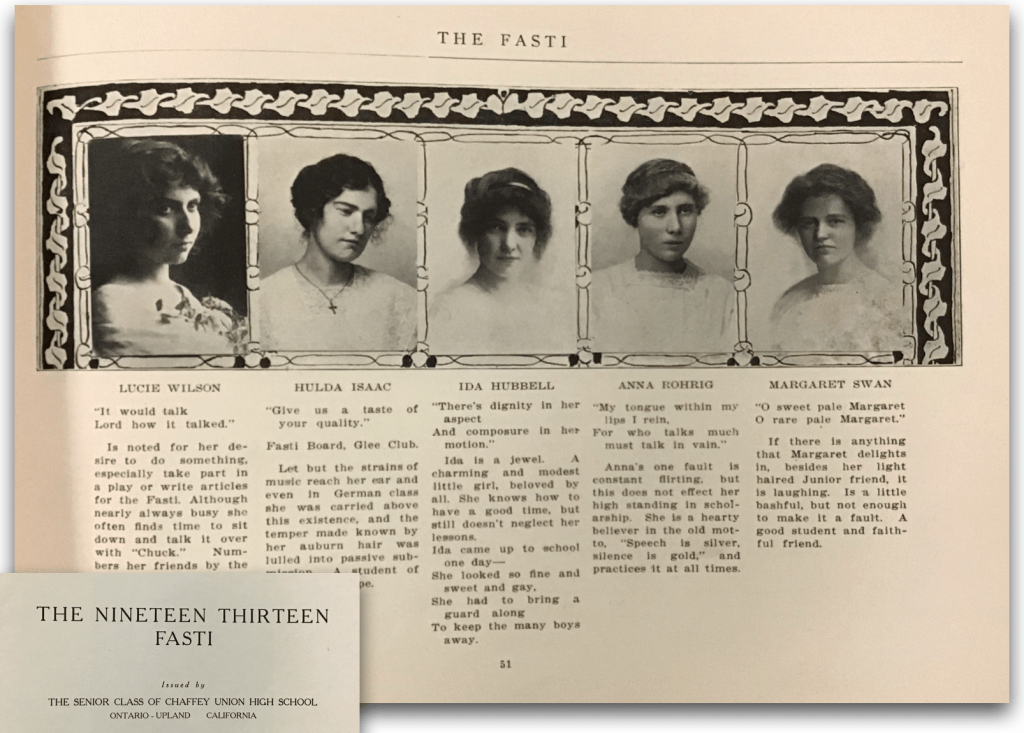
Daughter Margaret grew up in this privileged environment. She graduated from Chaffey Union High School in 1913…
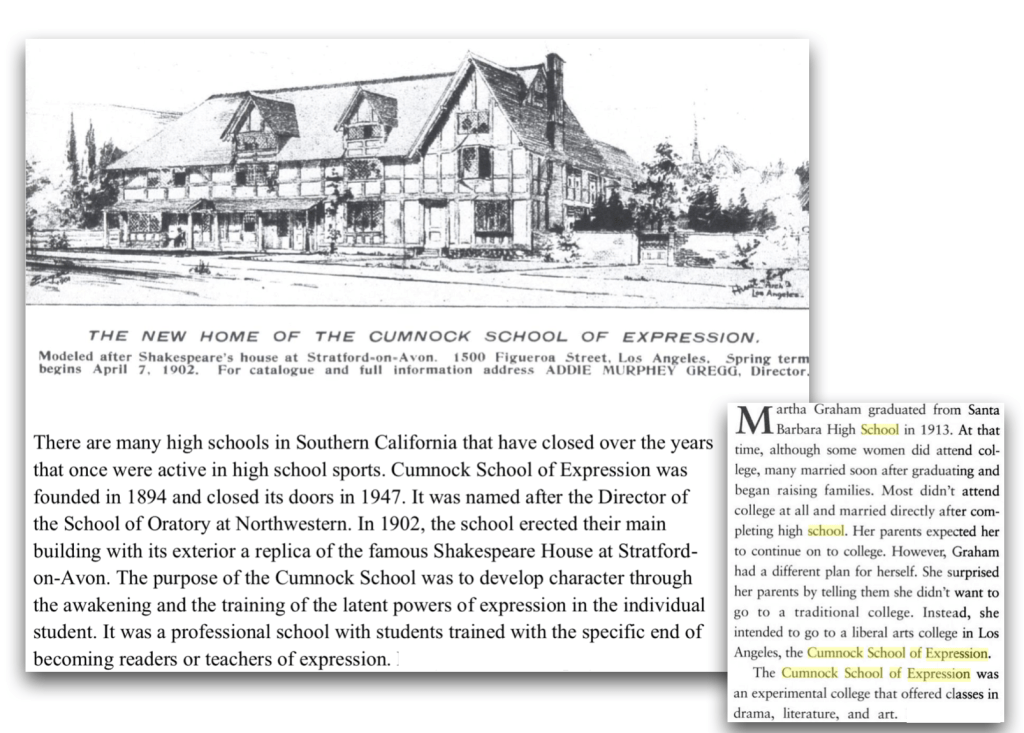
…and attended the Cumnock School of Expression in Los Angeles. LA is thirty miles away, although today a commute would require more than an hour. In the 1910s perhaps less She followed in the footsteps of Martha Graham.
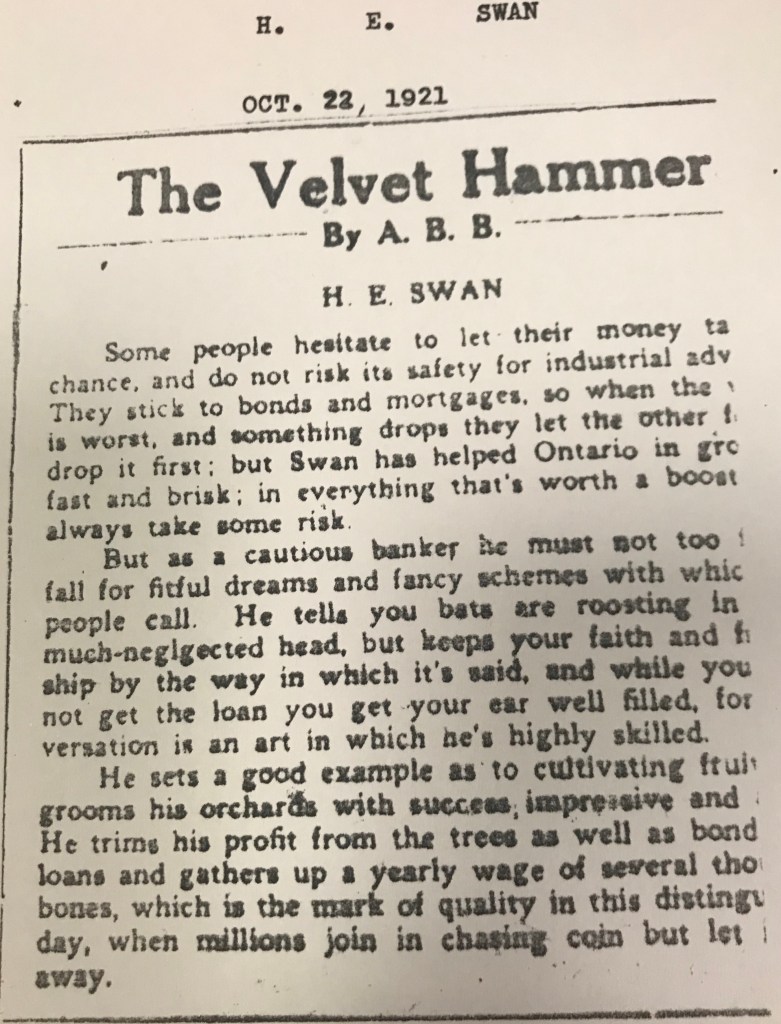
We can see that through the early 1920s, Henry Swan’s wealth and privilege were built on a foundation of service to, and high esteem from, the community he served. He worked very hard throughout his life. His fine reputation was well-earned, and there are many indications that the community understood the heavy burdens he took upon himself in balancing his responsibilities as a businessman with his drive to help his customers. A 1921 tribute to Swan recognizes some of these things about him.
The story of the Swan family will continue with the arrival of the Sandford family in Ontario in the mid 1910s, and with the increasing burdens faced by Henry Swan in the 1920s.
 Bridging the Silences
3 thoughts on “Prosperity, Service and High Esteem in the Model Colony”