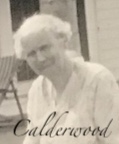
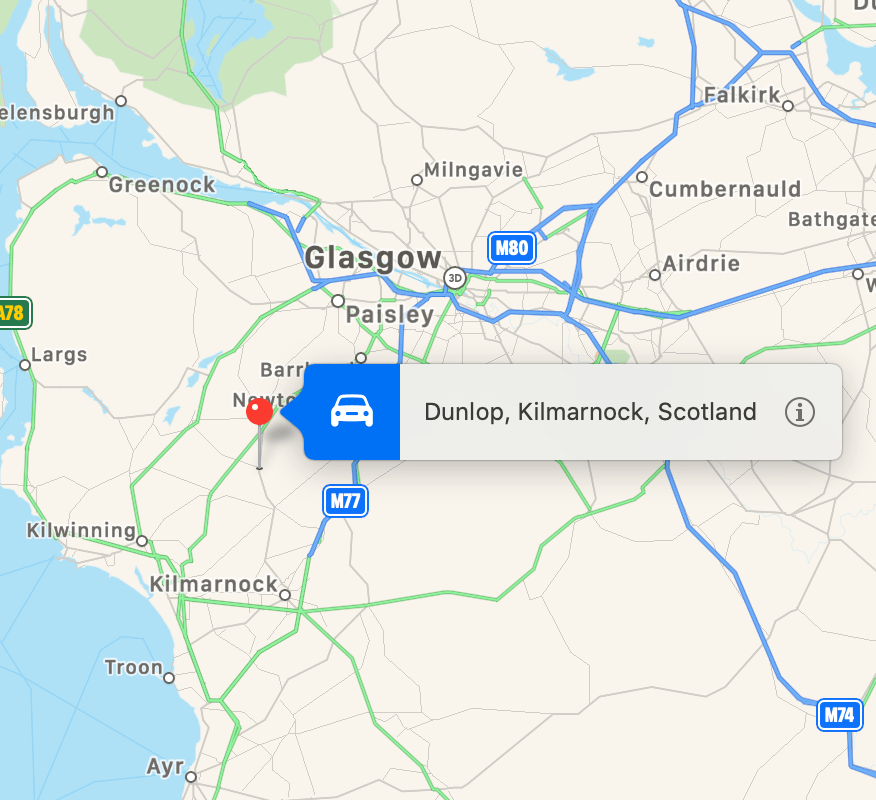
 The family of great grandmother Annavilla (Annie) Agnes Calderwood came from Dunlop, Ayrshire Scotland, about 15 miles southwest of Glasgow. Her father, John Calderwood (1822-1896), arrived in the United States in 1841 at age 18 or 19.
Difficult economic conditions in Scotland, driven by the growth of the industrial revolution, created tides of immigration to the United States throughout the 19th century. For many people from Ayrshire, including several generations of the Calderwood family, one of these currents flowed via the port of New York to Galway, New York (northwest of Albany) and later to Craftsbury, Greensboro, and Glover in northern Vermont (25 miles south of the Québec border).
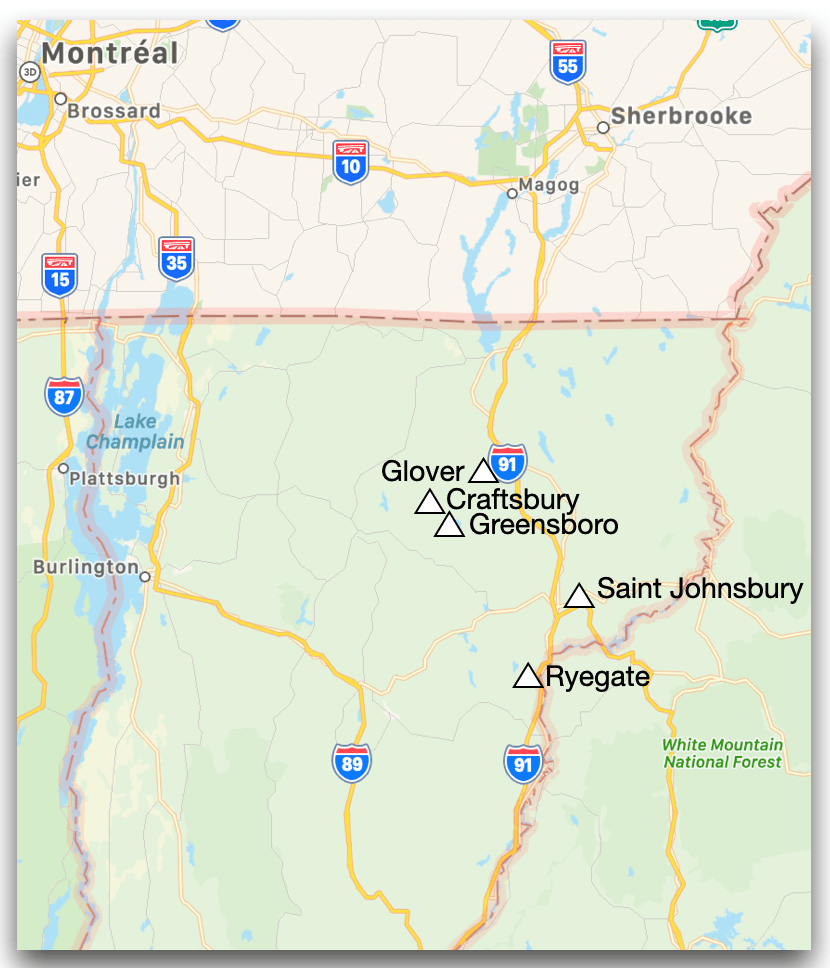
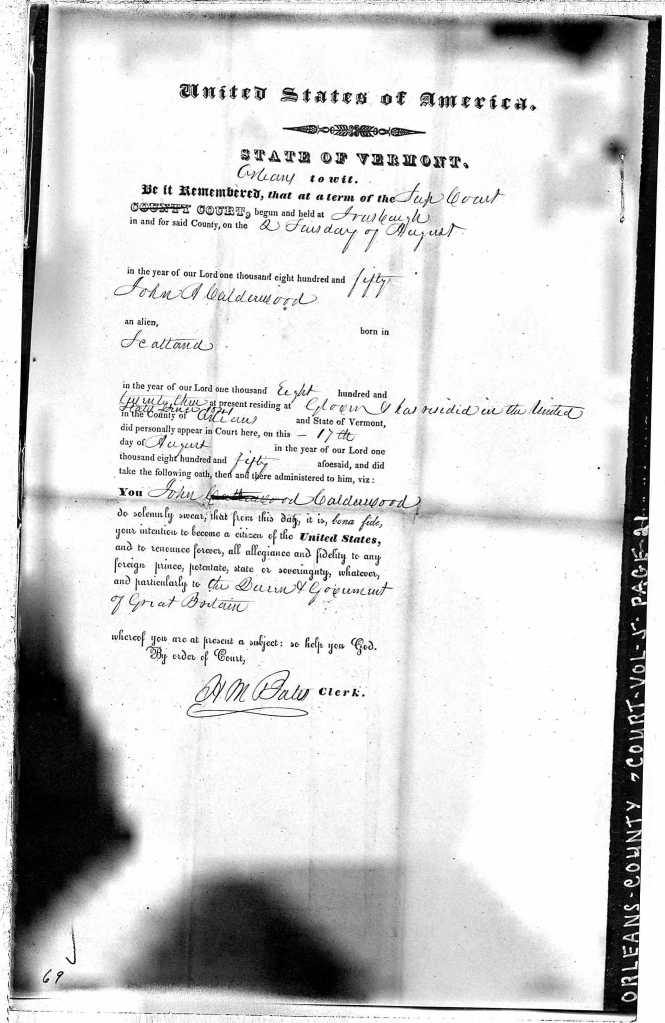
John Calderwood appears to have immigrated directly to Glover, Vermont, following Calderwood generations that had already established a foothold there. John became a United States citizen in 1850.
Annie’s mother was Elizabeth Smith (1826-1921), born in Ryegate, Vermont of parents who were both Scottish immigrants. John and Elizabeth were married in 1848 in Greensboro, Vermont.
Annie was born in 1858 in Craftsbury Vermont, She was one of nine children.
Tracing the Calderwood and Smith families back to earlier generations is difficult. There are descendants in the Ancestry databases who think they know who the previous generation were, but there is no documentation to support these claims. It turns out there is a reason for this. The Proceedings of the Vermont Historical society published an article in 1996 entitled Scots Among the Yankees: The Settlement of Craftsbury East Hill, by Bruce P. Shields, which provides an explanation…
While their Vermont destination is known, the route by which these Scots entered the United States is uncertain. Naturalization documents do not exist for most because of the Covenanter heritage of much of the group. The Covenanter Church derived from the Reformation in Scotland. For fifty years during the civil wars, the Long Parliament, and the Restoration, armed forces of the Episcopalian governments both of Scotland and England ravaged the glens of eastern Ayrshire, leaving a legacy of antigovernment feeling. Partly in revulsion to government persecution, Covenanters refused on scriptural authority to take any kind of oath and refused to pledge allegiance to a government not founded on Scripture. A confessional church, the Covenanters held to a detailed set of published standards for both faith and social behavior.
Covenanter refusal to take oaths complicated their U.S. citizenship. Without oaths, they could not be naturalized in the usual way by swearing allegiance to the U.S. Constitution before a justice. East Hill Scots who arrived before 1850 simply never made naturalization declarations, and consequently their port of entry cannot be discovered, except by oral tradition. Some Andersons entered via Montréal, as did the Youngs. The Calderwoods landed at New York City and moved to Schenectady, from which place part of the family came to Craftsbury and Greensboro. Alexander Shields, according to tradition, landed first at Albany, New York, took a barge to Vergennes, Vermont, and then traveled by oxcart to Craftsbury.…
Bruce Shields, 1996
So it seems that deliberate refusal to participate in government-related activities is what led to today’s scarcity of genealogical records for our Calderwood ancestors, and this phenomenon was common among Scottish immigrants from the Ayrshire region during the 19th century. There are U.S. Census records from 1860, 1870, and 1880 which show the family of John, Elizabeth, and Annie, but nothing earlier. Most records from the U.S. Census of 1890 were destroyed by a fire in 1921.
The 1860 census shows the family with five children, including two year old Annie, living in Craftsbury. The same is true for 1870 with the addition of one year old Edward (who apparently only lived a few years). John Calderwood is listed as a mechanic in 1860 and as a carpenter in 1870 and 1880. By 1880, John and Elizabeth were living alone in Saint Johnsbury (now 58 and 54), and Annie is listed in a separate entry as a housekeeper living in the home of Edward and Sarah Sandford (a story to be picked-up later).
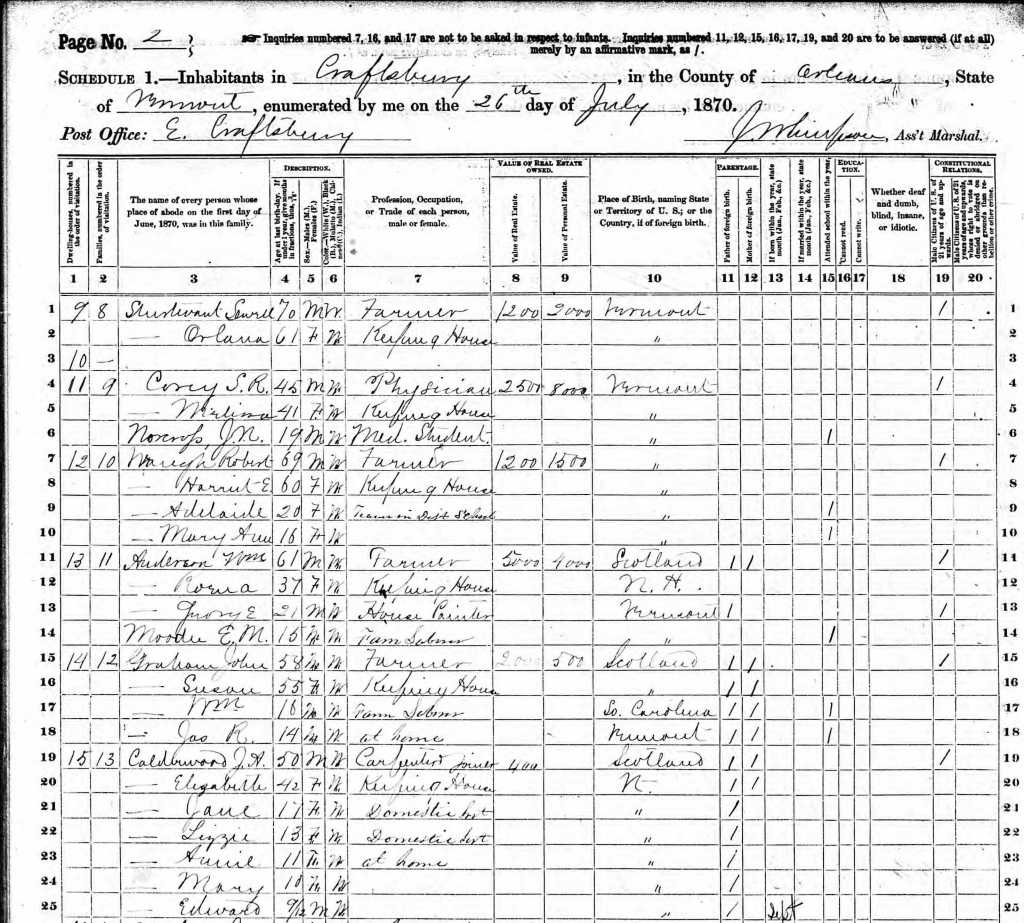
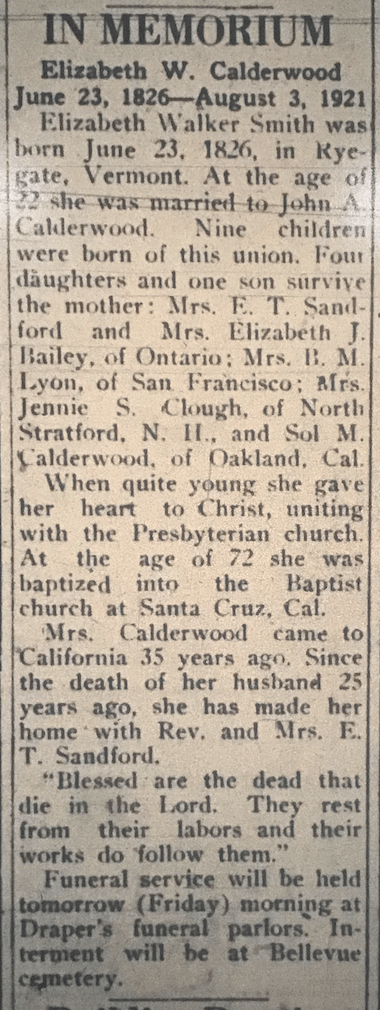
The 1880 census is the last record found of John Calderwood until a note of his 1896 death appearing in Elizabeth’s obituary. The same obituary states that Elizabeth moved to California (no city is named) in 1886, five years before Annie and Edward. So it seems that John and Elizabeth went to California first, and John died ten years after they arrived. Elizabeth shows up again in the 1900 census living with her daughter’s family in Corona, California.
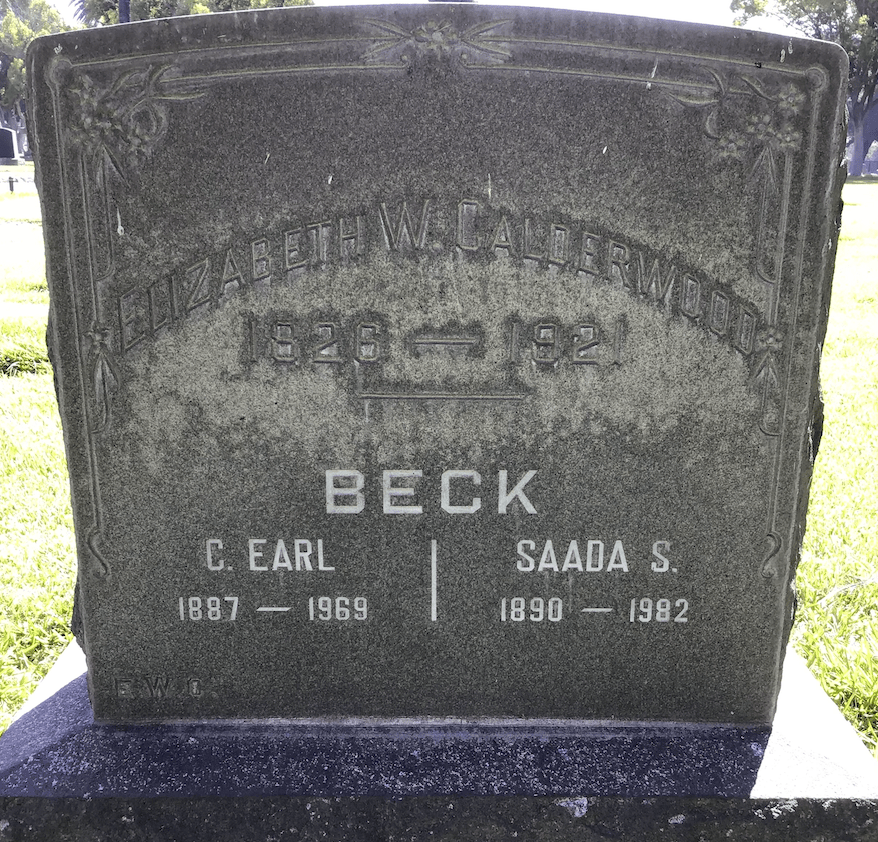
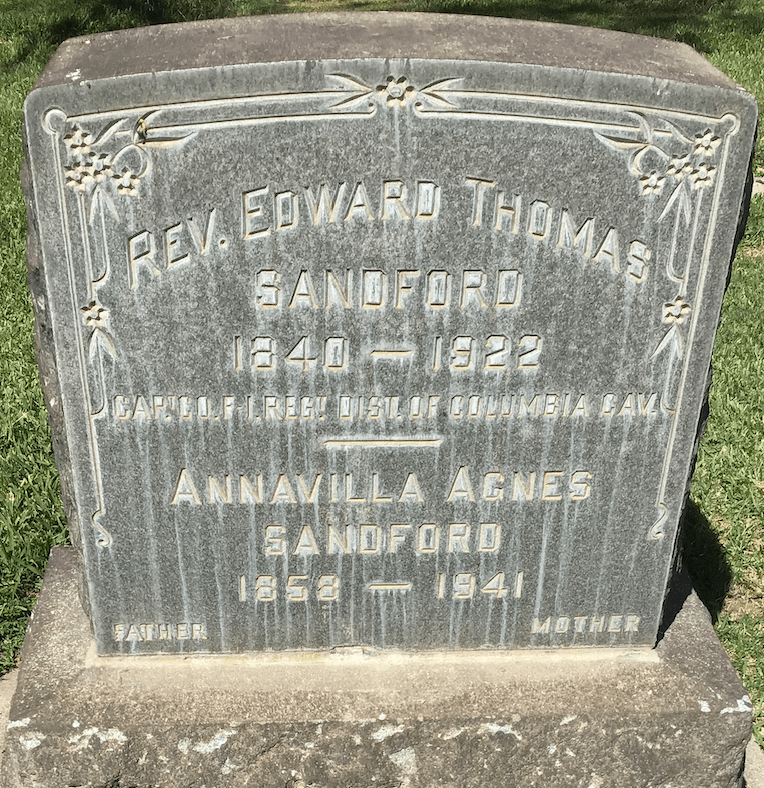
Elizabeth lived with Annie’s family for the rest of her life. She died in 1921, a year before her son-in-law great grandfather Edward T. Sandford. Her name is inscribed on the back of Edward and Annie’s gravestone in the Bellvue Cemetery in Ontario, along with Edward and Annie’s daughter and son-in-law, Saada and Earl Beck.
At least three of Annie’s siblings also moved to California at various times, all mentioned in Elizabeth’s 1921 obituary. Elizabeth Bailey lived in Ontario (and is buried in Bellvue).
The 1996 Vermont Historical Society’s article by Bruce Shields also mentions a famous Calderwood from Craftsbury, Vermont. Dr. Margaret Calderwood Shields (1883-1977) was born and died in Craftsbury, but during her life she was a physicist at the University of Chicago, a student of Robert Milliken, the Nobel Prize winning physicist. She was one of the first U.S women to receive a Ph.D. in physics.
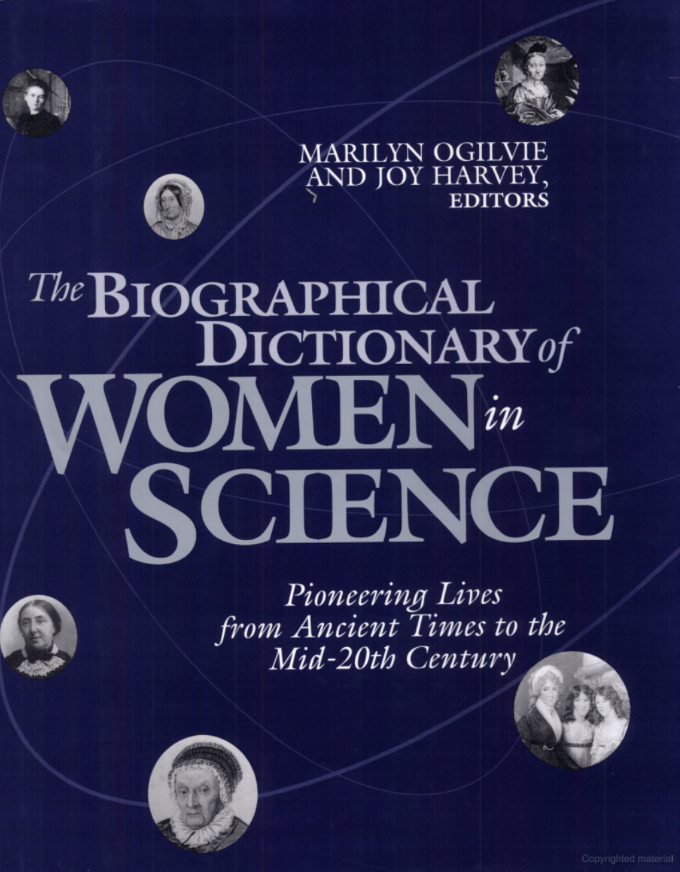
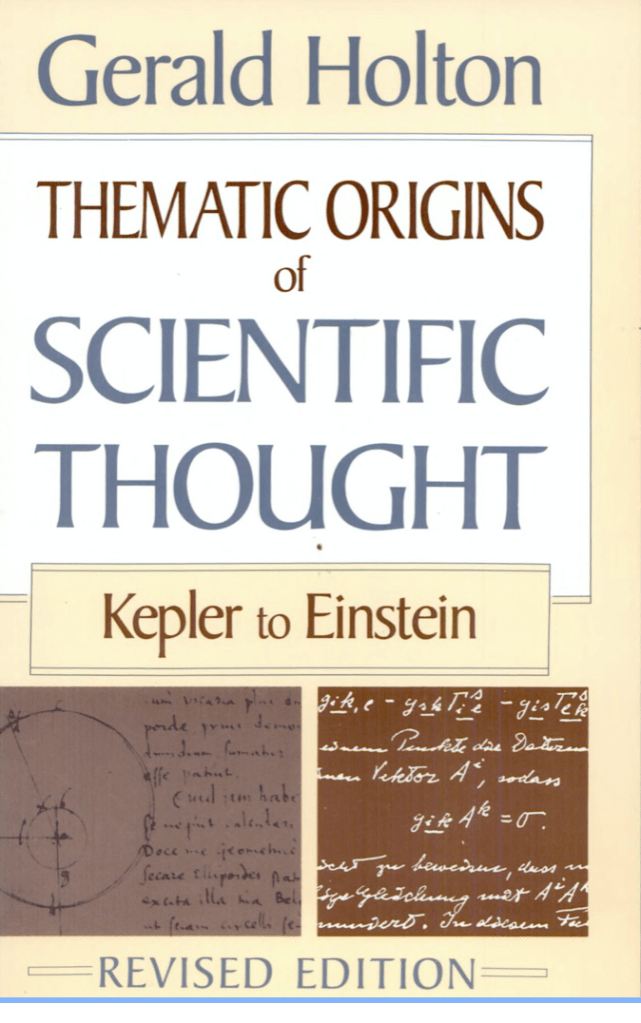
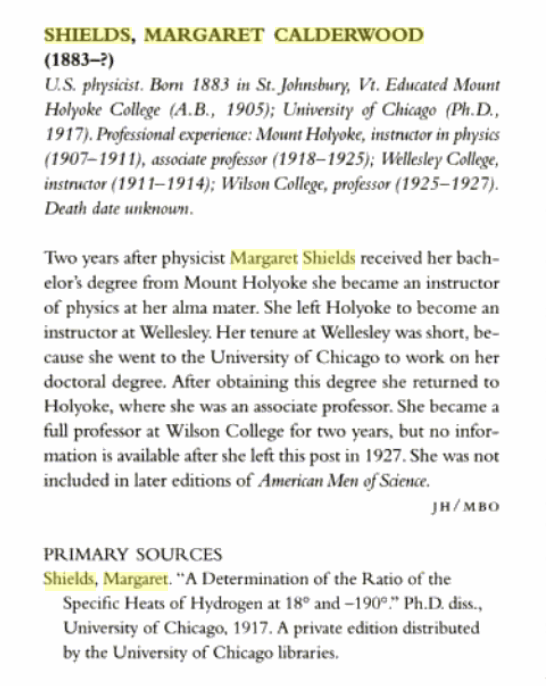
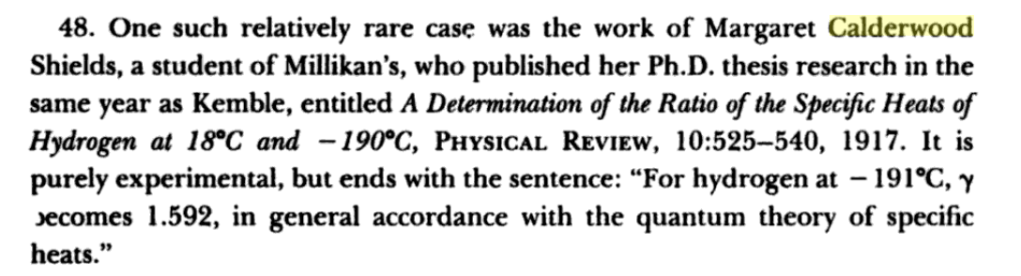
Probably because of the same Calderwood ancestral reluctance to participate in government activities, I have not been able to determine Margaret’s exact position in the Calderwood family. She is likely of the same generation as our grandparents. It appears that she was descended from those earlier Calderwood immigrants who settled near Albany before coming to Vermont, therefore our common ancestry probably goes back to Scotland and she is probably a second or third cousin.
One final revelation is that Bruce Shields, author of the 1996 Vermont Historical Society article, must be a descendant of Margaret, and therefore also a cousin of ours.
 Bridging the Silences
10 thoughts on “The Calderwood Family of Scotland and Vermont”