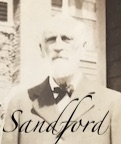
 There are several detailed accounts of the Sandford family’s early roots in England and colonial America. It is generally agreed that three Sandford brothers, Robert, Thomas, and Andrew sailed with their uncle Andrew Warner around 1634, landing in Cambridge and soon establishing themselves in the Hartford Colony which had begun to establish itself as an alternative to the Massachusetts Bay Colony. They were neither rich nor poor, but set out for new adventures and opportunities in a time when the flow of colonists from England was increasing and the days of extreme danger of the early colonial voyages had subsided. We will look closely at the Sandford migration in future posts, but a brief synopsis is that Robert remained in Hartford and Thomas established himself in nearby Milford, both to found branches of the Sandford family that would thrive. Andrew encountered serious problems and it is not clear that his branch endured.
Robert lived in Hartford for the remainder of his life, dying there around 1676. He and his wife Ann Howes had at least nine children, two of whom are known to have played interesting roles in American history. Son Ezekiel moved to Long Island to found our branch of the Sandford family tree. Son (and 8th great uncle) Zachariah remained in Hartford and is the subject of today’s post.
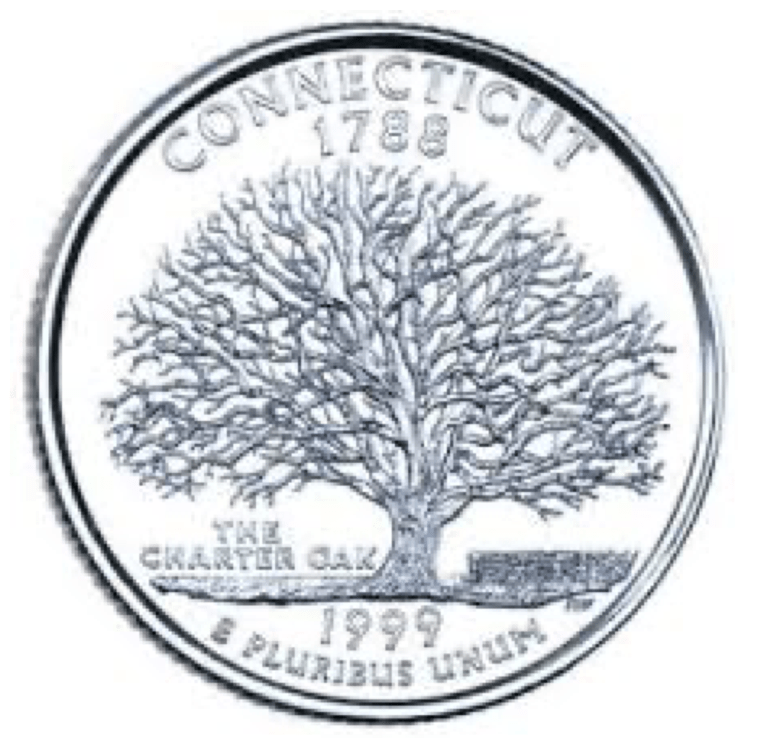
The story of the Charter Oak from the early history of Connecticut is commemorated today by the image of the oak tree on the back of the Connecticut state quarter. The story tells of the radical Hartford Charter, a lengthy document which afforded enhanced rights of self-governance and thus differentiated the Hartford Colony from the stricter Massachusetts Colony. Some of the ideas of the charter are thought to have eventually made their way into the Connecticut State and United States Constitutions. The British were not amused and made repeated attempts to seize the charter. (It is difficult today to understand the thinking that seizing a piece of paper could make such a threat go away.)
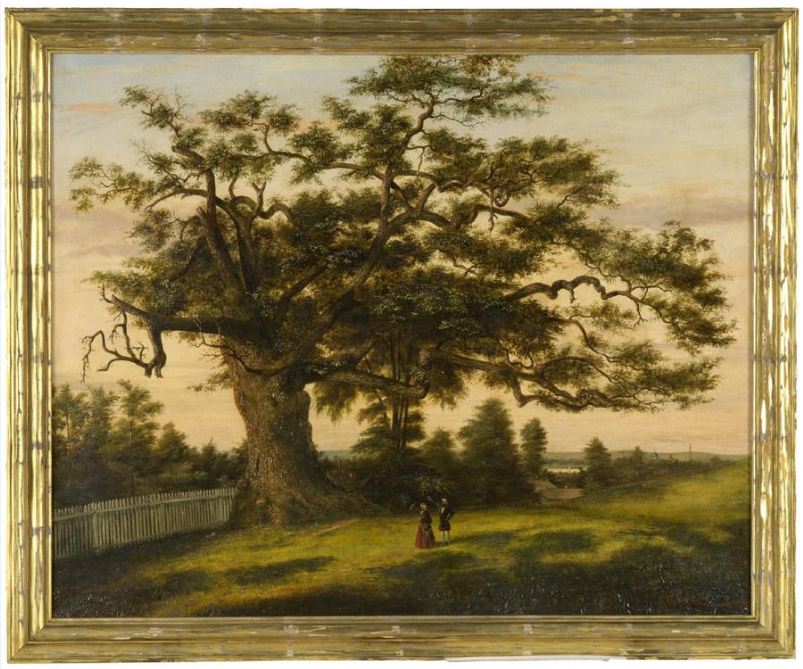
According to the story, things came to a head in a 1687 meeting in the Hartford meeting house/inn, where the British Governor General had arrived with the mission to seize the charter once and for all. At dusk following an afternoon of debates and threats, the colonial town leaders finally capitulated and brought the charter into the room, laying it on the table in front of the governor. But at that moment, the colonists simultaneously extinguished the all lights in the room, plunging it into darkness, and when the candles or lanterns were relit, the charter had vanished. It had been spirited away by Joseph Wadsworth and hidden in an oak tree a half mile away.
The tale, bordering on legend and mythology, is told today with a degree of caution and skepticism, particularly the drama of simultaneously extinguishing what must have been dozens of light sources. But the overall legend has enough credence that in 1999 the United States minted a quarter to commemorate it. In today’s Hartford it is impossible to go four blocks without seeing a business, building or bridge with Charter Oak in the name.
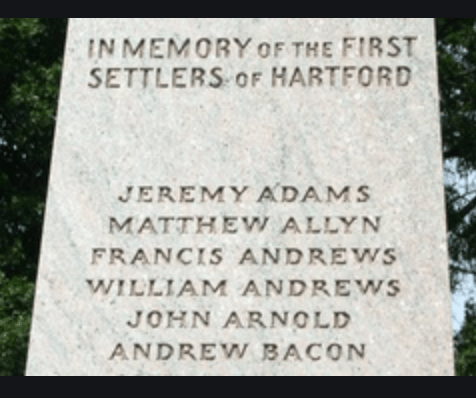
It is also not difficult to find accounts showing that the Inn was owned by Sergeant Zachariah Sandford, Robert’s son, and that he was the host of the 1687 meeting. Zachariah lived from 1644 to 1714 in Hartford. He was the grandson-in-law of Jeremy Adams, one of the original founders of Hartford, who left the inn to his granddaughter Sarah and husband Zachariah when he died in 1683.
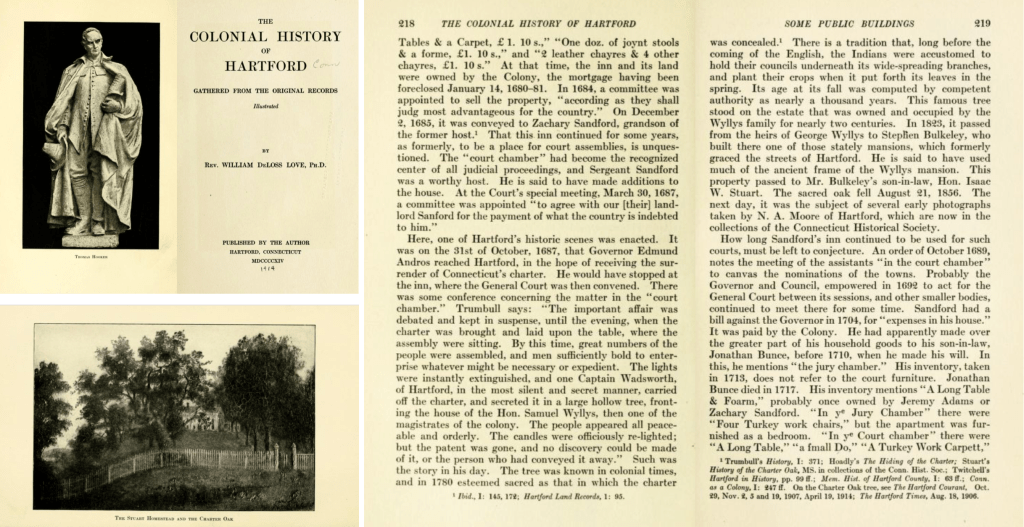
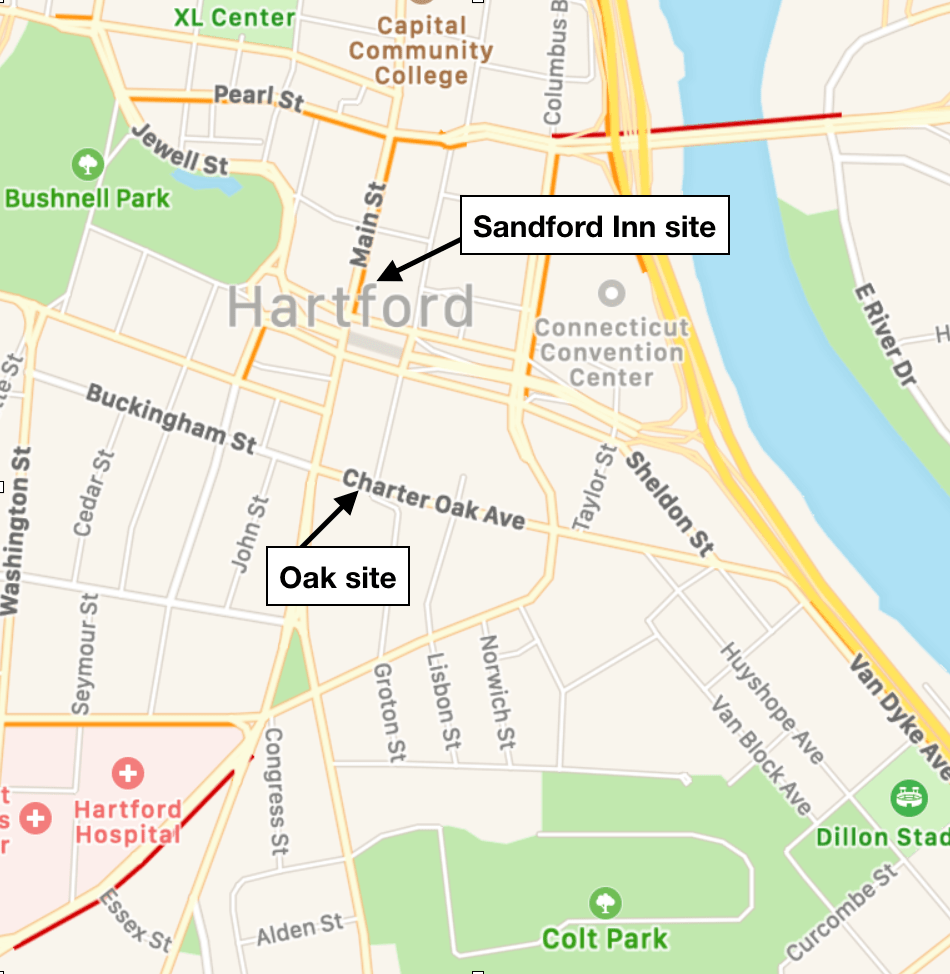
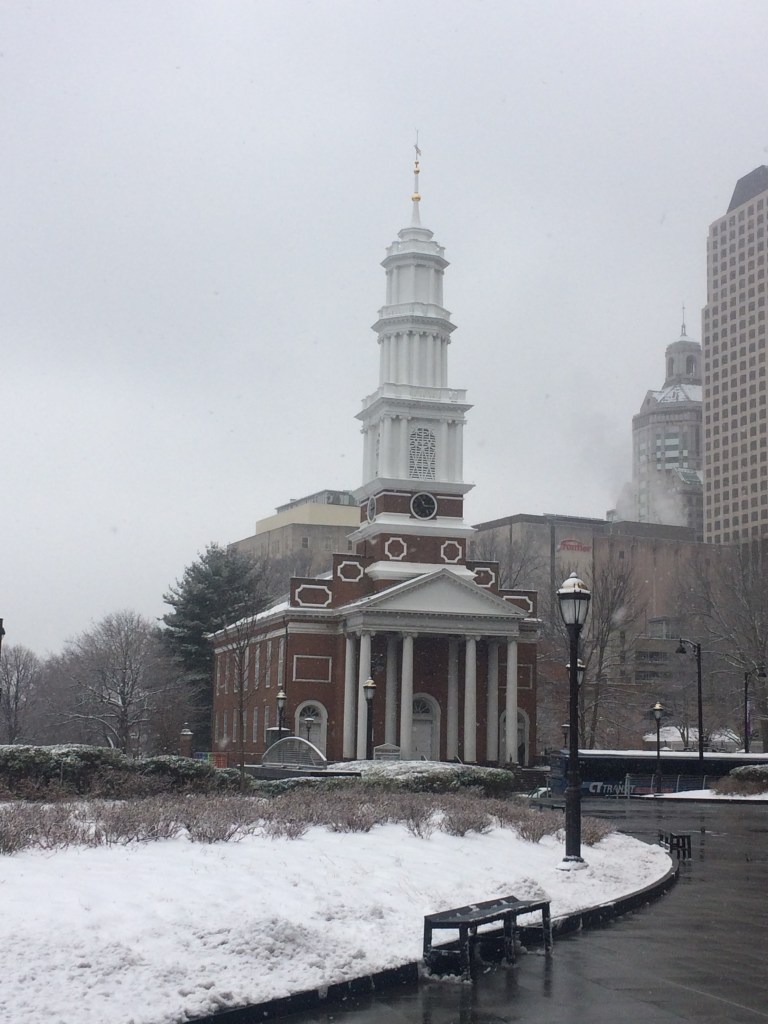
The oak lived until 1856 and today is commemorated by a stone monument just south of downtown Hartford. There is no sign of the inn at its former location which today is a town plaza across from the First Church of Christ and the Wadsworth Atheneum Museum of Art.
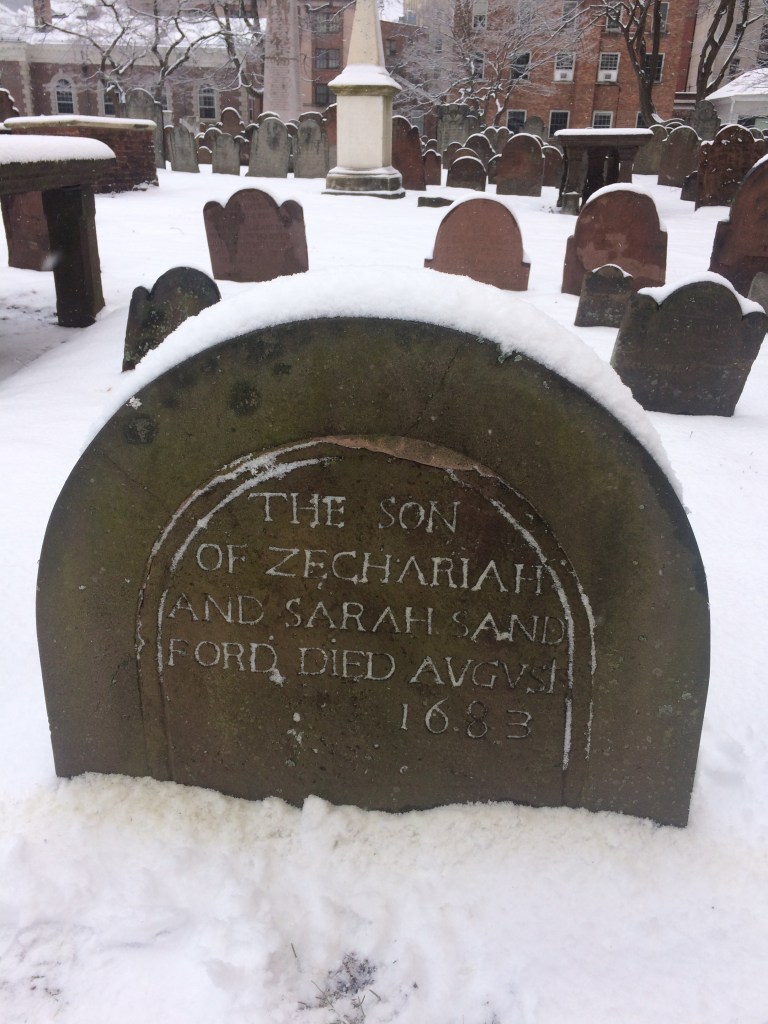
The old Hartford Cemetery, across the street from where the Inn used to stand, has tombstones for several Sandfords including the young son of Zachariah and Sarah, who died in 1683, and other descendants of the original Robert.
 Bridging the Silences
4 thoughts on “The Charter Oak Incident”